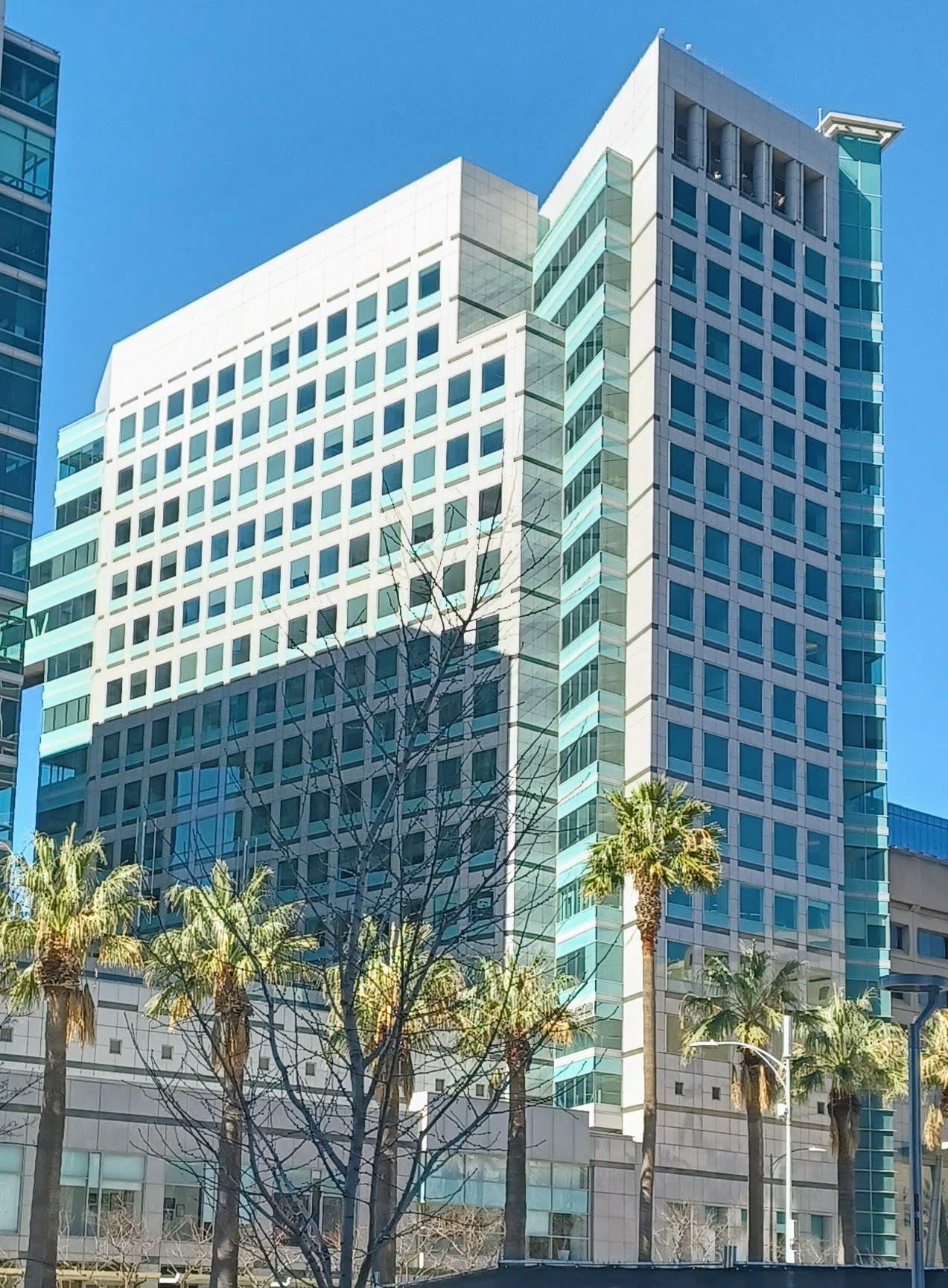
Adobe finished buying Topaz Labs on Wednesday 23 September. The agreement was announced in late June and closed inside three months, at a figure reported across the trade press as $340 million. Topaz keeps its own name, its apps and models stay available on their own, and its upscaling already runs inside Firefly and Photoshop. Topaz chief executive Eric Yang moves onto Adobe’s Digital Video and Audio team.
That is the announcement. The word missing from it is price.
What Topaz is doing in a pipeline
If you have never used it, Topaz looks like a photographer’s toy. It is not shelved that way in a production environment. Gigapixel is what you reach for when the only reference that exists for a prop is a 600-pixel catalogue scan and you need something you can actually paint from. Topaz Photo cleans noise out of texture source shot on a phone under bad light. Topaz Video is the one that ends up on a render farm, taking a sequence out at half resolution and bringing it back up, or rescuing an old plate nobody kept the negatives for.
None of that is glamorous work. It is the kind of thing that sits between two other jobs, gets run in batch overnight, and nobody credits.
Which is exactly why the shape of the software mattered as much as the models inside it. Topaz shipped as a binary that opened, did one job, and closed. No creative-suite login, no asset manager wanting to sync, no per-seat entitlement check before a background process could touch a frame. You could put it on a machine that was not on the internet. Artists bought it for the upscaler and kept it for the fact that it stayed out of the way.
The licence question predates Adobe
It is worth being accurate about who changed what here, because the ownership change gets blamed for a decision Topaz made on its own a year ago.
On 3 October 2025, Topaz stopped selling perpetual licences and launched Topaz Studio as a subscription. The products were renamed at the same time — Gigapixel AI, Photo AI and Video AI became Topaz Gigapixel, Topaz Photo and Topaz Video. Before that, you paid once: $99 for Gigapixel, $199 for Photo AI, $299 for Video AI. After it, Gigapixel ran $29 a month or $149 a year, Photo $39 a month or $199 a year, and Video $299 a year, with Pro tiers at $499 and $599. All in US dollars, all as of the change.
Existing perpetual licences were not revoked and Topaz has repeated that they keep working. They stopped receiving new models, though, and in a field where the model is the product, a frozen version is a slowly expiring one. The company’s stated reason for the switch was funding continued model development, which is at least a coherent argument rather than a pretext.
So the subscription was already there when Adobe arrived. What Adobe brings is a second layer of incentive on top of it. Adobe’s interest in owning an upscaler is keeping people inside Creative Cloud instead of exporting a sequence, running it through something else, and coming back — and a standalone app that works fine on its own is, from that angle, a leak rather than a feature.
Standalone is doing a lot of work in that sentence
“Remains available as a standalone product” can mean several different things, and the release does not say which one.
It can mean the installer stays on the site and the licence server stays up. It can mean the app survives but new models land in Photoshop first and reach Topaz Studio a version later. It can mean the app is maintained while the subscription that unlocks it gets folded into a Creative Cloud plan at Adobe’s pricing rather than Topaz’s. Every one of those is compatible with the wording published on Wednesday.
For anyone running this on a farm the distinction is not academic. A node that needs a Creative Cloud entitlement to process a frame is a different piece of infrastructure from a node that needs a file on disk. That is a licensing conversation, a firewall conversation, and in a facility with any security posture at all, a procurement conversation.
The honest position today is that nobody outside Adobe knows. The close announcement is a close announcement, and pricing decisions after an acquisition tend to arrive at the next renewal cycle rather than in the press release.
The pattern artists already recognise
There is a well-worn response to this, and it has been building for years: people buy the tool that cannot be taken away. ArmorPaint tagged 1.0 after eight years in early access earlier this month, charging $19 for the binaries with the source free under zlib, sitting opposite Substance 3D Painter’s subscription. It is a thinner tool than Adobe’s. It is also one whose cost of going away is zero, and for a lot of artists that has quietly become the deciding spec.
And the other half of that lesson arrived this month too. Zerply is going dark on 28 September after sixteen years, taking a lot of VFX credit history with it, and the only people who kept anything were the ones who exported in time. A service you rely on is not yours. Neither is a model you rent.
Topaz earned its reputation honestly — the 2025 Emmy for its video technology was for work that genuinely fixed footage other tools could not. The models are good. That was never the worry. The worry is the same one artists have had about every tool that gets absorbed: the thing keeps working right up until the renewal terms change, and by then it is load-bearing.
If you are holding a perpetual Topaz licence, the sensible move this week is unremarkable. Keep the installer. Keep the licence file somewhere that is not one laptop. The software works, Adobe has said nothing to suggest otherwise, and an archived installer costs you a few hundred megabytes against the chance that a support page quietly changes in eighteen months.
Close date, brand and integration details from Adobe’s own announcement of 23 September 2026 as carried by PetaPixel, Forbes, TV Tech and Newsshooter; deal value as reported, not confirmed in the release text seen here. Licence and pricing history from the October 2025 Topaz Studio transition as covered by CG Channel and Digital Production. Prices in US dollars, current to that change. Adobe has announced no pricing change for the Topaz apps at the time of writing.