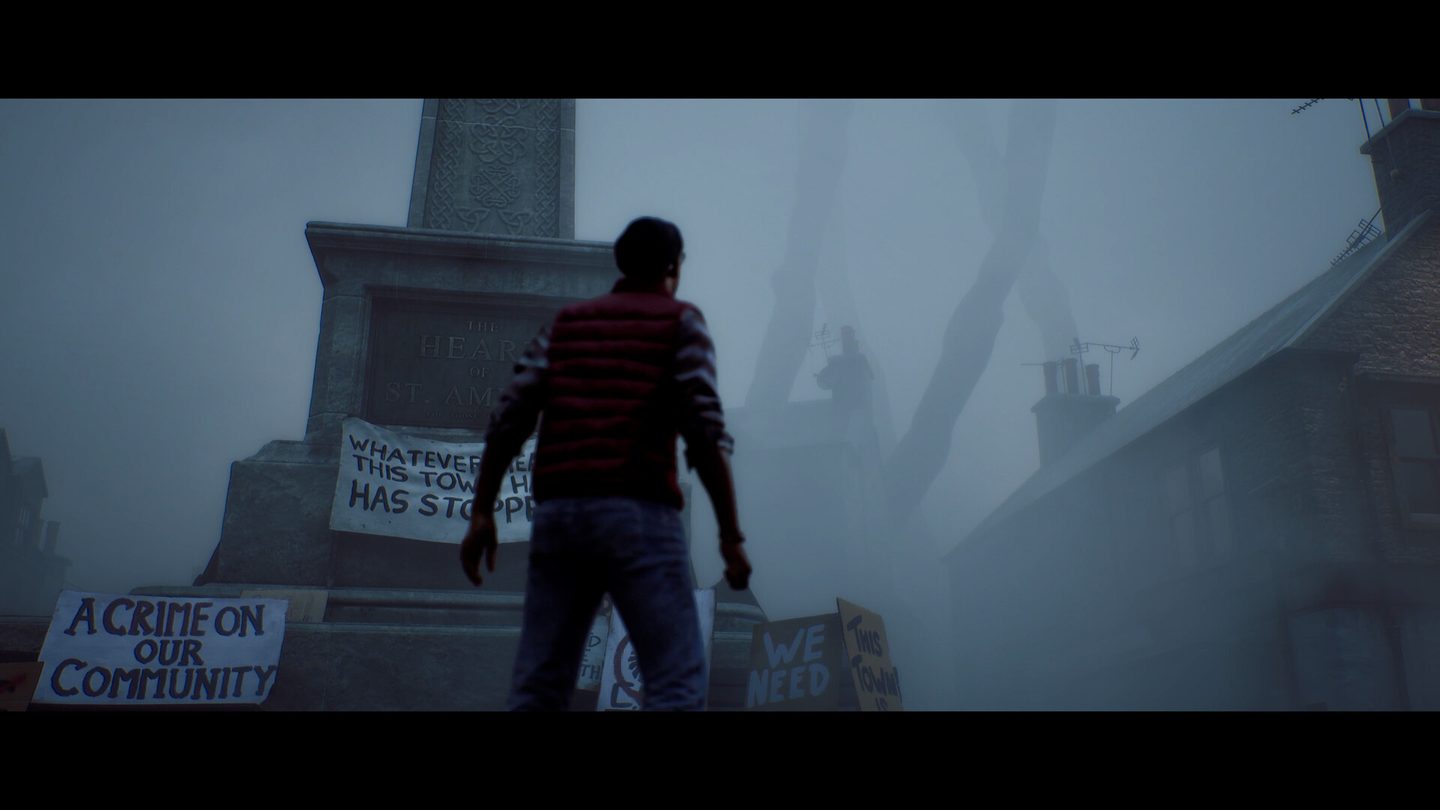
A GeForce RTX 5090, a Ryzen 9 7950X3D and 32GB of DDR5 at 6000 will run SILENT HILL: Townfall at native 4K, everything maxed, ray tracing on, north of sixty frames a second. That is DSOGaming’s test bench and DSOGaming’s number. The same write-up describes severe shader-compilation stutter, erratic frame times and heavy CPU load.
Both things are true at once. Frames per second and frame times are different measurements, and a game can pass the first while failing the second badly enough that nobody wants to play it.
TechPowerUp ran the same question across thirty-five cards and came out with a ladder rather than a headline: an RTX 4060 Ti or an RX 9060 XT for 1080p60, an RX 7900 XT, RX 9070 or RTX 4070 Ti and up for a comfortable 1440p, and native 4K60 reserved for the 5090 alone. So the 5090 result is the top of the ladder, not a surprise — and the hitching sits on every rung of it.
Two faults, one symptom
Everyone calls it stutter. On a frame time graph they look identical — a spike where a flat line should be. Underneath they are unrelated problems with unrelated fixes, and Townfall appears to have both.
The first is pipeline state compilation. Before a GPU can draw anything, the driver needs a compiled pipeline for that exact combination of shader, vertex layout, blend mode, render target format and lighting path. Change any one of those and it is a different pipeline. If the engine reaches a draw call and the pipeline for it does not exist yet, something has to build it right then, on the CPU, while the frame waits. That is where the multi-hundred-millisecond pauses come from when you walk into a room with a light type you have not seen before.
The second is streaming. Cross into a new cell and the engine is creating meshes, uploading textures, spinning up audio and running whatever construction scripts the level designer left in. Players are calling this traversal stutter and the reports cluster on zone transitions and on vegetation coming into view.
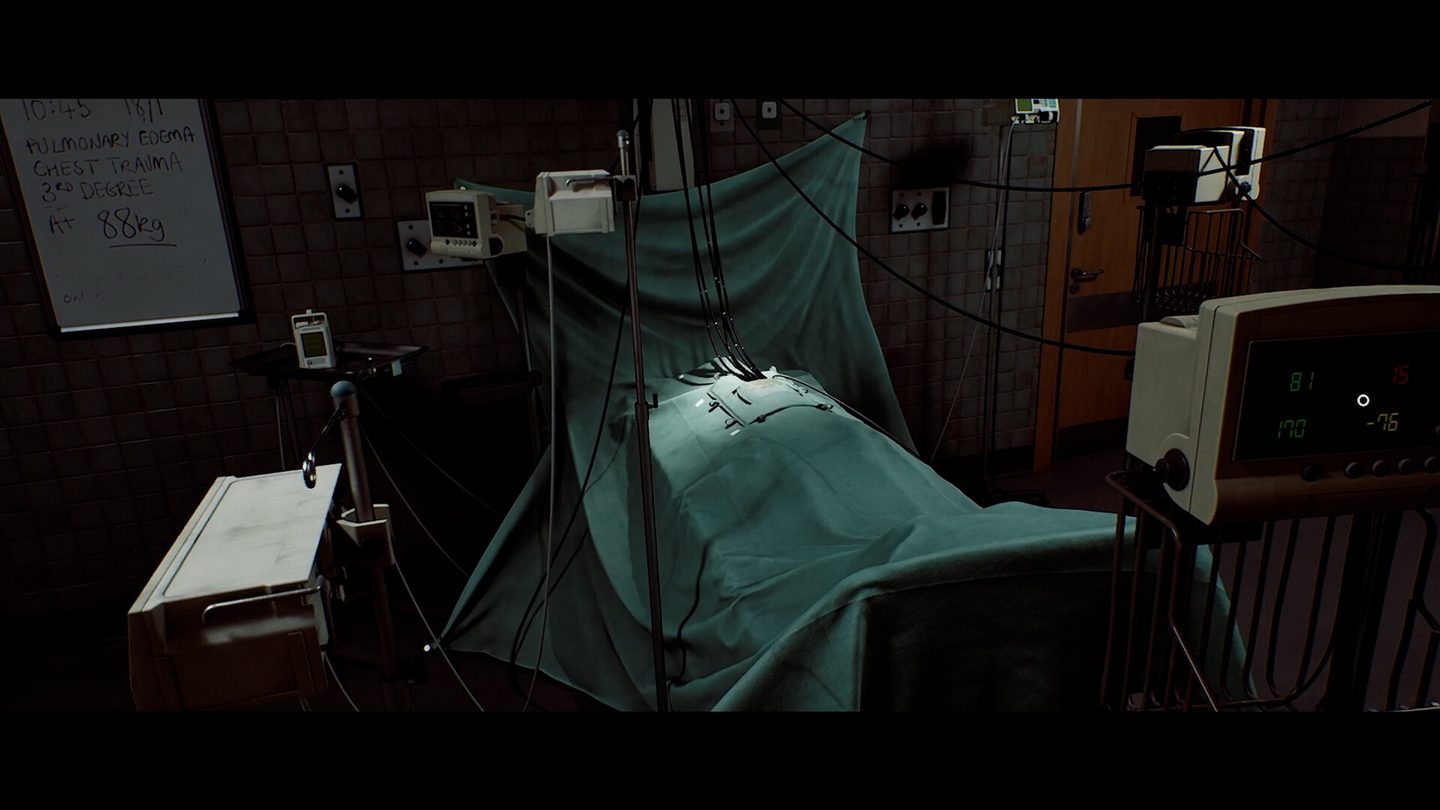
They overlap in the worst possible way. Streaming in a new area is exactly the moment a pile of never-seen material permutations arrives, so the streaming hitch and the compile hitch land on the same frame and get blamed on whichever one you already believed in. TechPowerUp’s own note is the tell: the stutter settles down once you have explored an area properly or come back to it later, which is the signature of something being cached on first contact rather than a GPU that cannot keep up.
Precaching only catches what it can see coming
Unreal has had an automatic PSO precaching system for several versions now, and it works. It walks the materials a scene is about to need, hands the driver the pipeline descriptions ahead of time, and the compile happens on a worker thread instead of in front of the player.
The catch is in “about to need”. Precaching sees the material instances that exist in the level, on the components, in the loaded assets. It does not see a dynamic material instance gameplay conjures the moment a mechanic fires. It does not see a permutation that only exists once a particular vertex factory meets a particular light and a particular shadow pass, if nothing in testing ever put those three together. Anything behind a switch nobody flipped during the gathering pass shows up at runtime as a surprise, and a surprise is a stall.
Foliage is the hardest case there is for this. Take one grass type: it needs a pipeline for the base pass, another for shadow depth, another for the velocity pass, more again once world position offset is doing wind on it, and Lumen — which TechPowerUp confirms is doing the lighting here — adds its own. Multiply by however many plant species the environment team placed. Then note that all of it arrives in bulk, at once, the instant you walk over a streaming boundary into a wooded stretch. Which is precisely where players say the hitching is worst.
Foliage has a habit of being the thing that breaks the budget. FromSoftware thinned out Limgrave’s grass to hold 30fps on Switch 2, and that was a considered decision made by people who knew exactly what the plants cost. The Townfall case is the same bill arriving without anyone having opened the envelope.
The sixty seconds in the menu
The community remedy doing the rounds is to launch the game, leave it sitting on the main menu for a minute, and only then press start. People report it helps.
That is diagnostic. It means the compilation is happening — there is a background pass chewing through pipelines while you look at the title screen. TechPowerUp puts it plainly: there is a shader step at launch, and it does not compile all the shaders. So the work starts, nothing gates you behind it, and whatever the step missed finishes during act one, in pieces, on your frame budget.
Compare that with the version of this that works. Infinity Ward’s Modern Warfare 4 beta moved shader compilation out of your first match entirely, running it as a background task from the moment the install finished, before you ever pressed play. Different genre, vastly different budget, same underlying bill — and one of the two decided who pays it and when.
I have seen that trade made in enough projects to know it is not an oversight. A blocking “preparing shaders” screen on first boot is honest and it is also four to eight minutes of a black progress bar, which is the first thing a launch-day reviewer photographs and the last impression you want on a horror game that opens on atmosphere. Somebody weighed a visible wait against invisible hitching and picked the hitching. Plenty of shipped Unreal titles have made the same call.
There is no frame generation in the build, for any vendor, which TechPowerUp notes alongside the missing XeSS support — an odd omission on a 2026 Unreal 5 title, where wiring it up is closer to an afternoon than a milestone. Worth saying that frame gen would not have saved this anyway. Interpolation needs two frames to work between, and a 300ms compile stall is a frame that never arrived.
Konami has admitted it
Screen Burn and Konami are not disputing any of the above. A notice went up on the game’s Steam news page and on the official Silent Hill account confirming an update is in development for the performance problems on the PC builds, Steam and Epic both. No date, and no detail on which of the faults it targets.
The timeline explains why the complaints arrived before the game did. Deluxe edition buyers got in on 22 September, two days ahead of the standard release on the 24th, which gave the reports a head start on the review cycle. Steam’s user sentiment through the first days has been reported both as mixed and as mostly positive at around seven in ten — the counts were small and moving fast enough on 25 September that I would not lean on either figure. Performance and crashes are what the negative ones are about, consistently.
What this does to the review
Eleven verdicts averaged 8.0 across a four-point spread when the embargo lifted on the 21st, with the atmosphere getting near-universal praise and the stealth taking most of the damage. None of that was wrong. Those were review builds, on review hardware, played by people who had already sat through whatever first-boot compile there was before they started taking notes.
A score describes a game. Frame pacing describes a build, and builds get patched — this class of fault more often than most, because the fix is usually a wider precache gather rather than a rewrite. What it costs in the meantime is the one thing Townfall was reviewed well for. Fog, silence, a village you are frightened of walking into, and a 300ms freeze every time the village gives you a new tree.
Hardware figures above are DSOGaming’s single-bench result and TechPowerUp’s thirty-five-card benchmark, both published after the 24 September release. The patch confirmation is Konami and Screen Burn’s own notice on the game’s Steam news page and the official Silent Hill account, reported on 25 September; no release date has been given for it.