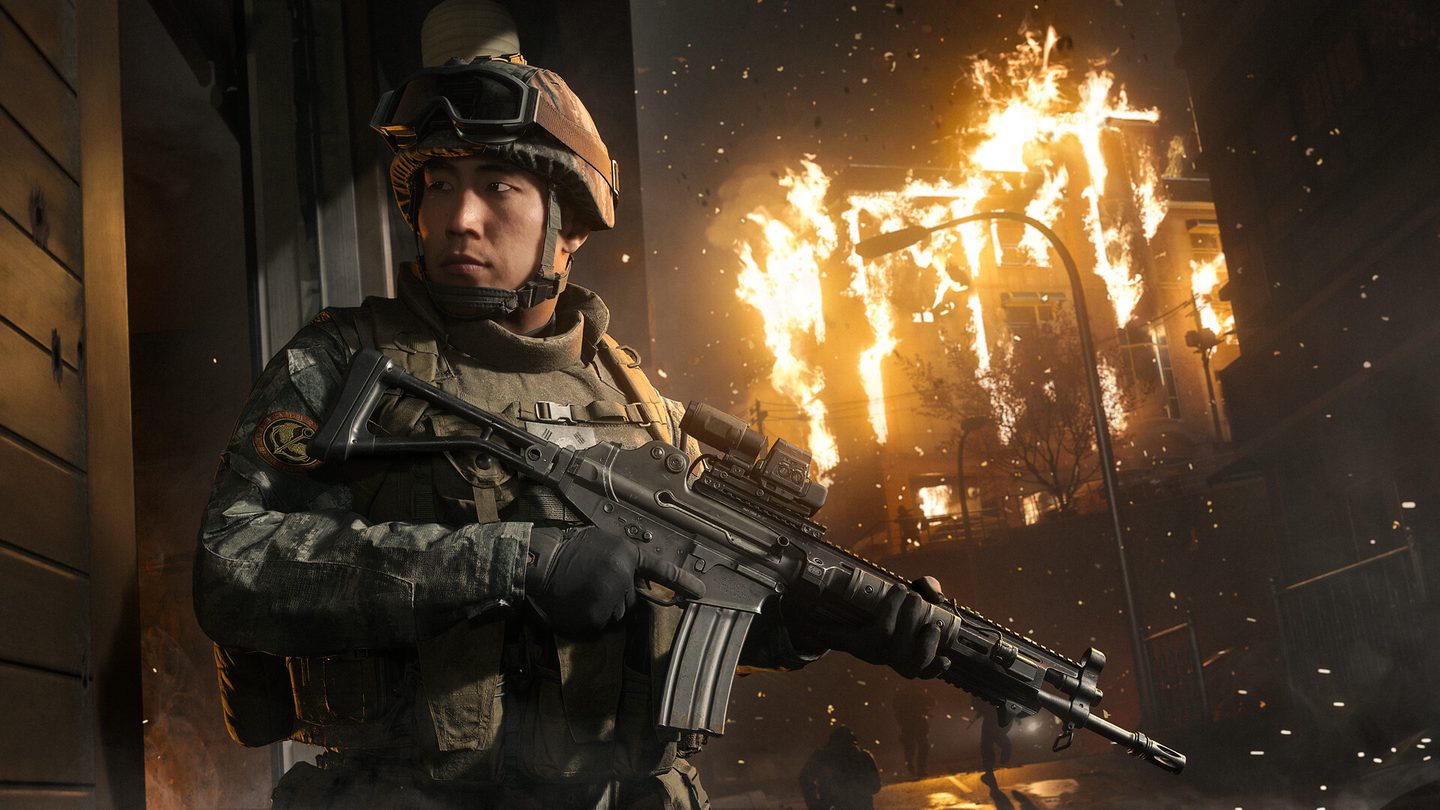
Infinity Ward and Beenox have put a fix into the Modern Warfare 4 PC beta for something Call of Duty players have been complaining about for years: the freeze-frame stutter that hits the first time the game has to draw something it has not drawn yet. The studios call it Shader Preloading, and the mechanism is almost aggressively simple — compile the shaders before the player launches the game, not during their first firefight.
On Battle.net, Preloading kicks in from the moment the beta finishes installing. A system tray notification says “Shader Pre-Loading Will Start,” it runs in the background at low priority, and you can cancel or disable it in settings. Steam players get a slightly worse deal for the first beta weekend — one full compile pass still has to happen on first launch — but Activision says Weekend Two brings preloading to Steam too, and that after MW4 ships properly, everyone only pays that compile cost once. (TweakTown, Neowin, Beebom)
If you have never hit this on PC, here is what it looks like: everything is smooth, then a new weapon skin or a map area you have not seen yet swims into view, and the game hitches for a beat while it compiles the exact shader variant that scene needs. It is the GPU driver being asked, live, mid-match, to turn shader source into machine code it has never built before.
Why this takes so long to fix, and why it is not really about Call of Duty

I want to be fair to Infinity Ward here, because this problem is bigger than one studio and it is worth explaining why.
Modern PC rendering runs on pipeline state objects — bundles of shader code, blend modes, depth settings and vertex layouts that the GPU driver has to compile into something the hardware can actually execute. A big modern game can have tens of thousands of PSO permutations: every material, every lighting condition, every weapon attachment combo, every post-process stack a scene might be running, multiplied together. You cannot ship them all precompiled for every GPU and driver version on the market, because the driver decides how to compile them, and driver behaviour changes between an RTX 3060 and an RX 7900 and a laptop iGPU running last year’s Radeon drivers.
So studios are stuck choosing between three bad options: compile on first encounter and eat the stutter live, in front of the player, at the worst possible moment; ship a shader cache built on one reference machine and hope it transfers; or do what MW4 is doing here, which is push the compile pass earlier, into a moment the player is not actively trying to aim at someone.
None of those options make the underlying cost disappear. Shader Preloading does not make compilation faster. It moves it to before you care. That is a genuinely useful trick, and it is also, structurally, the same trick a texture streaming budget uses — spend the time somewhere the player is not looking, so the moment that matters stays clean.
The part that actually matters for anyone who builds content, not just code
Here is the angle that gets skipped in most of the coverage of this: shader variant count is not a rendering-engineer problem you can fix after the fact. It is an art-direction decision made months earlier, one material setting at a time.
Every time an environment artist enables a new feature on a material — a extra detail-normal layer, per-pixel wetness, a vertex-blend on top of a decal — that is a new permutation somewhere downstream, multiplied against every lighting path and quality tier the engine supports. On a small indie project that is nothing. On a live-service shooter with a rotating cosmetics catalogue, seasonal maps, and a battle pass shipping new skins every few weeks, that number compounds constantly, and it never goes back down. Nobody deletes shader permutations. Content only accretes.
That is the quiet reason Call of Duty specifically has this problem worse than most: not because Infinity Ward’s engineers are behind anyone else’s, but because the game’s entire business model is engineered around a firehose of new material variants, shipped every season, forever, without ever meaningfully sunsetting the old ones. Preloading is a real fix for where the stutter lands. It does not touch why the shader count keeps growing in the first place — and that second problem belongs to art direction and production planning as much as it belongs to engine code, which is exactly why it never gets talked about outside of engineering circles.
Worth watching, not solved yet
Shader Preloading is a genuinely good, overdue piece of engineering, and putting it in a beta first — with a visible toggle players can turn off — is the right way to ship something that touches install-time behaviour. Whether it holds up once MW4’s live cosmetics pipeline starts adding new permutations every week, after launch, under review-bombing pressure if it stutters again, is the actual test. A background compile pass buys you a clean first hour. It does not buy you a shader budget that stays flat for a year of seasonal content, and nothing in what has been announced so far suggests Infinity Ward is trying to cap that number rather than just hide the cost of it better.
Details above reflect Modern Warfare 4’s PC beta as announced by Activision and reported by TweakTown, Neowin and Beebom on 20 August 2026. Steam’s rollout of Preloading is scheduled for the beta’s second weekend, per Activision’s own blog post — worth checking back on once that build is live.