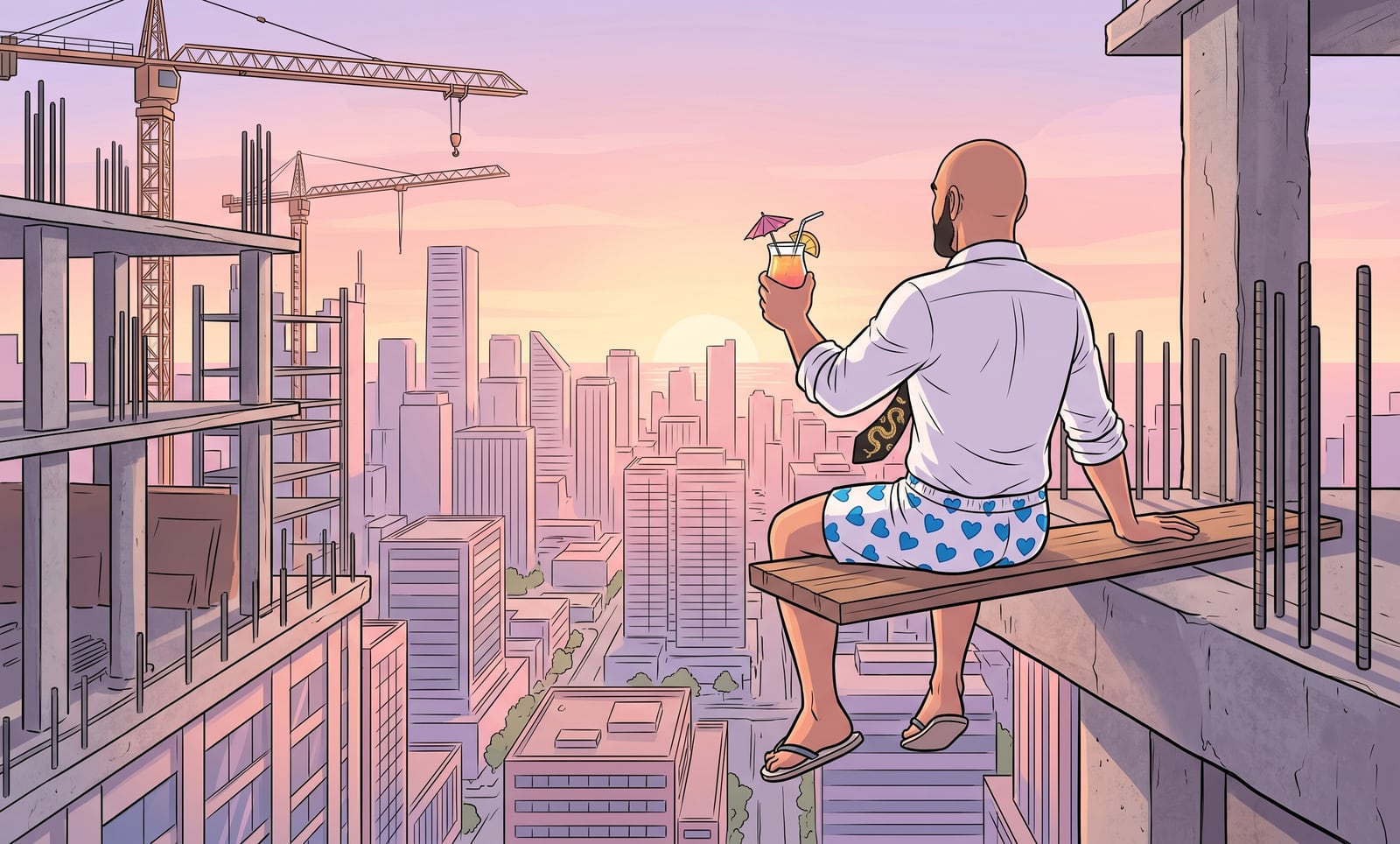
Everything I watched on Monday night was built to be looked at rather than played. Two hours of footage cut to survive a stage, an audience, and a clip on someone’s timeline — and I say that as someone who has built exactly that kind of thing, and who will explain further down what it cost.
Opening Night Live is a symptom rather than a cause, and this year it was unusually honest about it.
Gilded cages
Look at what we can do now.
Nanite eats the polygon budget that governed environment art for twenty years. Lumen means you can move a light source at runtime and the room answers. A phone in your pocket produces a gaussian splat of a real place in an afternoon. MetaHuman hands you a face that would have taken a small team a month in 2012.
We have never been this equipped. Not close.
And the headline output of the biggest showcase of the year was: a remaster of a game from 2015, a remake of a strategy game from 1999, and the third instalment of a remake of a game from 1997.
I want to be careful here, because the easy version of this argument is stupid. Remasters are not a moral failing. Old games deserve to keep running. The Witcher 3 remaster is free, which is more than most publishers manage, and Heroes 3 has earned every ounce of the affection people have for it.
But line the tools up next to the output and something does not add up. We built machinery capable of describing anything, and we mostly point it backwards.
The cage is gorgeous. It is still a cage.
All of it fake
The word the industry uses for the thing I built is “vertical slice”, and it is a good name, because a slice is exactly what it is: a cut through a cake that does not exist yet.
You take the two minutes somebody is going to see. You light it for one camera angle. You put the good asset where the eye lands and a box with a texture on it where it does not. You do not build the systems, you build the appearance of the systems working. Everyone does this. It is how you get money to make the rest.
The trouble starts when the slice is the only thing that ever exists.
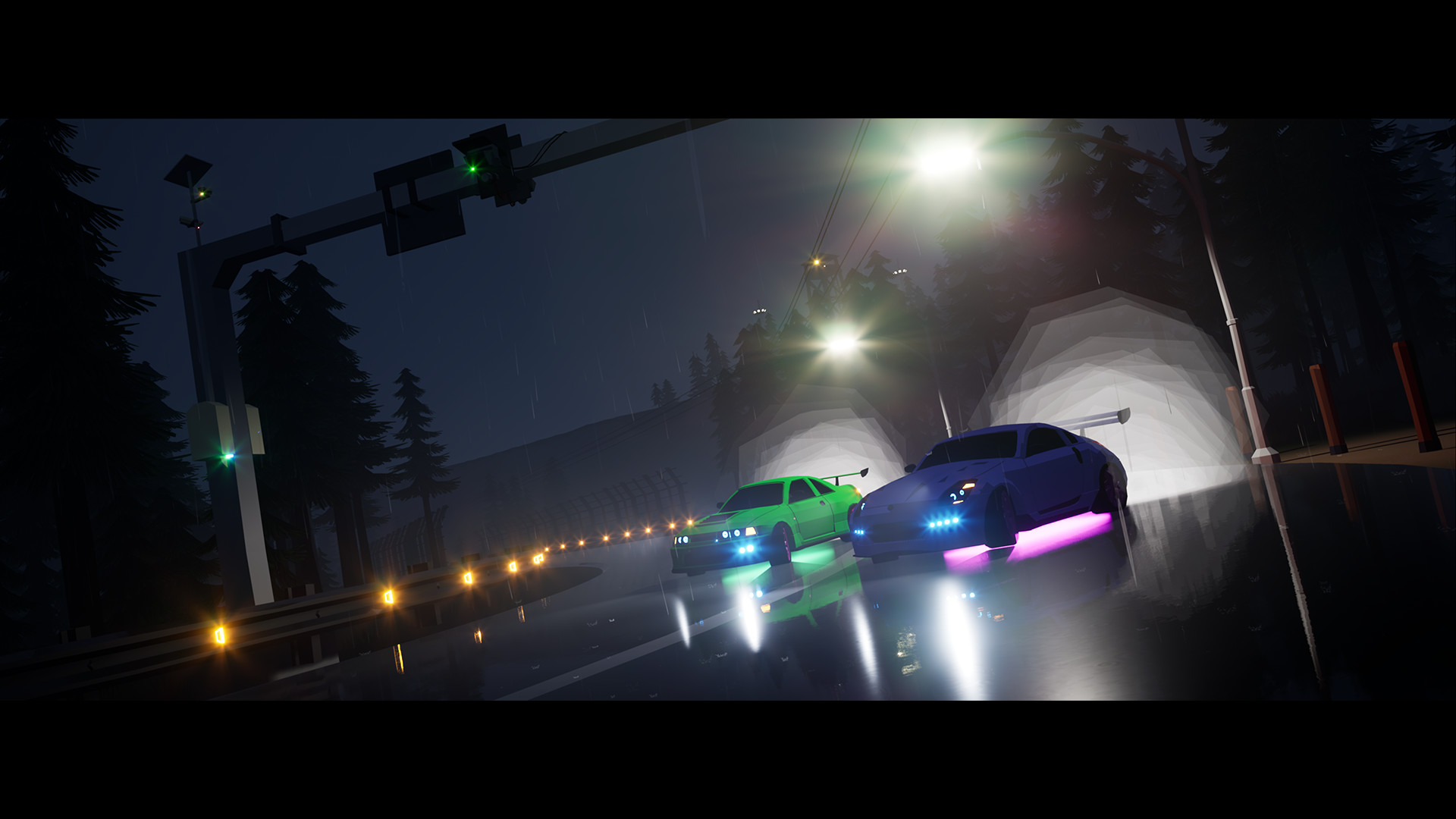
A slice, and a gate
Some years ago I worked on a vertical slice for N31, a stylised open-world driving game. Low-poly cars, saturated palette, a city built to be driven through fast. The kind of art direction I like, because it earns its look through decisions rather than through budget.
We built the slice. We sent it to Epic MegaGrants for approval.
We never moved to the next phase.
The Steam page is still up, as far as I can tell. It still says coming soon. The screenshots on it have not changed since January 2023.
I am not telling you this as a grievance. Projects stall for a hundred reasons and most of them are nobody’s villainy. I am telling you because of what it taught me about the shape of the thing: we had poured everything into the two minutes that would be looked at, and the gate we were building for was a gate that decides based on looking.
That is the machine. Build a thing to be looked at, show it to people whose job is to look, and hope the looking converts into permission to build the part that matters.
Sometimes it does not convert, and what you are left with is a very good-looking two minutes.
Eleven years
Here is what broke my own argument.
In 2015 The Witcher 3 was the ceiling. Graphics, interaction, density — it moved what people thought a game could be, and it moved it for me personally. I remember the impact it had.
It is eleven years old now. Everything technical about it has been surpassed, some of it twice over. The lighting is baked. The foliage is cards. The LODs pop if you look sideways while riding.
And it still stops me. I go back and there are vistas that make me stop the horse, and an action-RPG rhythm that holds up against things built a decade later with an order of magnitude more compute.
Go back to a scene you made a long time ago and it is like watching a very old film after a run of new ones. You find every flaw in the world. But if the thing has a real soul, that part stays, and it stays beautiful.
That is not a technical property. You cannot buy it with Nanite.
The part nobody notices
So what is it, in production terms? Because “soul” is a word people use when they have stopped trying to explain something.
I think it is this: somebody sweated a detail that nobody was ever going to notice.
There is one in almost everything I make — 2D, 3D, animation — because I am enough of a perfectionist that I cannot leave it. Days lost on a seam, a transition, a piece of timing that not one person will consciously see. It never shows up in a review. It never gets pointed at in a trailer, because it is invisible by definition.
But it is the difference. A world where a thousand invisible decisions went the right way feels different to stand in, and every one of us can tell, and none of us can say why.
A vertical slice cannot contain that. There is no room in two minutes for a thousand invisible decisions, and no reason to make them — the camera is not going there. You make the decisions that will be seen. That is the brief.
Which is why a slice can be flawless and still feel like nothing.
Where the void really sits
The emptiness in “architectures of the void” is not a shortage of technology. We are drowning in technology. It is a shortage of reasons.
We can build anything, so we build the thing with the clearest reason attached: a name people already love, a corridor they already walked, in 8K. The reason comes pre-approved. Nobody has to be convinced. Nobody has to gamble on whether a thousand invisible decisions will add up to something.
And the industry keeps being surprised when the pre-approved thing feels hollow, as though fidelity were the missing ingredient.
An eleven-year-old game with baked lighting and cardboard trees is still out there stopping people mid-ride, because of how many times somebody decided to do the harder thing in a place where it would never be seen.
We do not have a technology problem. We have a nerve problem.
Written on 26 August 2026, the week of Gamescom. The Witcher 3 — Remastered is free for existing owners on 29 September; Songs of the Past is dated 2027. N31’s Steam page is listed under Croworks and was, when I checked this morning, still marked coming soon.