Electronic Arts stopped being a public company on 4 August 2026. A consortium led by Saudi Arabia’s Public Investment Fund, alongside Silver Lake and Jared Kushner’s Affinity Partners, closed a $55 billion buyout at $210 cash per share — the biggest leveraged buyout on record, of a company whose games are on more of our hard drives than we probably want to admit.
CEO Andrew Wilson stayed on, telling employees the new owners would “invest boldly, accelerate innovation, and build the next generation of games and experiences.” That is the kind of line every closing statement contains. What actually tells you where this is going is the number that leaked nine days later.
The part that matters is the debt, not the price tag
$55 billion sounds like conviction. It is really a financing structure, and the structure is what determines what happens to the people making the games.
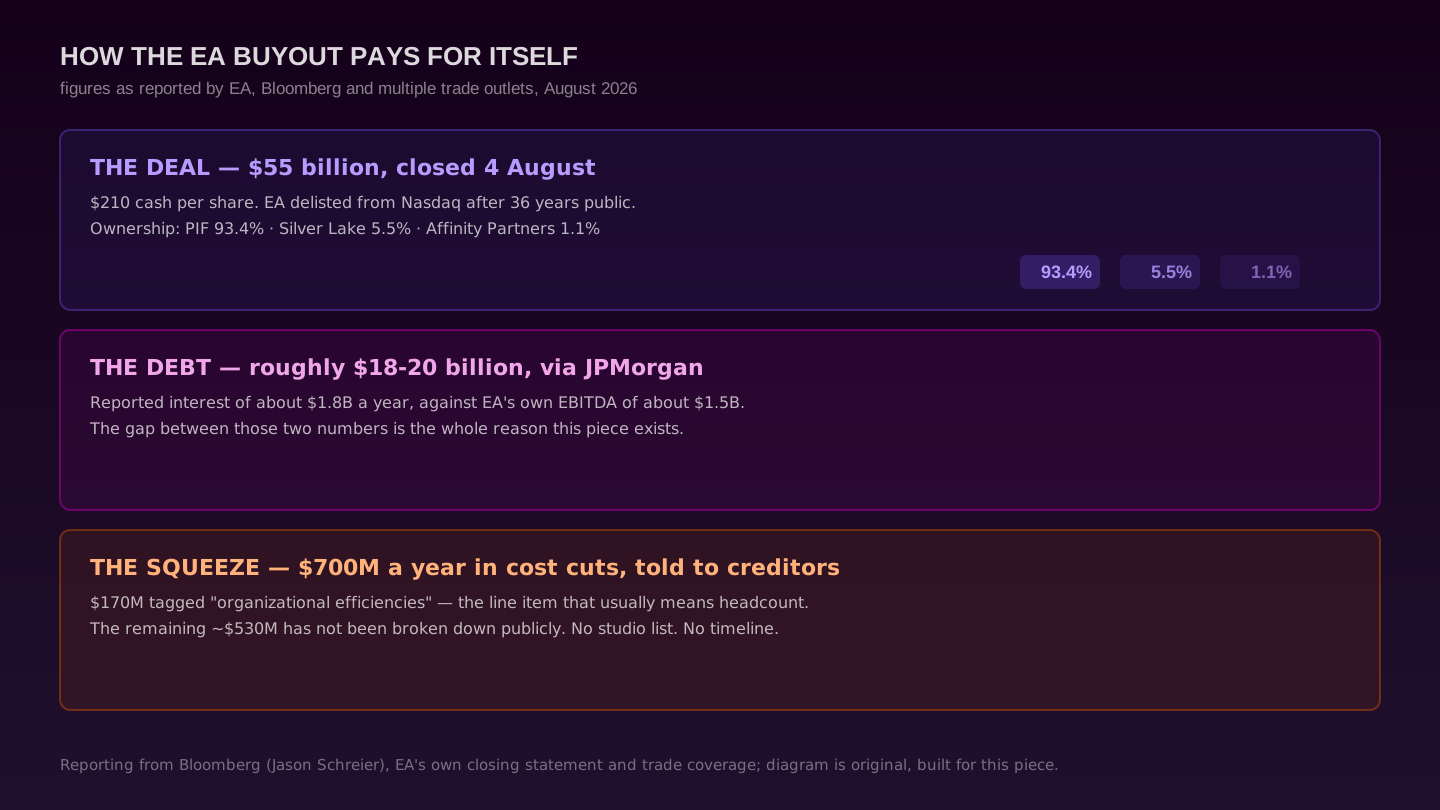
JPMorgan financed roughly $18 to 20 billion of the purchase with debt — reports vary slightly on the exact figure, which is itself a sign of how fresh this is. Debt of that size at current rates works out to somewhere around $1.8 billion a year in interest. EA’s own annual EBITDA is estimated at roughly $1.5 billion. Servicing the loan alone would eat more than the company currently makes.
That gap is not a rounding error you grow your way out of. It is the reason a leveraged buyout is, structurally, a machine for finding cost to cut — because the new owners have promised lenders a repayment schedule that the existing business does not generate.
$700 million, and the line item that gives it away
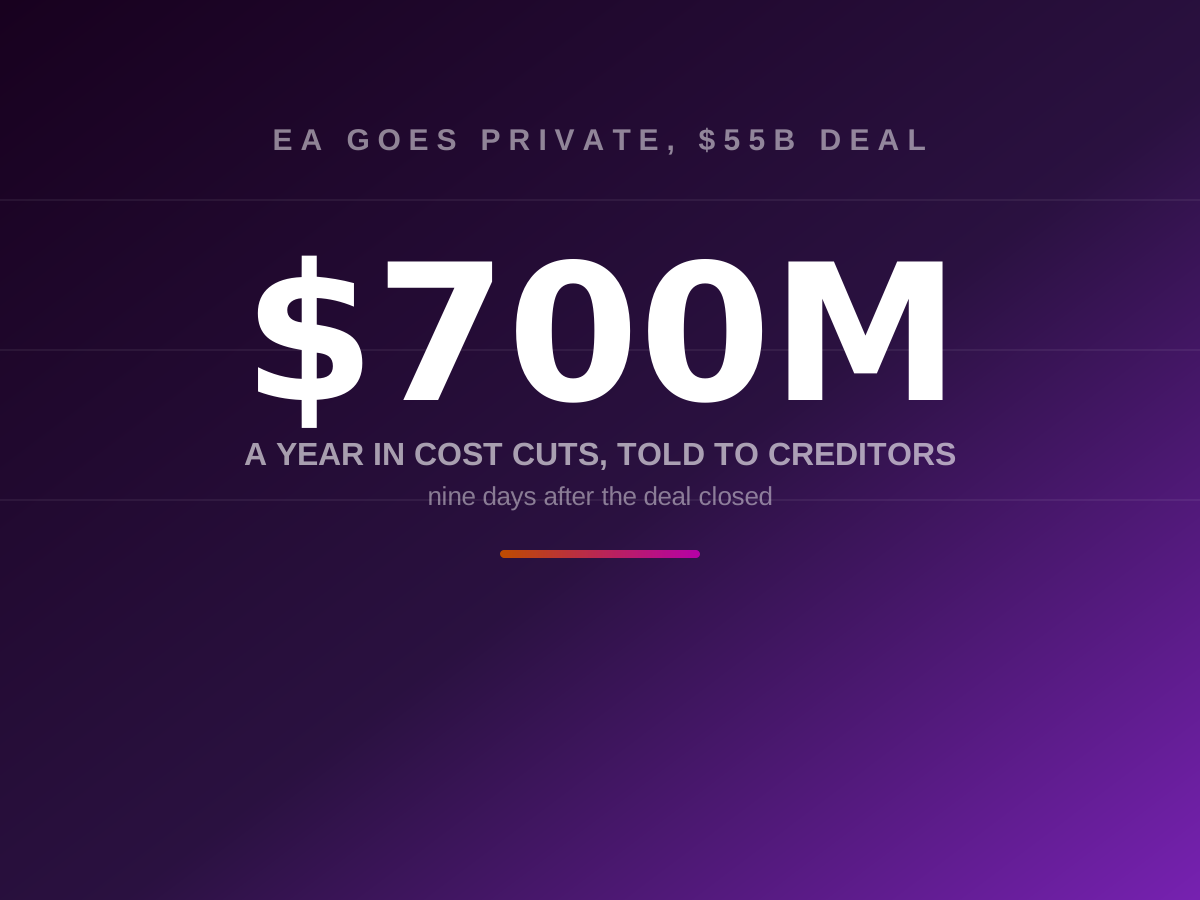
According to Bloomberg’s Jason Schreier — reporting since corroborated by Push Square, GamesRadar+, Kotaku and others — EA has told its creditors it intends to cut $700 million in annual costs. Of that, $170 million is specifically labelled “organizational efficiencies.” EA has not said what that phrase covers. Nobody who has watched this industry for more than a year needs it spelled out — that is the line item that means headcount.
The remaining roughly $530 million has not been broken down publicly. No studio list, no numbers, no timeline. EA has not confirmed any of it on the record. Worth saying plainly: this is sourced reporting, not a company announcement, and it should be read that way until EA says otherwise.
Why BioWare’s name is the one everyone reaches for
Every conversation about where the cuts land ends up at the same studio. BioWare was already restructured in January 2025, after Dragon Age: The Veilguard undersold expectations — more than a hundred people let go, the studio’s headcount now under a hundred, down from a team that once numbered in the hundreds across multiple projects. That is the size of studio you can decide is no longer worth keeping, rather than the size you invest in.
The speculation making the rounds — and I want to flag it exactly as that, speculation, because nobody at EA has confirmed a target list — is that a debt-loaded EA is more likely to sell off smaller studios and franchises outright than to keep funding them through a slow rebuild. Dragon Age gets named in that context more than anything else EA owns.
There’s a separate, uglier thread running alongside all of this: reporting that Wilson earned $38.6 million in the same fiscal year EA laid off the team behind Battlefield 6’s live-service arm, and that the buyout could net him up to $125 million more depending on how his equity is structured. I’m not going to pretend to know how that number should make anyone feel. I’ll just note that it exists in the same news cycle as “$170 million tagged organizational efficiencies,” and leave you to do the arithmetic on what that juxtaposition looks like from inside a studio.
The angle I actually care about: what happens to the tools
Here’s the bit that is genuinely my corner of this story rather than borrowed business reporting.
EA has spent two decades building and maintaining Frostbite, its proprietary engine, across genres it was never really designed for — sports, RPGs, shooters, all forced through one shared pipeline. It is expensive to keep current and it requires people who already know it, which is a smaller hiring pool than an engine everyone has touched. Back in 2023, EA Motive already made the call to build its Iron Man game on Unreal Engine 5 instead, and its general manager said the quiet part out loud at the time: a bigger pool of experienced developers means an easier hiring process, full stop.
That decision predates the buyout by three years. I’m not reporting that Frostbite is being retired — nobody has said that, and I’m not going to state it as fact. What I will say, as someone who has spent years inside proprietary pipelines, is that maintaining an in-house engine across a whole publisher’s slate is exactly the kind of standing cost a debt-driven cost review goes looking for, and EA already had one foot out the door before the interest payments started. If you work in tech art at a studio that still leans on Frostbite, that context is worth having, not because anything is confirmed, but because it tells you which direction the incentives now point.
What I’d actually do with this
Don’t treat this as news about one studio. The $700 million target is company-wide and unallocated. Reading tea leaves about which specific team is safe is a waste of time nobody currently has the information to do properly.
If you’re job hunting toward EA right now, ask about engine and tooling direction in the interview. It is a completely normal question, it tells you something real about stability, and under a company this size mid-restructure it matters more than usual.
Watch for the pattern, not the headline. Debt-funded acquisitions squeeze through outsourcing and contractor churn as often as through headline layoffs, because it is quieter and easier to reverse. If EA’s outsourcing partners suddenly have a lot more open contract work, that is the story continuing without a press release attached to it.
Give the reported numbers time to firm up. $18 billion versus $20 billion, $700 million versus some other figure — these will get corrected as EA’s actual filings under private ownership become available, which happens less often and less publicly than it did when it reported quarterly. I’ll come back to this once there’s an actual studio list instead of a leaked target.
The headline was always going to be the $55 billion. The number that decides whether this changes your working life is the $700 million, and right now that number does not have names attached to it yet. That is worth watching, not panicking about — but it is worth watching.