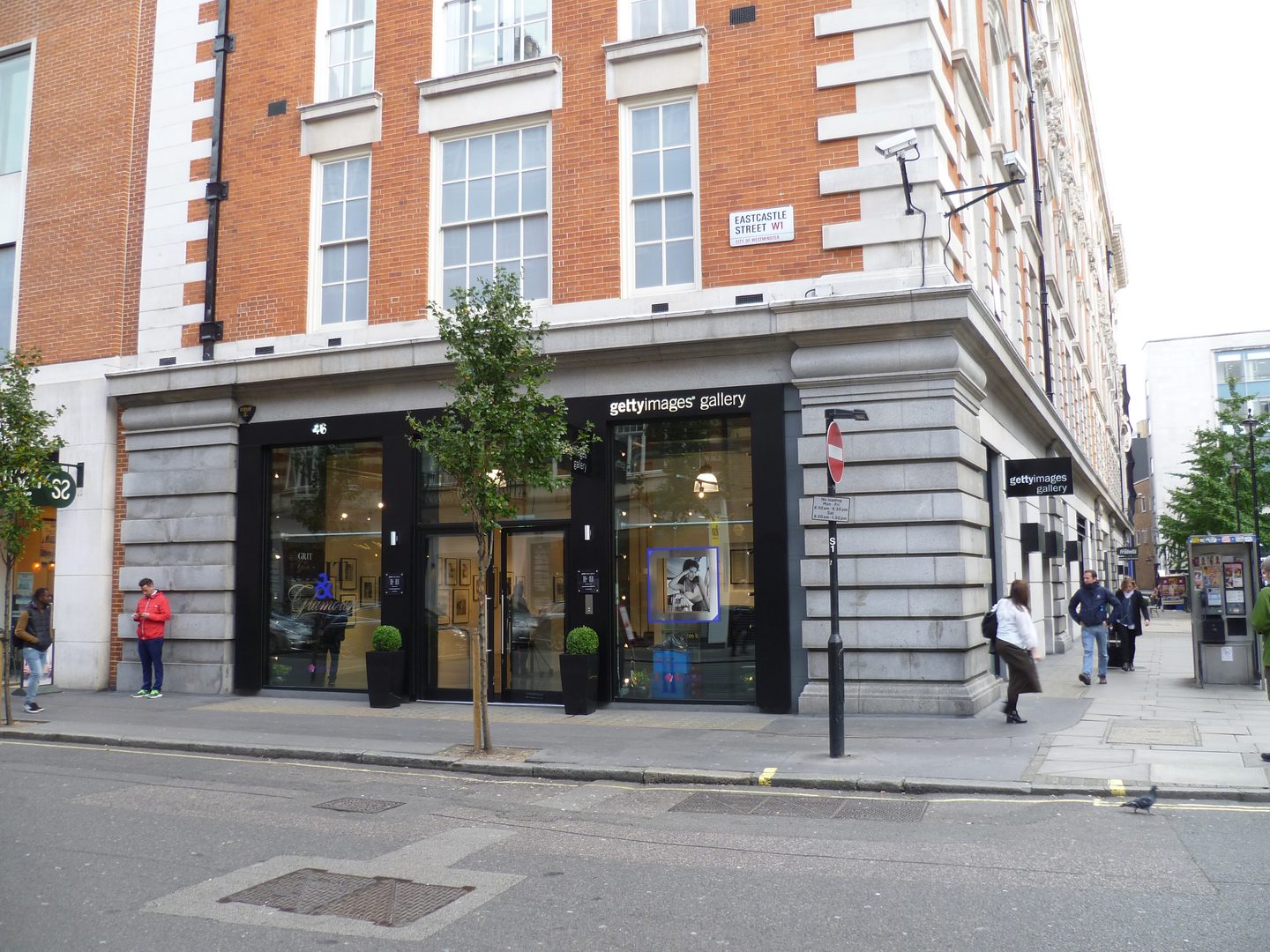
Getty Images filed for Chapter 11 on 21 October 2026, in the US Bankruptcy Court for the District of Delaware. Prepackaged, which means the deal was finished before the paperwork landed: a restructuring support agreement signed on 12 October, creditors already counted, and a hearing set for 14 December to bless it.
What comes out the other end is a private company. Affiliates of the Getty family and Koch Equity Development are putting in up to $533 million of new equity and taking full ownership. Existing shares are cancelled — public shareholders get nothing — and the plan clears more than $500 million of what filings put at roughly $1.46 billion in funded debt. Holders of 83.5% of the unsecured notes agreed to retire $270 million of them. Getty expects to be done by the end of the year.
For anyone whose pictures sit in that library, the sentence that matters is a duller one. Getty says it will keep operating in the ordinary course with no expected impact on contributors, customers, employees, partners or vendors. Payments continue. I could find nothing in the coverage or in Getty’s own statement about royalty rates changing, which is worth saying precisely: nothing announced is not the same as a commitment that nothing will.
The cause Getty names, and the one the headlines name
Most write-ups led with AI, and you can see why. Getty sells photographs, and the last three years have put a free, instant, roughly-good-enough alternative in front of every art director with a Friday deadline.
Getty’s own disclosure points somewhere else. It attributes the company’s financial condition to non-operational events: judgments in warrant litigation, the collapse of the Shutterstock merger, and the cost of servicing the debt. The merger is the expensive one to read about. The UK Competition and Markets Authority would have cleared it only if Shutterstock sold off its editorial business; Getty refused that condition and terminated the deal on 30 June 2026, having spent, by its own account, more than $100 million in professional and financing fees getting that far.
Both readings hold. A balance sheet like that is survivable while revenue grows, and generative imagery is a reasonable explanation for why it stopped growing fast enough. CNBC framed it as debt plus AI competition. Getty’s lawyers, writing for a judge, named the warrants and the merger. Neither party is lying; they are answering different questions.
The lawsuit worth remembering here
Getty spent those same years as the loudest legal opponent of image generators, which makes the UK result sting more in hindsight. In November 2025 the High Court gave most of that case to Stability AI. Getty dropped its central claim — that Stability trained Stable Diffusion on Getty pictures — partway through trial, in part because the evidence about what had gone into the training set was thin. The judge dismissed the secondary infringement claim on the reasoning that the model does not store or reproduce the works. Getty won a narrow point about its watermark turning up in generated images, which the judge described as “both historic and extremely limited in scope”. The US case is still going.
The company with the archive, the lawyers and every motive to establish in law how training data works came away without that ruling. Whoever tries next will be doing it from a weaker position and with a smaller budget.
What a stock library does in a pipeline
This is the part that touches the desk. Getty and iStock are not where anyone sources hero art, and a 3D artist who says “I don’t use stock” usually means they don’t buy illustrations. The library does three other jobs:
- Reference. The rust pattern on a specific kind of ship hull, the way a particular café in a particular city is actually lit, what a 1970s switchgear panel looked like. Searchable, dated, captioned, and shot by someone who was standing there.
- Editorial clearance. When a piece needs a real place or a real crowd, licensed editorial imagery is the only version that survives a legal read.
- Indemnity. The reason a studio pays for a photograph it could have found on a blog. The licence is a paper trail, and the paper trail is what a client is buying.
Generative images are competitive on the first job and useless on the other two. A model will give you a plausible switchgear panel in four seconds. It will not give you a captioned photograph of the one that was installed in 1974, and it will not give you anyone to point at when a rights holder writes in.
Who owns the window you keep your work in
None of this is unfamiliar. The platforms artists depend on keep changing hands above their heads, and the reassurance always arrives in the same register — in August, Epic sold ArtStation and Sketchfab to KitBash with promises of the reassuring kind, portfolios and libraries carrying on exactly as before. Getty’s filing uses nearly identical language about contributors.
The difference worth watching is who the owner answers to afterwards. A listed company has to publish what it pays out and explain a change in terms. A company owned by a family office and a private investment arm does not. If contributor rates move in 2027, the first anyone hears of it will be an email.
That is the same unanswered question as Unity promising Asset Store artists a cut of Spark without writing down the rate: the commitment is public, the number is not, and the number is the whole agreement.
The honest state of it
Confirmed: filed 21 October in Delaware, prepackaged, up to $533 million of new equity from Getty family affiliates and Koch Equity Development, shares cancelled, more than $500 million of debt cleared against roughly $1.46 billion funded, hearing 14 December, completion targeted for year end, and Getty’s statement that operations and contributor payments continue.
Not confirmed: anything about future royalty rates. Reports also differ on what triggered the NYSE halt — one has the shares under two cents, another has them at twelve cents on 29 September — so treat the delisting detail as reported rather than settled. I could not reach Getty’s newsroom release or the Delaware docket directly from here; the figures above are the ones multiple outlets published independently and agreed on.
The hearing is on 14 December. Anybody with images in that library has until then to read their contributor agreement properly, which is a dull piece of homework and a better use of an evening than arguing about diffusion models.