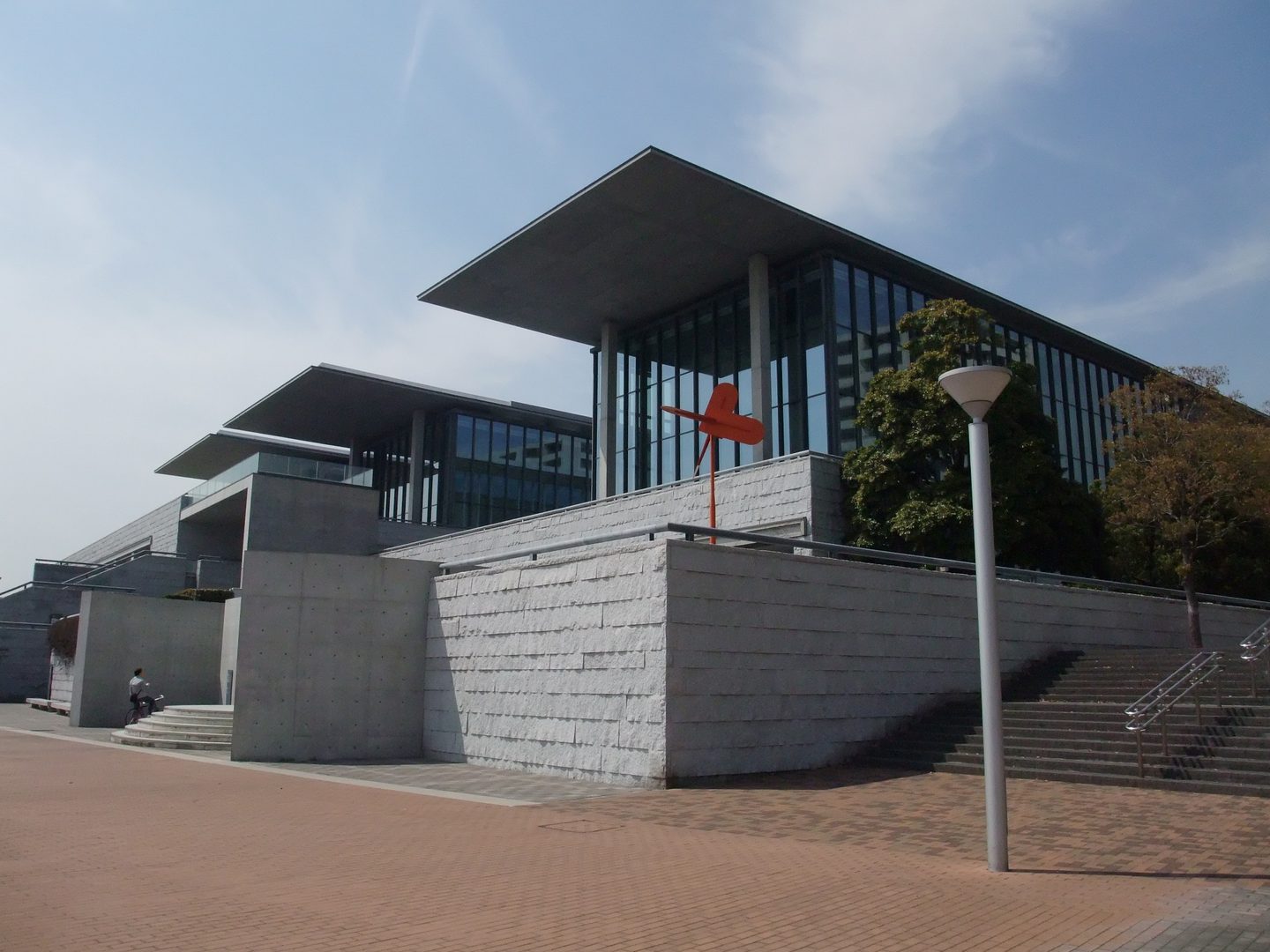
I found this in the feeds as a straightforward museum listing: Ghost in the Shell: The Exhibition has moved on from its opening run at TOKYO NODE and is now in its Kansai leg, at the Hyogo Prefectural Museum of Art, open through 30 August. Framed as a career-spanning retrospective — original drawings, storyboards, setting materials, more than 1,600 pieces by the organisers’ own count — timed to both the franchise’s history and the new THE GHOST IN THE SHELL anime series that premiered in July. Standard anniversary-tour stuff, and I almost skipped past it.
Then I remembered what “setting materials” means for this particular franchise, and why I’d actually get on a train for it.
The part that isn’t about the Major
Ghost in the Shell’s reputation rests on Motoko Kusanagi and the philosophy — ghosts, shells, what counts as a self when the body is swappable. Fair enough, that’s the franchise’s whole pitch. But the 1995 film’s other legacy, the one that gets talked about far less outside art circles, is the city. Art director Hiromasa Ogura and his background team built a dense, humid, semi-fictional Hong Kong-inflected Niihama that still gets cited as a reference point for cyberpunk environment design three decades later — Blade Runner gets the credit for inventing the aesthetic, Ghost in the Shell is where a lot of working artists actually learned to build it.
What makes an exhibition like this useful, rather than just nostalgic, is that it’s showing the setting materials as artifacts — actual hand-painted backgrounds, key frames, the layout sheets that decided where the camera sat before a single cel went down. That’s a completely different reference than scrolling a fan Pinterest board of film stills. A still shows you the result. A layout sheet shows you the decision.
What that team was solving without a shader budget
Here’s the thing that struck me reading up on this ahead of writing it: everything that makes Niihama read as a living, breathed-in place was achieved with paint, compositing layers and camera moves, on a production with none of the tools a real-time environment artist takes for granted now. No volumetric fog system, no GI bounce, no procedural grime shader. Just an art director who understood that density and atmosphere are decisions, not render settings.
A few of those decisions are still the exact ones I’m making on a modern scene, just with different tools:
- Depth through haze layers, not geometry. Stack enough atmospheric perspective into a matte painting and a flat background reads as kilometres deep. I do the same thing today with fog volumes and depth-based fresnel, and I’m solving the identical problem: tell the eye how far away something is without modelling it.
- Signage as population density, not vector clutter. The market and rooftop shots are covered in signage, cabling, pipework and laundry lines that do the job of implying a city full of people the animation budget couldn’t afford to draw. That’s the same trick a trim-sheet-and-decal pass does in a game environment: fake density cheaply, in the layer the eye skims rather than the one it studies.
- Warm-cool contrast doing the lighting design’s job. Ogura’s palette leans hard on sodium-orange interiors against cold blue-grey exteriors, which is doing exactly what a lighting artist reaches for a colour-graded LUT to do now — except here it’s baked into the paint, scene by scene, by hand.
That holds up under a second look. Those are still the load-bearing decisions in any “future megacity” environment I’ve seen shipped in Unreal or Unity in the last few years. The tools changed. The problems Ogura’s team was solving with an airbrush in 1995 didn’t.
Why the exhibition format actually matters here
I’d normally be skeptical of an anniversary tour — they tend to be merchandise with a ticket price. What tips this one into something worth flagging is the AR layer the Kansai leg has added on top of the original-materials display: visitors can view parts of the show through AR glasses alongside a Tachikoma, according to the exhibition’s own materials. I’m not the target audience for a mascot-robot AR walkthrough, and I’d genuinely rather see the layout sheets under glass at eye level for twenty extra minutes. But it’s a sign someone on the production side understands that the setting itself, not just the cast, is what people are coming to see up close — which is exactly the read I’d want an environment artist’s work to get.
If you’re anywhere near Kobe before 30 August, this is the rare franchise exhibition where the environment art is the actual draw, not the thing you walk past to get to the merch stand. If you’re not, the original 1995 film and Innocence are still the better reference than any exhibition photo — go look at the backgrounds themselves, frame by frame, and pay attention to what’s doing the work when nothing is moving.
Exhibition details — venue, run dates, the Kansai leg’s AR features and materials count — are as reported by Ghost in the Shell’s official exhibition site and Anime News Network’s coverage of the Hyogo run. The craft reading of the 1995 film’s background art is my own.