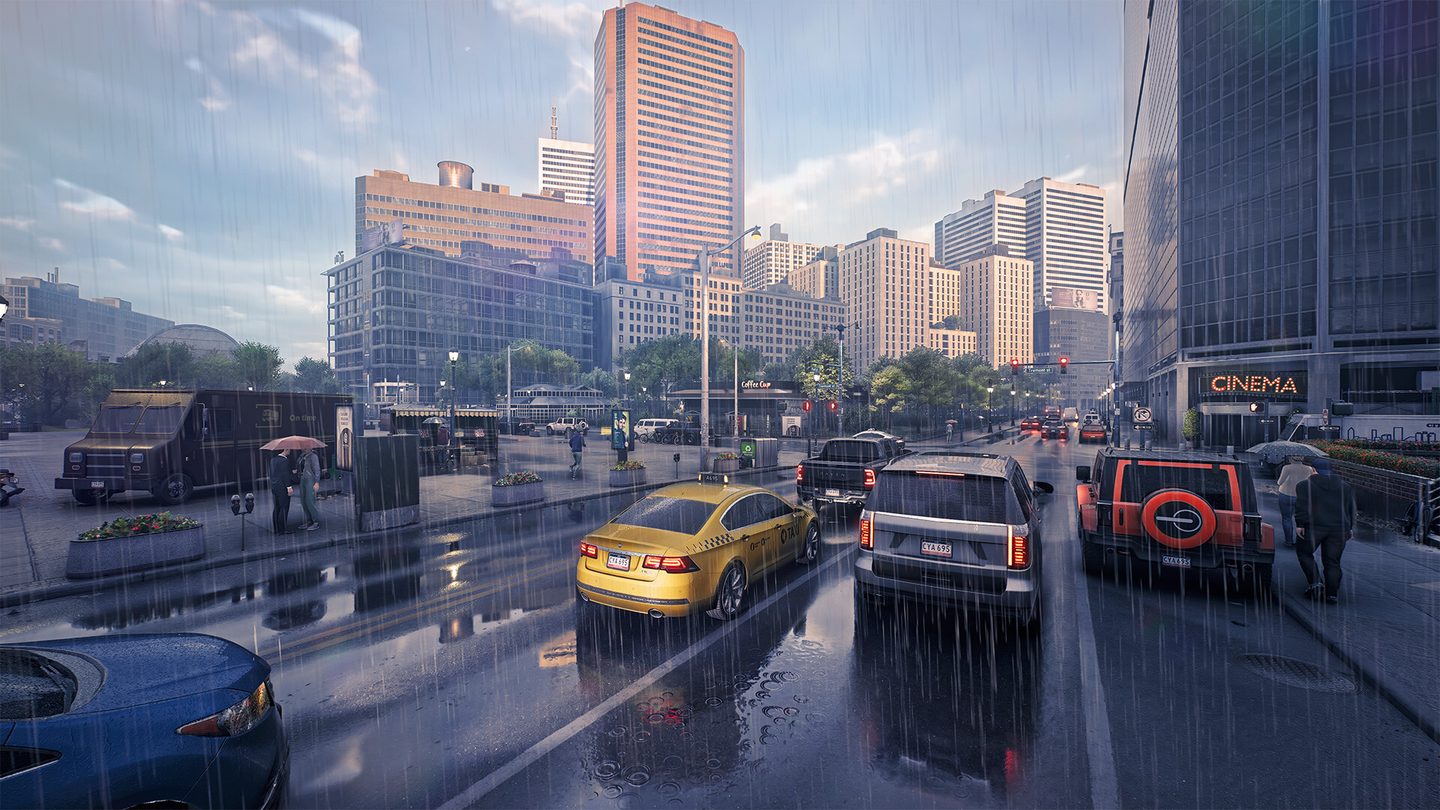
I wasn’t going to write about this one, because on the surface it’s a Twitter — sorry, Bluesky — spat between a studio CEO and a former employee, and that’s not really my beat. Then I read what Saber Interactive actually confirmed using AI for, and it turned out to be a small, boring, entirely familiar technical decision that got completely buried under the drama around it. That part is my beat.
What actually happened
On 11 August, Stella Sacco — Saber’s lead writer from mid-2023 to mid-2024, credited on Stuntman: Hollywood and other Saber titles — posted on Bluesky that she’d been “replaced with ChatGPT midway through development” on Saber’s upcoming PS5 driving sim, Rideshare “Stimulator.” She said her manager had pushed back against executives who wanted generative AI in the game because, in her account, it would make good marketing.
Saber’s studio response, quoted by PC Gamer, Kotaku and Game Developer among others, was a flat denial: “Neither Saber nor Unigine have replaced any writers with AI for Rideshare or any other game,” with the story “written entirely by real people.” It did confirm one thing — an experimental free-ride mode uses generative AI for passenger dialogue, because, in the studio’s words, the number of passengers in the game is effectively infinite.
That would have been a normal, forgettable statement. Then CEO Matt Karch gave a combative follow-up, first reported by This Week in Video Games and re-quoted widely since (I’m treating the quote as well corroborated across outlets, but sourced originally to one interview): “Stella who? I had to ask Claude because I have never spoken to her or seen her,” and, on the AI question specifically: “I would frankly in retrospect have been happy to replace her with AI. At least we would be dealing with someone programmed to be honest.” Sacco stood by her account, saying Karch was “lashing out because he did not want people to know there was AI use in the game.” Nobody involved has published anything resembling a paper trail, so as of today this is a dispute between two accounts, not an established fact in either direction.
Two different AI stories got welded together
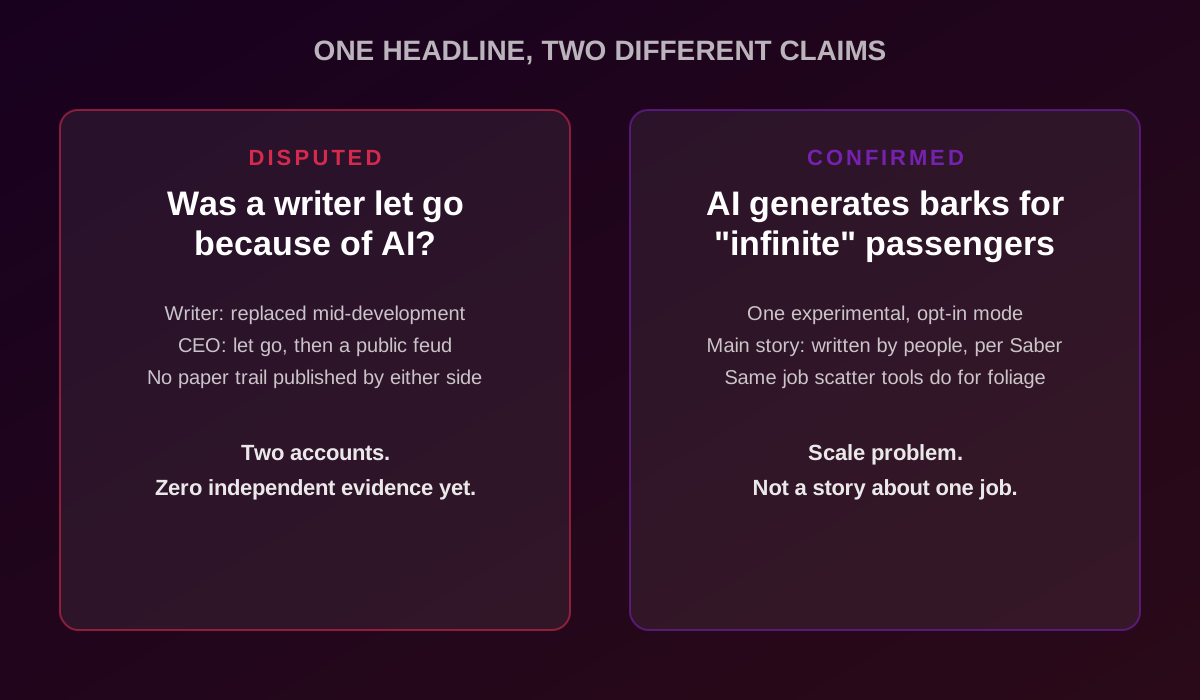
Story one is a labor dispute: was a specific person let go because of AI, or for other reasons, and did anyone above her push for the AI angle as marketing? That’s a real question, it deserves a real answer, and right now nobody outside Saber has one. I’m not going to pretend a CEO calling a former employee “Stella who” settles anything — if anything it reads like someone who knows the optics are bad and picked the wrong day to stop being careful.
Story two is a technical decision, and it’s the one I actually have something to say about: generating dialogue procedurally for a role that has to scale past what anyone could hand-write. It is the same problem environment artists solved for foliage and crowd variation a decade before “generative AI” was a marketing term — you can’t hand-place ten thousand trees or hand-write ten thousand NPCs, so you build a system that produces bounded variation inside rules a person set. A scatter tool doesn’t replace whoever laid out the forest. It replaces the part of the job that was never really about individual trees.
Passenger barks in a rideshare sim are the writing equivalent of that scatter layer — filler lines for characters nobody wrote a backstory for, that exist so the world doesn’t feel empty on a fortieth ride. Using a model to generate infinite variations of “nice weather today” is not the same category of decision as using one to write the game’s actual story, and Saber’s own statement drew exactly that line — main narrative by “real people,” AI confined to one experimental, clearly-labelled mode. If that’s accurate, it’s a defensible, fairly ordinary pipeline choice that happens to have landed in the middle of a much angrier argument about something else entirely.
What I’d actually watch
Whether the Steam page gets the disclosure Saber promised. Karch told Game Developer the store page would be updated “once the feature set is finalized” and that Saber is “touting this experimental mode as a feature, not shying away from it.” As of this week, reporting from GamesRadar+ said no disclosure was live yet. That’s a checkable promise with a date attached to it — worth going back to look at once the game is closer to release.
Whether this becomes evidence in the wrong direction. The moment a studio confirms any generative AI use, every AI-adjacent claim from the same controversy tends to get treated as equally confirmed. It isn’t. The dialogue system is confirmed. Sacco’s account of why she left is not, and neither is Karch’s.
The broader anxiety this is really about. Game Developer reported this week that a survey of roughly a hundred developers at this year’s Gamescom Dev Conference found real, widespread unease about generative AI’s effect on roles and team sizes over the next three years. That’s the actual, industry-wide story sitting underneath one CEO’s bad week on social media — and it’s the one that will still matter after this particular spat is forgotten.