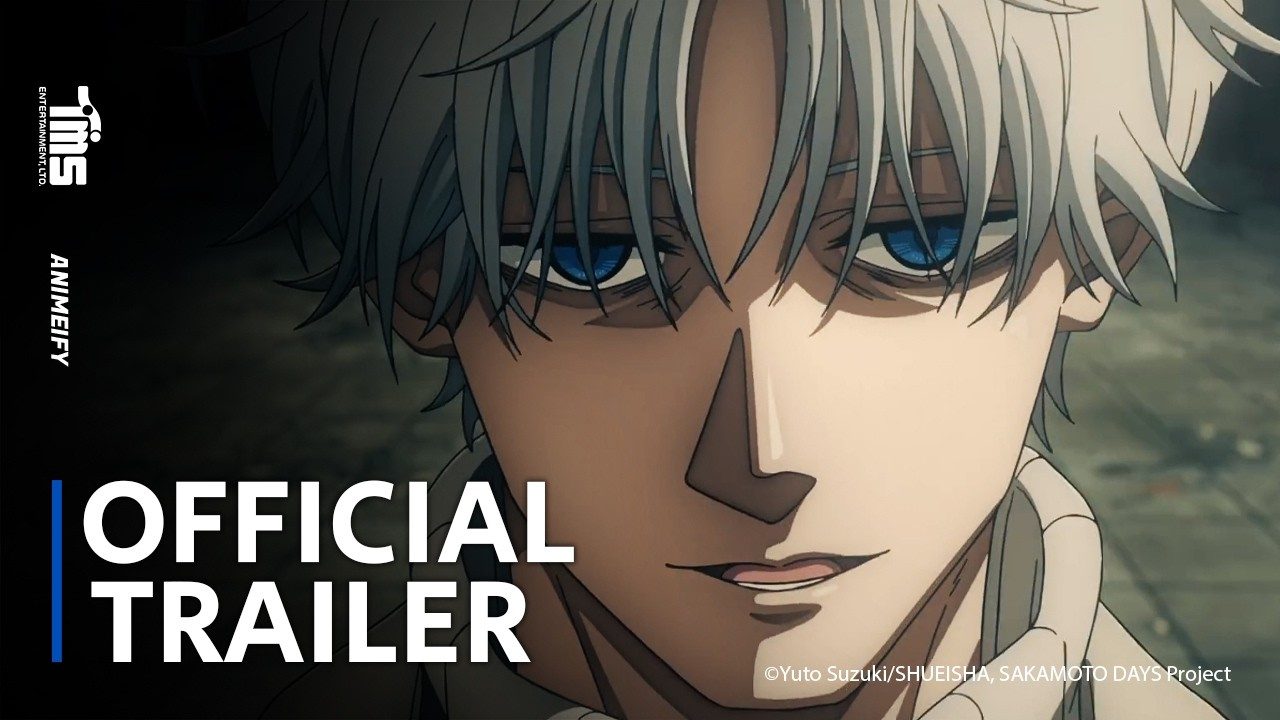
Weekly Shonen Jump issue 52 went on sale in Japan on Monday with chapter 284 of Sakamoto Days in it, and that was the end. Six years in the magazine, starting November 2020, out of a one-shot Yuto Suzuki drew for Jump GIGA in December 2019. Eighteen million copies in circulation worldwide as of August.
The books are behind. Volume 29 came out on 4 November. Volume 30 is dated 4 January 2027, and volume 31 — the last one — 30 April.
Netflix puts season 2 of the anime in January.
The reference arrives in the wrong order
Production works from volumes wherever it can. The weekly version of a page is drawn against a deadline that does not move, and the collected edition is where an author goes back and redraws the panels that got away from them — a hand that came out wrong, a background that was three lines and a prayer, lettering that sat over something it should not have. Studios know this. If you are building model sheets and layouts, the tankōbon is the cleaner document, and it is the one the author signed off on twice.
Sakamoto Days has just ended as a story and will not exist as a finished set of books until the end of April. Season 2, by Netflix’s announcement, starts three and a half months before that.
For the arc season 2 is adapting this barely matters. The JCC infiltration chapters were collected years ago; that material is settled, drawn twice, and the layout team has had it on the shelf the whole time. What is new, as of Monday, is that everyone on the production now knows how it comes out — which sounds like a small thing until you have tried to design a character whose final form has not been drawn yet. Witch Watch ran into the same arithmetic eight days ago and gets the same advantage, and the reason it matters is the same in both cases: you only get to lock a design once cheaply.
What this particular manga asks for
Adapting Sakamoto Days is a staging problem before it is anything else.
Suzuki’s action is built on continuous space. A fight starts in a convenience store and uses the convenience store — the shelf you can see over, the one you cannot, the aisle that is a dead end, the freezer door that opens into somebody’s face. He draws the room first and then lets people ruin it, and the reason the choreography reads at a glance is that the geography never cheats. Nothing appears because a panel needed it.
In animation that costs money in an awkward place. Character animation is the line item everyone protects, because it is the part audiences name when they say a show looks good. Backgrounds and layout are the part they do not name, and on a television schedule it is where the saving gets made. Which is a problem when the background is the choreography. A fight in a fully described room needs that room to exist consistently across forty cuts, with the knocked-over shelf still knocked over, and props that stay where the last shot put them. Continuity of set dressing, basically, except nobody has built the set.
The cheap way out is to pull the camera into a neutral field — speed lines, a colour wash, a gradient — and let the bodies carry it. It works. It also throws away the thing that made the page good. Season 1, across its two cours in January and July 2025, did both at different moments, and you can watch the schedule decide.
This is the same difficulty Hirayasumi’s adaptation faced from the opposite direction, where the hard part was a soft line nobody could reproduce at twenty-four frames a second. One manga’s drawing is a staging problem and the other’s is a texture problem, and in both cases the fix is hiring the specific people who have solved that one before.
Credit where it is due
Tetsu Ōkawa, who assists Suzuki on the main series, draws the Sakamoto Holidays spinoff, and in November it was reported to be heading for its own climax. Six years of weekly pages with that much background detail in them is not one person’s work and never was. Assistants on an action serial are doing the architecture — the shelving, the station platforms, the crowd — which on this title is not decoration.
TMS Entertainment is animating season 2, with Daisuke Nakajima directing after working on the first season. Viz Media and MANGA Plus have the English release.
Whether 284 chapters ever get fully adapted is a different question, and the honest answer is that most long Jump serials do not. What this week changed is smaller and more useful: the people drawing it have the whole book now, or will by spring, and they can stop guessing.
Chapter number, issue, the 4 November volume 29 date and the January and April 2027 volume dates from Anime News Network and MyAnimeList’s reports of the Weekly Shonen Jump issue 52 release. The 18-million circulation figure is as of August 2026 per Anime News Network. Season 2’s January 2027 window, TMS Entertainment, Daisuke Nakajima and the JCC arc come from Netflix’s own announcement as reported by both outlets; Netflix did not name a day in it, and one trailer card has been reported as carrying 18 January, which I could not confirm. The point about collected editions being redrawn is general practice rather than anything stated about this title.