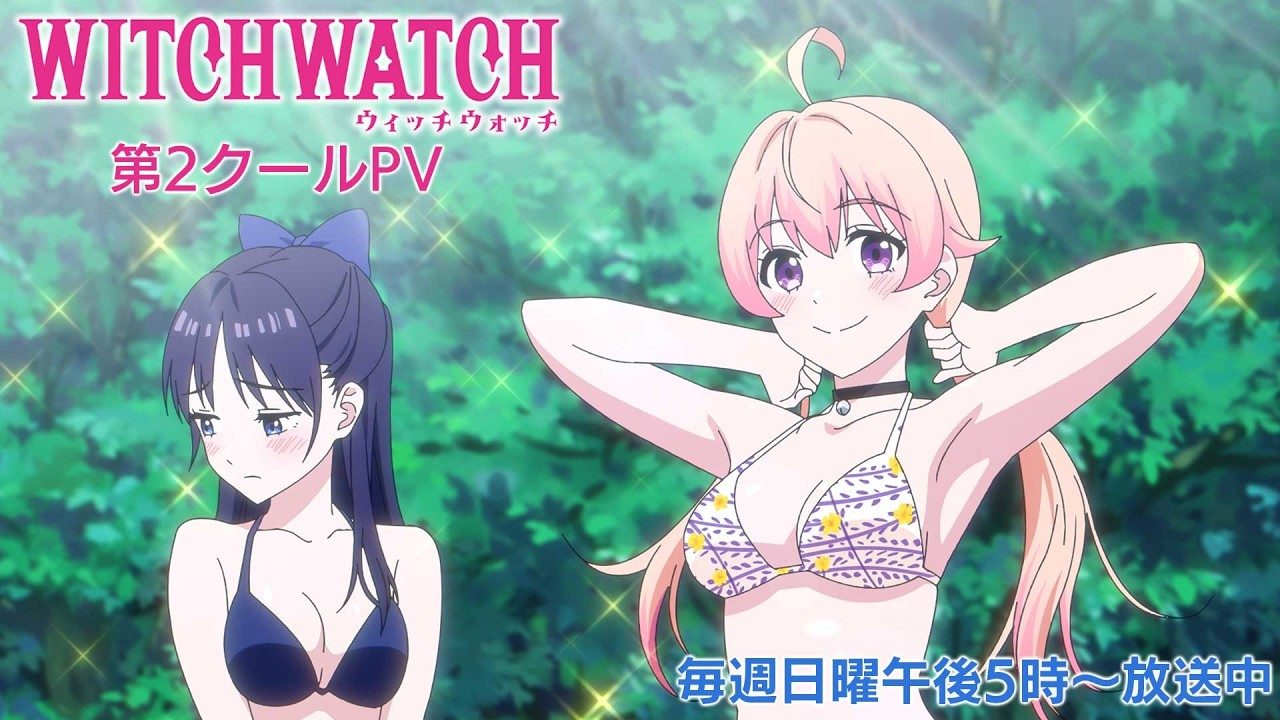
Weekly Shonen Jump issue 51 went on sale in Japan on Monday carrying chapter 270 of Witch Watch, and that was the last one. Kenta Shinohara had been drawing it since February 2021. Five years, twenty-eight collected volumes as of the second of October.
The anime is nowhere near finished.
Bibury Animation Studios made twenty-five episodes across two consecutive cours in 2025, and a second season was announced in the minute or so after the finale aired on 5 October that year — the classic Jump move, title card at the end of the credits, no date attached. Anime News Network now has that season airing in 2027.
Which puts the pieces in an unusual order. Season 2 was greenlit while the manga was still running and nobody knew how it ended. It will go into broadcast with the source closed for more than a year.
What a closed source actually buys
Adapting a serial that is still running means building against a moving target, and the cost of that lands on pre-production rather than on the episodes everybody sees.
Model sheets get locked early. If the author later draws a character’s real form, or a location that was a throwaway panel in year two and turns out to matter in year five, the anime has already committed to a version of it. Series composition is worse. You are dividing an unknown quantity of chapters into a known quantity of episodes, so you pace conservatively, you pad where you have to, and when you run out of material you stop somewhere that is not an ending and hope for a third season.
A finished manga removes all of that. The composition writer can count the remaining chapters, divide by episodes, and put the expensive sequences exactly where the story actually peaks instead of where the schedule guessed it might. Designs get drawn once, against their final state. Nobody has to invent an anime-original ending, which is the single most reliable way to lose the audience you spent two cours building.
That is a real production advantage and it is rarer than it sounds. Most long-running Jump adaptations never get it.
The arithmetic, with its caveat
270 chapters total. Season 1 ran twenty-five episodes.
A Jump gag comedy usually moves at three to four chapters an episode, which would put season 1 somewhere around 75 to 100 chapters of material. I have not verified where it actually stopped and I am not going to pretend otherwise — treat the number as an estimate and nothing more. But if it is roughly right, there are something like 170 to 190 chapters still sitting there unadapted.
That is three or four more cours of television. Not one season. A second twenty-five-episode run would still leave half the manga on the shelf.
Comedy is expensive in a way people underrate
An action show is, in asset terms, a reuse machine. You design a character, a weapon, a handful of locations, and then you amortise that work across fifty episodes. The second fight in a location costs a fraction of the first.
A gag comedy does the opposite. Witch Watch runs on transformations, one-off visual jokes, a different ridiculous thing every week. Every one of those needs its own layout, often its own background, sometimes a design that exists for eleven seconds and never appears again. None of it amortises. You pay full price every time, and the show’s quality is almost entirely a function of how many of those single-use drawings the schedule can afford.
So the 2027 date reads to me as sensible. A comedy that cannot afford its gags stops being a comedy. We have watched the alternative play out plenty of times — Bleach’s last two episodes slipped a month and the committee’s stated reason was quality, and that was a finale, the part of a production everyone is supposed to protect. Giving a team two years instead of one is the cheaper version of that lesson. Chiikawa did much the same thing deliberately when it stopped new episodes for thirteen weeks to build a buffer.
What is worth watching for
The staff announcement, and specifically whether Bibury is still on it. Season 1 was theirs. I could not confirm from anything published that they are returning for season 2, and the reporting I have seen does not say either way, so that is genuinely open.
The other thing is the episode count. If season 2 comes back as another two cours, the maths above says they are committing to adapt this properly over several years. A single twelve-episode cour would say something quite different about how much of chapter 270 anyone intends to reach.
Shinohara, for what it is worth, has finished every serial he has started. Sket Dance ran six years in the same magazine and ended on its own terms. Astra Lost in Space was planned short and landed. Five years and 270 chapters is a third one, and the anime now has the whole thing in front of it on paper.
Chapter number, issue, volume count and the 2027 broadcast year from Anime News Network and MyAnimeList’s reports of the Weekly Shonen Jump issue 51 announcement. Season 1 episode count, studio and the October 2025 season 2 announcement from the same reporting. The chapter-pacing estimate is mine and is unverified. Season 2 staff and studio were unannounced at the time of writing.