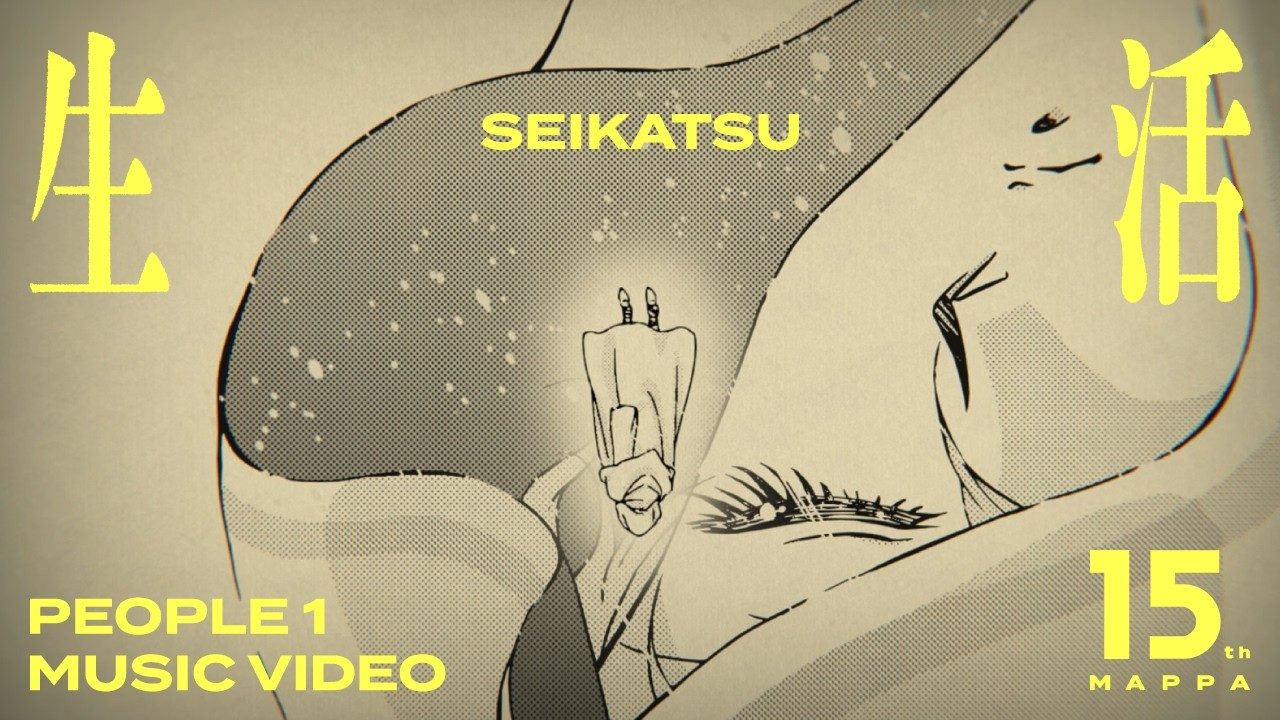
MAPPA turned fifteen this year and put the evidence in a museum. MAPPA EXPO 15th Anniversary has been at the Yurakucho Museum in Tokyo since 16 September and closes on 7 December, with further venues to follow, and Anime News Network walked the second phase of it this week. Twenty-three productions. Original drawings, cels, storyboards, seven illustrations drawn for the show and sold nowhere else. A life-size Bomb, lit from inside, in the Chainsaw Man room.
I have not been, and I am not going to write as though I had. What I can read is the inventory, and an inventory is a statement. It tells you what a studio believes its work is made of.
Paper is the part that frames
The three headline areas are built on production drawings. The Chainsaw Man – The Movie: Reze Arc room traces Denji and Reze from the first meeting to the fight with Bomb through the drawings that got them there. The Jujutsu Kaisen area revisits the big fights the same way. Attack on Titan: The Final Season puts up original drawings for key scenes and, by Time Out Tokyo’s account, the hand-painted watercolour of the hill from the ending.
That watercolour is the thing I would walk past twice. A background is one of the last pieces of an anime pipeline that gets authored complete — someone paints it, and what they painted is very nearly what reaches the screen. A key animation drawing is not like that. A genga sheet is pencil, timing notes and corrections, handed downstream to be cleaned up, scanned, digitally painted, re-weighted, filtered and lit. It is a brilliant object and it is an instruction, not a result.
Which is why an exhibition of production materials from a cel-era film works so cleanly. When I wrote about the Ghost in the Shell retrospective in August, the point was that a layout sheet shows you the decision where a still only shows the result — and on a 1995 production, the painted board and the cel laid on top of it were the frame. Hang the board, hang the cel, you have hung the film. Thirty years later the relationship between what hangs on a wall and what appears on a screen has got a lot longer.
The part that does not go behind glass
Ask anyone who watches a lot of modern television anime to describe MAPPA and you will get answers about surface: the heat shimmer and smoke in Chainsaw Man, the grain, the way a light source blooms, fights that keep moving the camera through real space instead of panning across a held cel. Almost none of that is decided on paper. It is decided in 撮影 — satsuei, the photography department, which in a digital studio means compositing — and in layout, where somebody works out where the camera sits and how it travels before a drawing exists.
I have made this argument on this blog about another studio: ufotable’s identity sits almost entirely in the compositing credit most people scroll past, the department that holds three separate light sources in a night exterior rather than dropping one flat key over everything. MAPPA is a different house with a different look and the same structural fact. The drawing is the performance. The composite is the surface, and the surface is what people mean when they say a show looks expensive.
You cannot put that in a vitrine. You could put up a layer breakdown — line art, paint, shadow pass, diffusion, grade, the lot, stepped out — and I would stand in front of it for twenty minutes. Most visitors would read it as a diagram and keep walking. I understand entirely why that is not the exhibition anybody builds.
So the showpieces got built as sets
What this expo does instead is interesting, and I think it is the correct instinct. The things being photographed and shared are not framed pages. They are objects: the lit Bomb; a life-size Yuji Itadori; a recreated train interior with three-dimensional pieces and video around it; and in the Final Season room a large-scale installation of the Rumbling, which Metropolis describes as visuals and 3D displays and nippon.com as a model.
Those choices track almost exactly onto the sequences where MAPPA’s work is a camera problem rather than a drawing problem. A fight staged inside a train carriage is a blocking exercise in a confined volume. The Rumbling is scale, crowd and perspective. Both are the kind of shot where a drawn production reaches for a three-dimensional layout — either a punishing amount of perspective genga or a rough 3D set the drawn layer rides on, and from the footage I would bet heavily on the second. Rebuilding those as physical spaces is a reasonable translation. A room communicates a camera move. A stack of paper does not.
And the Final Season area apparently carries displays explaining the production process, which is the one place in the listings where somebody tried to show the middle of the pipeline rather than its two ends. If that is accurate, it is the most unusual thing in the building.
The anniversary movie is worth watching for the same reason the expo is worth a ticket, and it also demonstrates the problem. It is a compilation piece cut across fifteen years of the studio’s catalogue, and what holds it together is grading and compositing — a consistent treatment laid over material drawn by dozens of different teams in different years. That treatment is the studio’s signature. It exists in no single drawing on any wall in Yurakucho.
The show rotated part of its contents when the second phase opened on 28 October, which means the version Anime News Network walked is not the version somebody saw in September, and the touring legs will presumably be a third thing again. Fifteen years is a lot to fit in one museum. I suspect what gets dropped each time is never the Bomb.