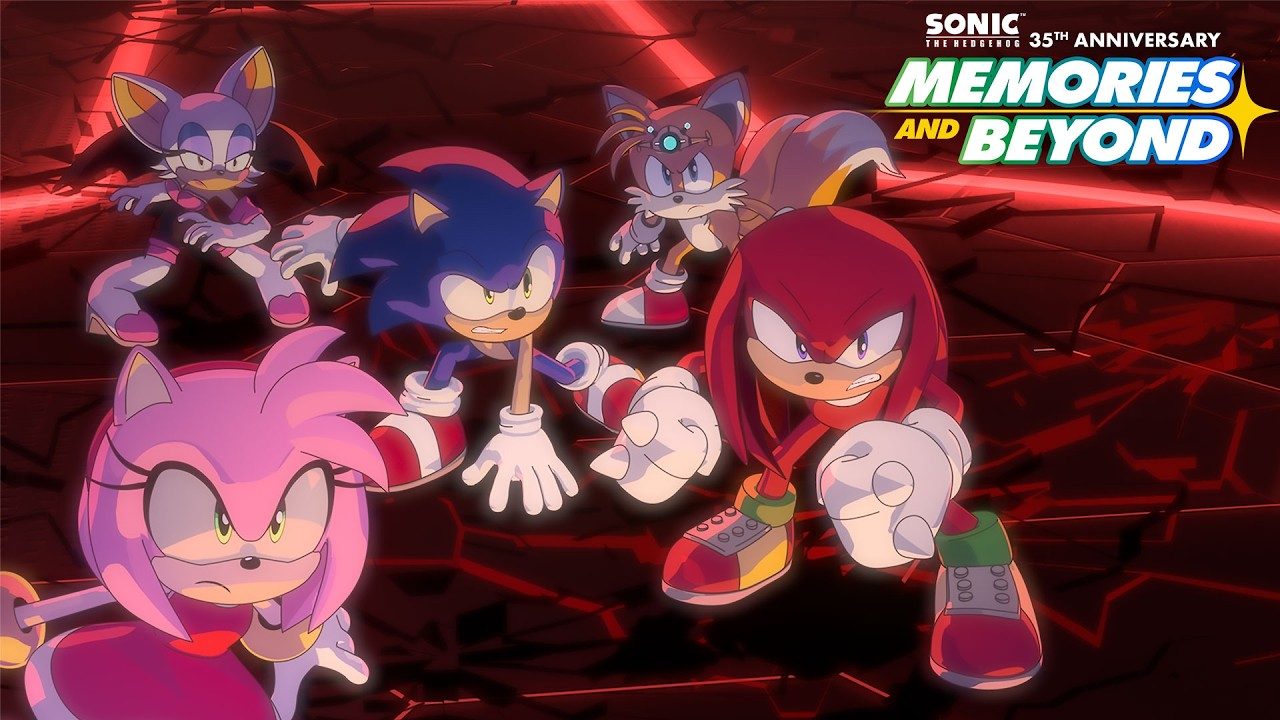
Sega put Sonic the Hedgehog: Memories and Beyond on YouTube on 12 November 2026, free, to mark the franchise’s thirty-fifth year. Around thirteen minutes of hand-drawn animation. Eggman gets hold of the Chaos Emeralds and sets about upgrading Metal Sonic with Sonic’s own life data; Tails works out a counter; Knuckles, Shadow, Amy and Rouge are all in there.
Try to find out who drew it.
The director is named everywhere: Kevin Molina-Ortiz. Ian Flynn wrote the script, which will surprise nobody who has read a Sonic comic in the last fifteen years, and the story is credited to Sonic Team’s Takashi Iizuka. All three turn up in every write-up, consistently spelled, consistently credited.
The animation studio does not. One account has the short produced by Studio GIGGEX and animated by SIMAGE Animations. Others print GXS Productions as the animation house and stop there. When the short was announced at Anime Expo in July, The Sonic Stadium read the panel and concluded it was safe to assume Giggex, which is the sound of a reporter working from inference because the press material did not say.
I have not sat down with the short frame by frame — this is written from the coverage and from Sega’s own material, a day after it went up.
Why the name matters more than it looks
Thirteen minutes of 2D is not a weekend. Strip the romance off it and you have layout, key animation, in-betweens, clean-up, colour, backgrounds, compositing and a mix, and every one of those is a department with people in it. Even on a brisk schedule that is months of work by dozens of artists, most of them on a contract that ends when the short does.
A commissioning brand gets the title card. A director gets the press release. The studio that put pencils on the thing gets a line in the credit roll that nobody transcribes, and if two outlets disagree about which studio that even was, nobody is going to settle it.
It matters because that credit is the only portable thing most of those artists take with them. A studio name on a well-received short is how a 2D house wins the next commission, and how the individual in-betweener points at something and says that was us. Blur it and the work still exists; the career evidence does not.
The flipside is worth saying plainly: brand shorts of this kind are good jobs. A thirteen-minute piece on a famous property with no runtime pressure from a broadcaster is the sort of brief 2D crews rarely get. Which is the argument for naming the people who took it.
The director is the real signal
Molina-Ortiz came out of Rise of the Teenage Mutant Ninja Turtles, a show with a very particular grammar — loose, aggressive drawing, characters stretched hard through a movement and snapped back, poses that break proportion in service of the beat. Toon Boom lists him among its ambassadors, which tells you Harmony and tells you a rigged-and-deformed 2D pipeline rather than a paper one.
Now put that against Sonic. The character has one of the most tightly policed style guides in games. Quill count, eye geometry, the exact arc of the shoes — all of it is locked down across three decades of licensing, because a brand that appears on lunchboxes cannot afford drift. Sonic’s on-model sheet is a legal document as much as an artistic one.
So the question to ask of the short is how far the drawing is allowed off model when the action gets going, and whether Sega’s licensing people let the smears through. A director hired for a loose hand, working inside a style guide built to prevent exactly that, is a genuine tension, and it is the one thing in this production that could not have been predicted from the press release.
Sonic’s animated output has swung between hand-drawn and CG for years, and the choice is rarely about which looks better. It is about what the material wants and what the schedule can carry — the same calculation that decides whether a cast is made of something a renderer is already good at. Quills, speed lines and impact frames sit on the 2D side of that line without much argument.
One number drifted
When the short was unveiled at Anime Expo in July it was billed at around ten minutes. It landed at about thirteen.
Three minutes sounds like nothing. On a hand-drawn short it is close to a third more footage, and a third more footage is a third more key animation, more in-betweens, more clean-up, more comp. Nobody adds that by accident at the back end of a schedule. Either the cut earned its length in edit and somebody signed off the extra, or the ten-minute figure was a rough estimate given to a panel audience months before picture lock. Both happen. Neither is reported.
Both voice casts came back, which is the other quiet sign that somebody cared about this one. Roger Craig Smith, Colleen O’Shaughnessey and Dave B. Mitchell on the English side; Jun-ichi Kanemaru, who has voiced Sonic in Japanese since the late nineties, and Kotaro Nakamura as Eggman. Anniversary pieces often make do with whoever is cheap and available.
A short film is the cheapest honest test there is of whether an idea and a crew hold up — it drags layout, colour, comp and mix into daylight in a way a sizzle reel cannot fake, which is exactly why ABEMA is buying four-minute pilots rather than series commitments. Sega has just run that test at thirteen minutes, in public, for free, and the result is sitting on YouTube.
It would be useful to know whose test it was.
Release date, runtime, cast and staff from Sega’s announcement and the coverage published on 12 and 13 November 2026, chiefly Anime News Network and Noisy Pixel; the Anime Expo billing and the Giggex inference from The Sonic Stadium’s July report. The animation studio credit is in dispute between outlets at the time of writing and is not confirmed here.