CGChannel rounded up the breakdown reels for Foundation season 3 this week, and between the two lead vendors — Framestore and Rodeo FX — you get a decent map of where the season’s budget actually went. Framestore covered roughly 500 shots, Rodeo FX 494, and across all nine vendors working the season (BOT VFX, Crafty Apes, Accenture Song, Outpost VFX, Otomo FX, PFX, SSVFX among them) the total comes to something close to 4,000 shots — about a thousand more than either of the first two seasons, mostly because this year leans so much harder on environment extensions.
What each studio actually built
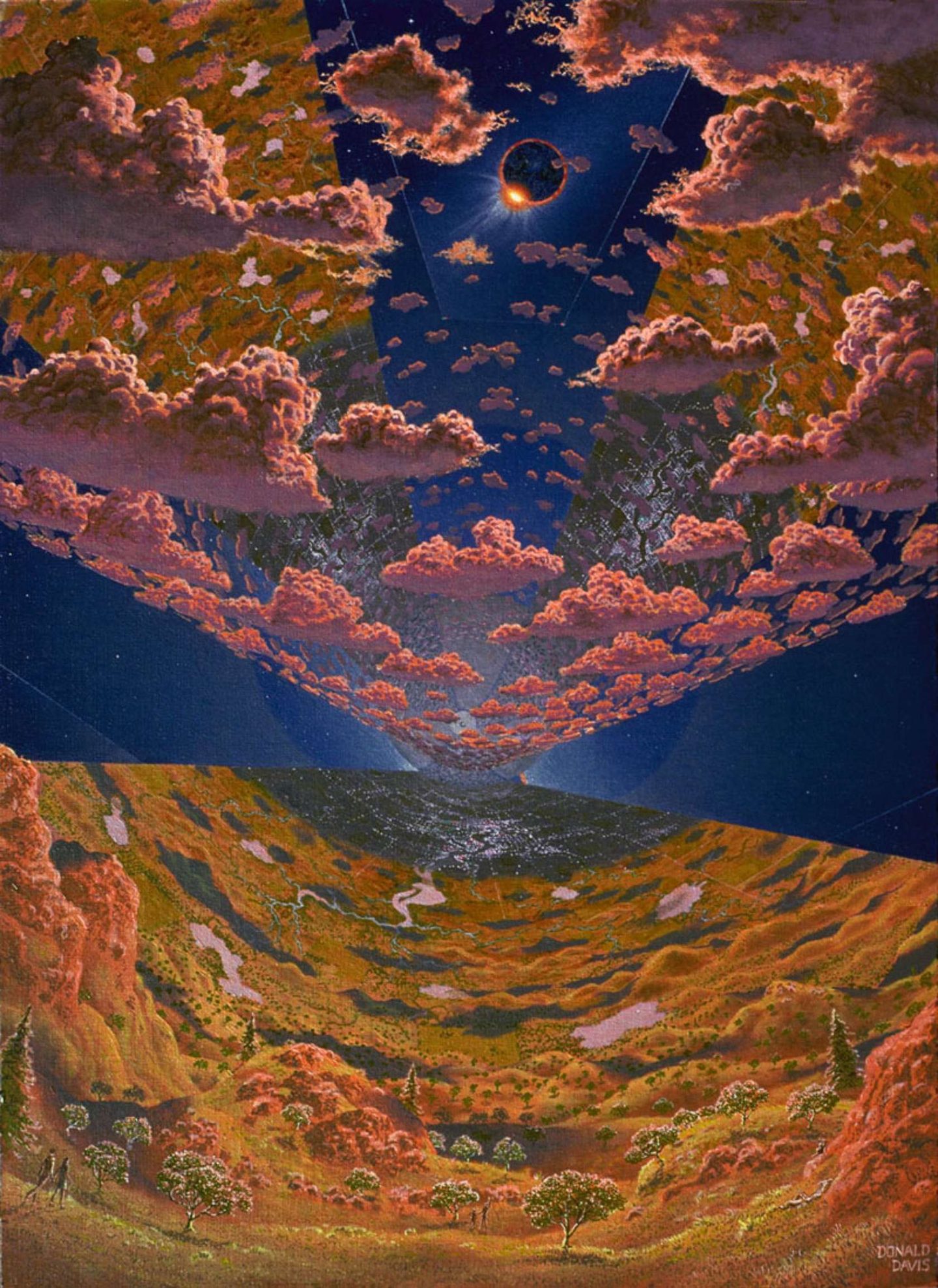
Framestore’s headline piece, and the one that earned them a VES nomination, is Clarion Station — a station roughly 5km wide that isn’t dressed as a static backdrop but built and rigged as an actual vehicle, with three separate habitat panels rotating independently, each running its own day/night cycle. Inside that shell they built a “brutalist cyberpunk city” and the mycelium-choked Secretorium, plus the Novacula, a weaponized station built around a captured black hole.
Rodeo FX’s work centers on Kalgan: the plateau confrontation between the Mule and Bellarion, the villa where Toran and Bayta are introduced, and a run of digital set extensions stitched onto physical locations rather than built from nothing. They also handled the season’s opening traveling shot — mountains, waterfalls, buildings, one continuous move — and the fleet and armada simulation work for the Mule’s telepathic battle sequence.
That is ordinary for a show this size. What’s worth stopping on is how they kept it buildable.
The part that’s actually hard: a station big enough to break your tools
A single static space station is a modeling and texturing problem. A station that has to rotate on camera, believably, across three independently timed habitat rings, at a scale where individual buildings need to read as buildings is a completely different problem, and it’s the one that actually determines whether a shot like that is deliverable on a TV schedule.
Framestore’s answer was a USD-based pipeline leaning hard on instancing — scattering hundreds of thousands of structures across the station’s surface as instanced geometry rather than unique authored assets, so the scene stays light enough to move, light, and render at all. This is the same problem every open-world game environment artist knows from the other direction: you cannot hand-place a city, so you build a system that can multiply a small kit into something that reads as a full one, and you spend your actual craft time on making the kit and the placement rules good enough that nobody notices the repetition. USD’s whole reason to exist as a pipeline format is exactly this — letting a scene of that size stay composed of references and variants instead of baked-down unique geometry, so a supervisor can still turn a dial three weeks before delivery.
Rodeo FX solved a smaller but stricter version of the same problem on Kalgan: build to camera. Camera moves for the plateau and villa work were locked from rough greyscale previs before the final environments were built, referencing Lake Como for what the team called a “Techno Niagara Falls” look. That ordering — lock the shot, then spend the environment budget only where the lens will actually land — is standard practice, but it’s the difference between an environment team building a real place and an environment team building the twelve square meters of it that will ever appear in the frame.
Where virtual production lost to the older method, on purpose
The other detail worth flagging, reported separately by VFX Voice and Art of VFX in interviews with production VFX supervisor Chris MacLean: Framestore’s London previz unit used Unreal Engine for early blocking on several sequences, including the Flitter Bike chase — the standard playbook this year for any big genre show. But the season’s speeder-bike race, originally planned as an on-set virtual-production sequence, got pulled back to a practical-and-CG hybrid shot on greyscreen with hydraulic rigs instead.
That’s the more interesting decision of the two, because it’s a studio choosing to walk back the trendier tool. Virtual production earns its keep when a director needs to see the final environment lighting the actors’ faces and eyes in real time, on the day. It costs you when the sequence is built around unpredictable physical performance — actors reacting to a rig throwing them around — because a real hydraulic rig and a real greyscreen give the actors and the camera operator something honest to react to, and you composite the CG environment in after, once you’re not fighting a stage’s on-set render budget for a shot that needed thirty takes anyway. Nobody puts that decision in a press release. You only see it by noticing which tool a studio picked for which shot type, and asking why.
Foundation season 3 finished airing in July. The breakdown reels are the part that gets watched by maybe a tenth of the audience the finale did, and they are the only part of the release that tells you anything about how the next season’s budget should actually be spent.