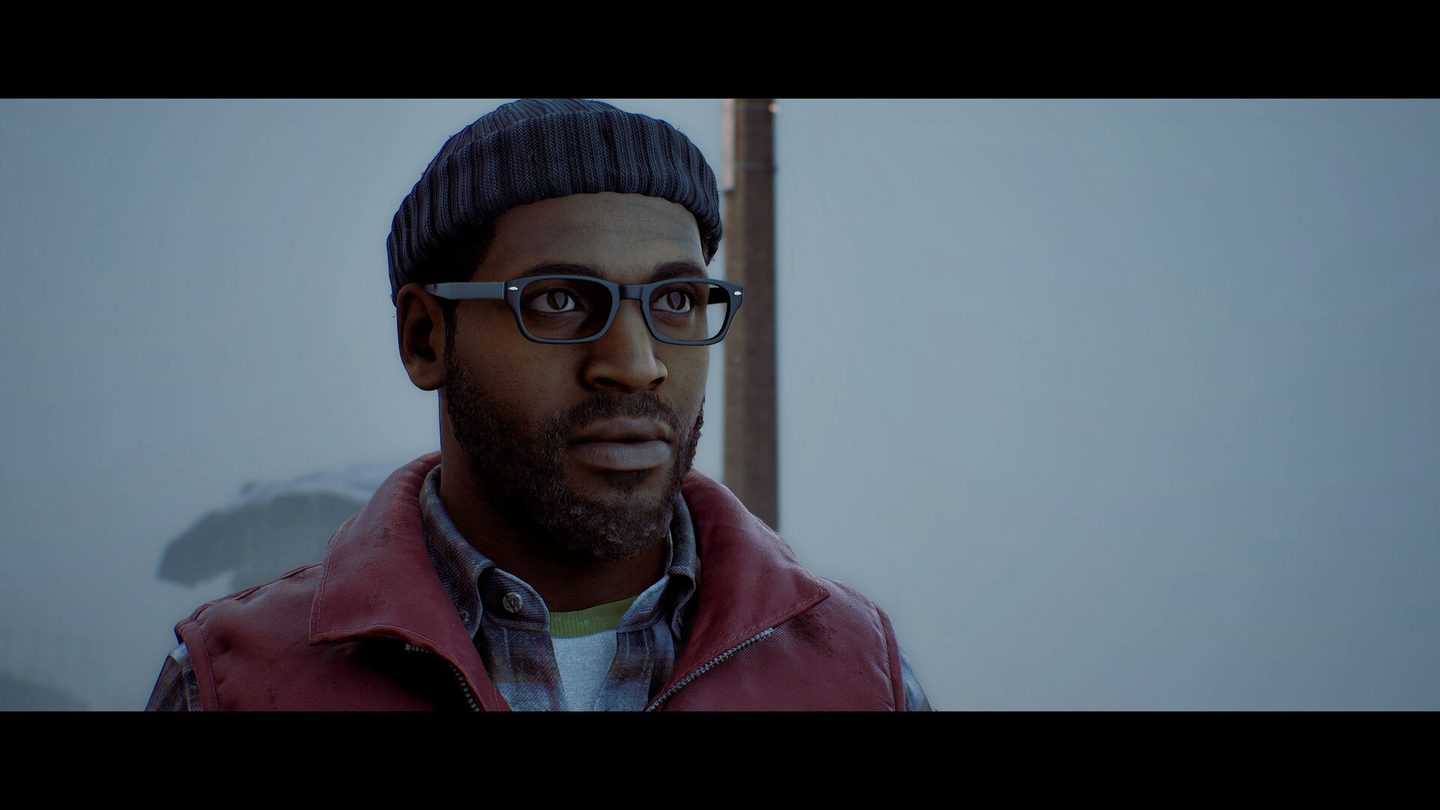
Konami and developer Screen Burn (the studio formerly known as No Code, of Stories Untold and Observation) put out an 18-to-19-minute gameplay reveal for Silent Hill: Townfall this week, and outlets from Gematsu to GameSpot to Vice all filed on the same two headline facts: it’s coming 24 September 2026 (22 September for Deluxe Edition owners), and it’s a six-month timed exclusive on PS5 and PC before it reaches anything else.
Both of those are business news. What I actually sat up for is further down the same footage.
What the reveal showed
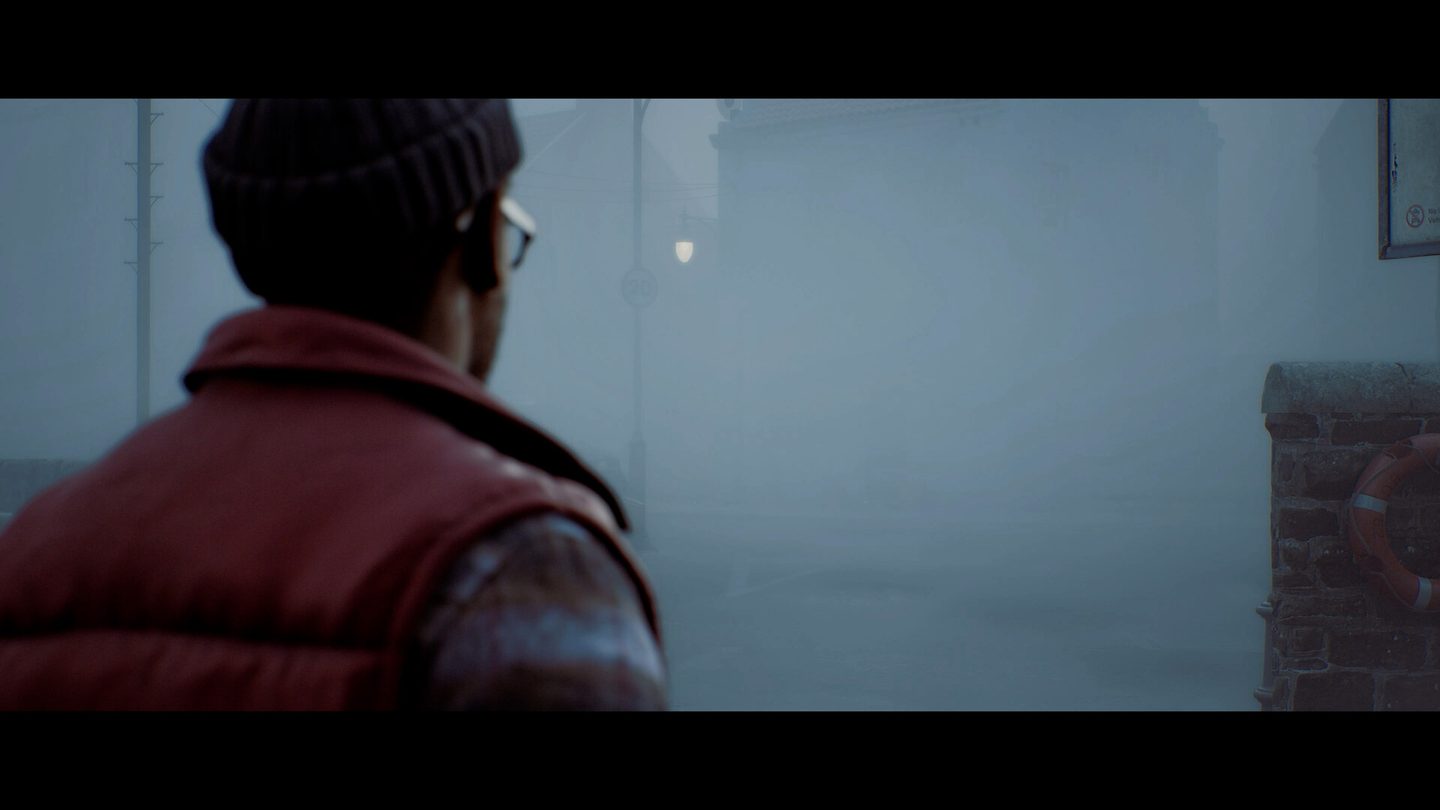
Townfall drops the series’ fixed US town setting for St. Amelia, a fictional town on the Scottish coast — the team apparently did location scouting driving around actual Scottish towns for reference, which tracks: the footage is full of very specific, very lived-in decay, rain-slicked high streets, shuttered shopfronts with real signage wear, the kind of detail you only get from photographing an actual place rather than inventing one from mood boards.
Bigger departure: it’s first-person, a first for a mainline Silent Hill. Protagonist Simon carries a CRT-like device (outlets are calling it the CRTV) to detect monsters, and can push into an “Otherworld” version of the town for the series’ traditional reality-flip. It’s built on Unreal Engine 5, targeting a 30fps quality mode and 60fps performance mode on PS5 Pro, with PSSR2 upscaling and ray tracing in the mix.
And running through nearly every shot of it: fog. Dense, rolling, doing a lot of the atmospheric heavy lifting, with neon-red light sources cutting through it in the town’s more damaged corners.
Why the fog is the interesting part
Silent Hill’s fog has an origin story every environment artist knows: on the original PS1 hardware, Team Silent couldn’t render the town at a usable draw distance, so they filled the space they couldn’t afford with fog, turned a hardware ceiling into a mood, and by Silent Hill 2 it was the series’ signature rather than an apology for it. That’s about as clean an example as exists of a technical limitation becoming an aesthetic on purpose.
Unreal Engine 5 does not have that problem. Nanite exists specifically so environment artists stop budgeting draw distance by hand, and World Partition streams geometry in well past where the PS1’s fog wall used to sit. So why is a UE5 game built around the same trick?
Because the constraints just moved somewhere else in the pipeline, and fog is still the cheapest tool for hiding all of them:
- Streaming pop-in. World Partition loads high-detail meshes in as the camera approaches, and in a first-person game the camera is close to everything, all the time — there’s no third-person distance buffer to hide a building’s roofline resolving a beat late. Volumetric fog masks the transition the same way the PS1 wall did, just for a completely different bottleneck.
- Upscaler artifacts. PSSR2, like DLSS and FSR, leans on temporal accumulation — blending information across frames to reconstruct detail it didn’t render natively. Volumetric effects are exactly what that approach handles worst: fog has no fixed silhouette from frame to frame, so it’s a known source of ghosting and shimmer in every upscaler I’ve seen used with heavy atmospherics. Rendering the fog dense and low- contrast to begin with reduces how much the reconstruction has to guess, which is a very different reason to reach for the same visual than “we can’t afford to render further than this.”
- Ray tracing budget. Full volumetric fog interacting correctly with ray-traced lighting is expensive per pixel, which is very likely a meaningful chunk of the gap between that 30fps quality mode and the 60fps performance mode. I’d expect the performance mode to be quietly running thinner, more uniform fog than the quality mode’s, the same way console settings menus never advertise that a resolution mode also changes volumetric density.
None of that is confirmed by Screen Burn — nobody publishes a fog budget in a press release — but it’s the honest read of what a first-person, Nanite-and-Lumen horror game gains from keeping the series’ oldest trick. The fog isn’t hiding a missing draw call anymore. It’s hiding streaming seams, upscaler seams, and a frame-time budget that ray tracing already spent — which is arguably a harder job than the original one, just invisible in a completely different way.
Details on the reveal trailer, release date and exclusivity window are from this week’s coverage (Gematsu, GameSpot, Vice, PlayStation LifeStyle, DualShockers, Dot Esports), all filed 20–21 August 2026. The rendering analysis — streaming, upscaling and ray-tracing cost — is my own reading of what a UE5 first-person title with PSSR2 and ray tracing is likely balancing, not a studio-confirmed breakdown.