Unity has bought Synty Studios. Announced yesterday, terms undisclosed, and the headline number depends on which outlet you read: PocketGamer.biz and GameDev.net put the catalogue above 60,000 assets, Unite.ai above 70,000. Nobody is publishing a price. Most of the artists who built the POLYGON range are joining Unity full time and carrying on making packs.
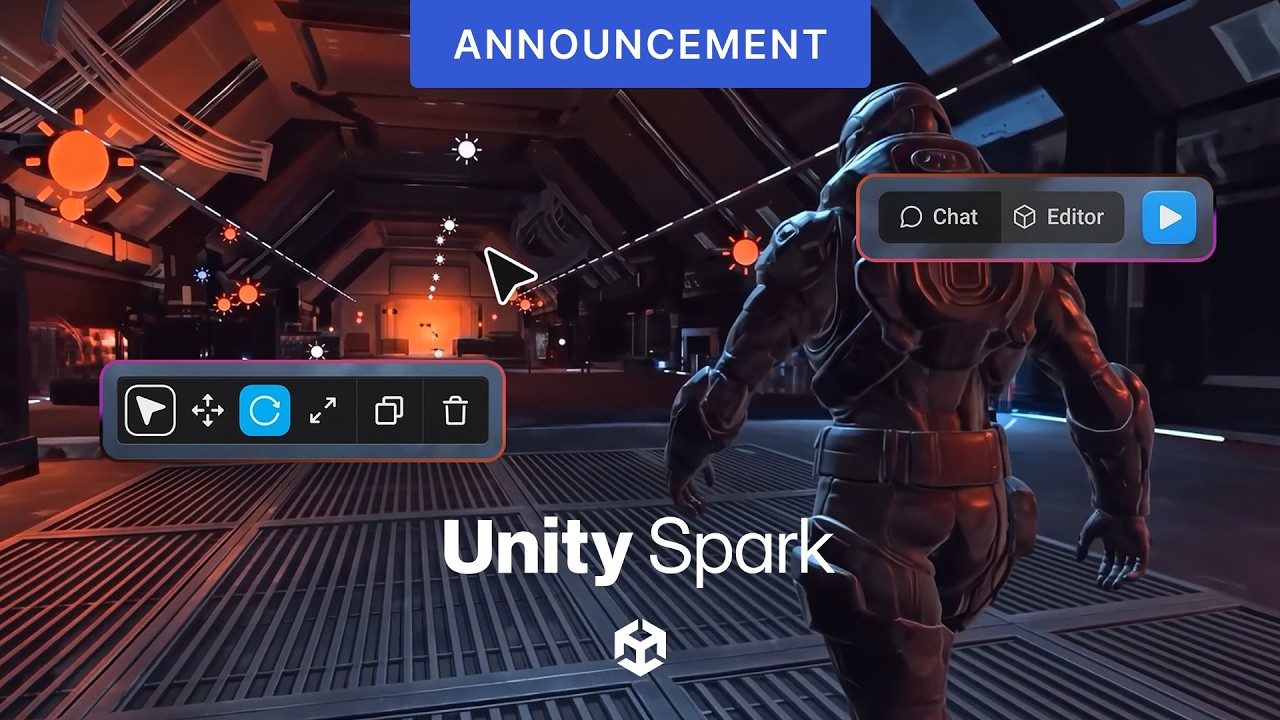
The destination is Unity Spark, which Unity announced on 7 October alongside Google — a browser-based, prompt-driven editor wired to Google’s Playground platform and to the Unity Asset Store. Spark goes into closed beta later this year, and Synty’s library goes in with it. Unity’s $50,000 fellowship for ten indie teams arrived in the same week, which says something about where the company is pointing its chequebook.
Why a prompt editor goes shopping for art
Ask a machine for a street and the street is the easy half. The building it puts on the corner has to live next to the car parked outside it — same scale, same shading, same idea of how bright the world is. Generated meshes do not come with that agreement built in. Neither does a storefront full of assets from four hundred vendors, which is where the Asset Store has always sat: a car boot sale of brilliant individual work at four hundred different texel densities.
Synty’s range is the opposite case, and it is close to unique at that size. The packs were made to be mixed. That is the product. Someone building a prototype can pull a dungeon set and a 1960s city set and a spy kit into one scene and the join does not show, because the whole library was drawn to the same rules from the start.
For a tool that assembles rather than invents, that is the expensive thing to own. Unity’s chief executive has been unusually blunt that Spark is not meant as a one-shot game generator — prompting a machine to regurgitate a game somebody already made does not make you the next Hideo Kojima, as he put it. Take him at his word and the purchase follows: a tool that places art instead of dreaming it needs a deep library that already speaks one language.
The licence answers, and the one still missing
Unity has said the reassuring things, and said them promptly. Existing packs, licences and workflows are unchanged. Pricing is unchanged “at this time”. Free assets, the Synty Store and the Synty Pass carry on as before. The packs stay available for Unreal and Godot — for, in Unity’s phrasing, the tools they support today.
That last clause is an inventory statement with a roadmap-shaped hole in it. And we have watched this film recently. Epic sold ArtStation and Sketchfab to KitBash in August, where the promises were also the reassuring kind: nothing changes today, in the present tense, about an indefinite future.
The question none of the coverage can answer yet is what a licence means once the assets live inside a generative editor. If Spark drops a POLYGON building into a scene because a prompt asked for a street, is that an ordinary seat-licence use of an asset the user never bought? Does beta access carry asset rights with it? Unity says the terms have not changed. They have not. They were also written for a person dragging a prefab into a viewport.
Worth watching too: whether the Unreal and Godot releases keep pace. Synty’s packs have shipped for rival engines for years, a meaningful chunk of the low-poly supply chain for everybody outside Unity. Nobody has to cancel anything for it to quietly fall six months behind.