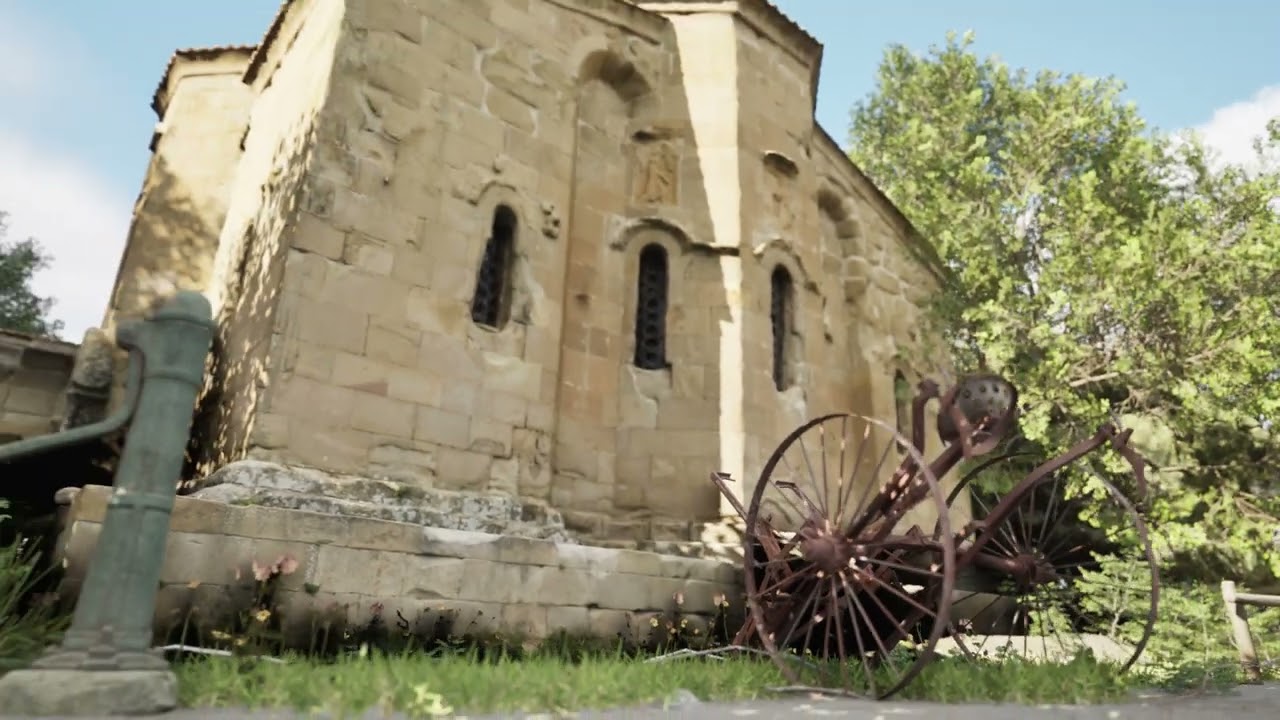
A timelapse is a trailer. Four hours of work compressed into ninety seconds, and what survives the compression is the part that was never the hard bit: the shapes appearing, the lighting snapping into place, the render resolving. It looks like the work happened by itself.
The part that actually matters gets cut. The twenty minutes spent deciding a silhouette does not read from the camera angle the shot needs. The three attempts at a material before the fourth one behaves. The moment where the scene is technically finished and still looks wrong, and you have to work out why.
What speed removes
Watch a 4x timelapse of a lookdev pass and you will see a material improve. You will not see why each change was made, which is the only transferable part. Sped up, every decision looks obvious and instant. In real time you can see that it was neither.
There is also the matter of mistakes. In a timelapse an error is a flicker — a wrong value that appears and disappears in two frames. At 1x it is five minutes of diagnosis, and the diagnosis is the lesson.
What I keep on YouTube
The fast versions stay. They are honest about what they are: a way to show a project and give a sense of the process. Good for a portfolio, poor for teaching.
Everything else — the uncut recording, the scene file, the node groups, the HDRIs I actually reached for — lives behind the membership. Not because the slow version is premium in some abstract way, but because it takes far longer to make and it is the version that is genuinely useful.
How I record
No script and no second take. I record the session as it happens and narrate the reasoning while I work, which means you occasionally hear me change my mind halfway through a sentence. That is the point. A rehearsed tutorial shows you a solved problem; a recorded session shows you the solving.