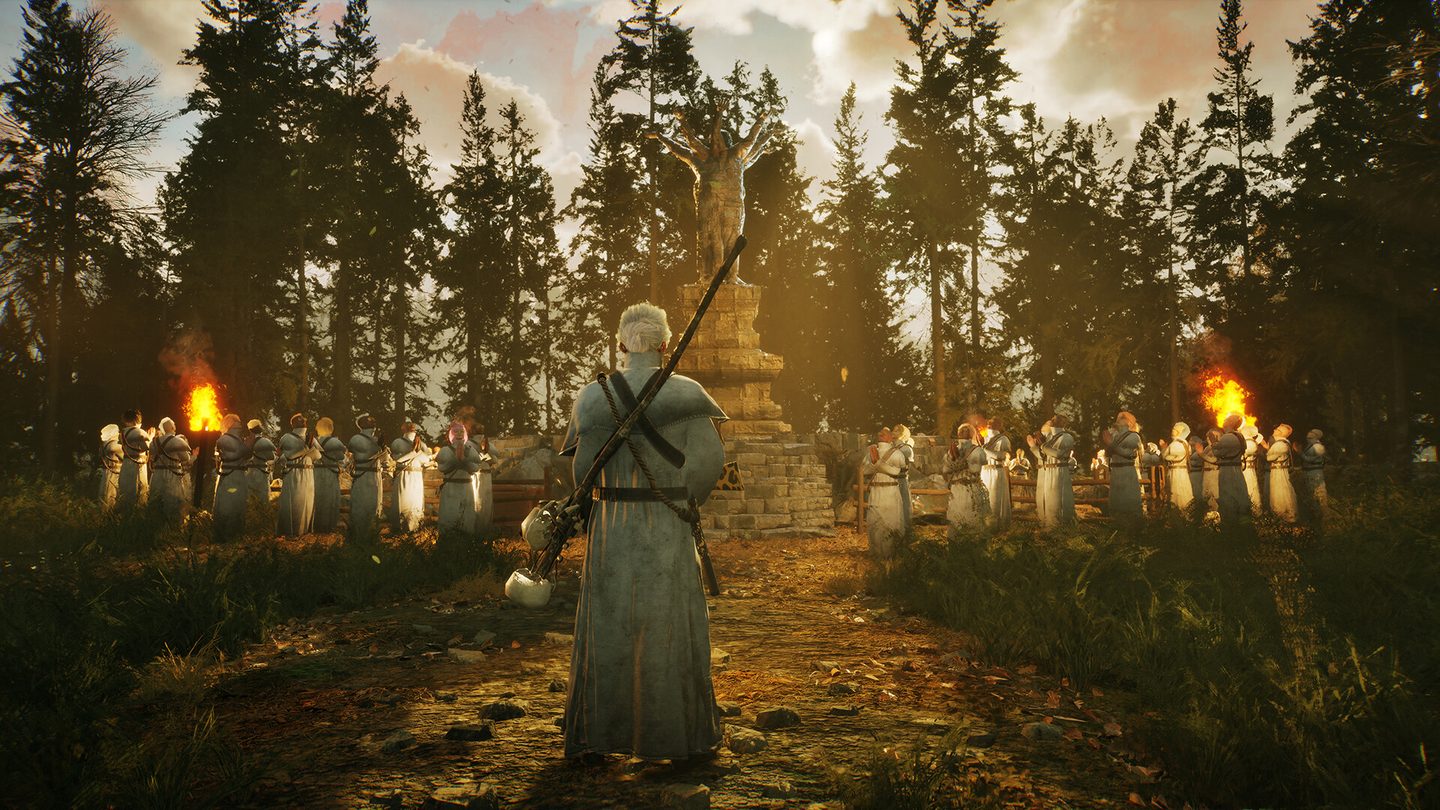
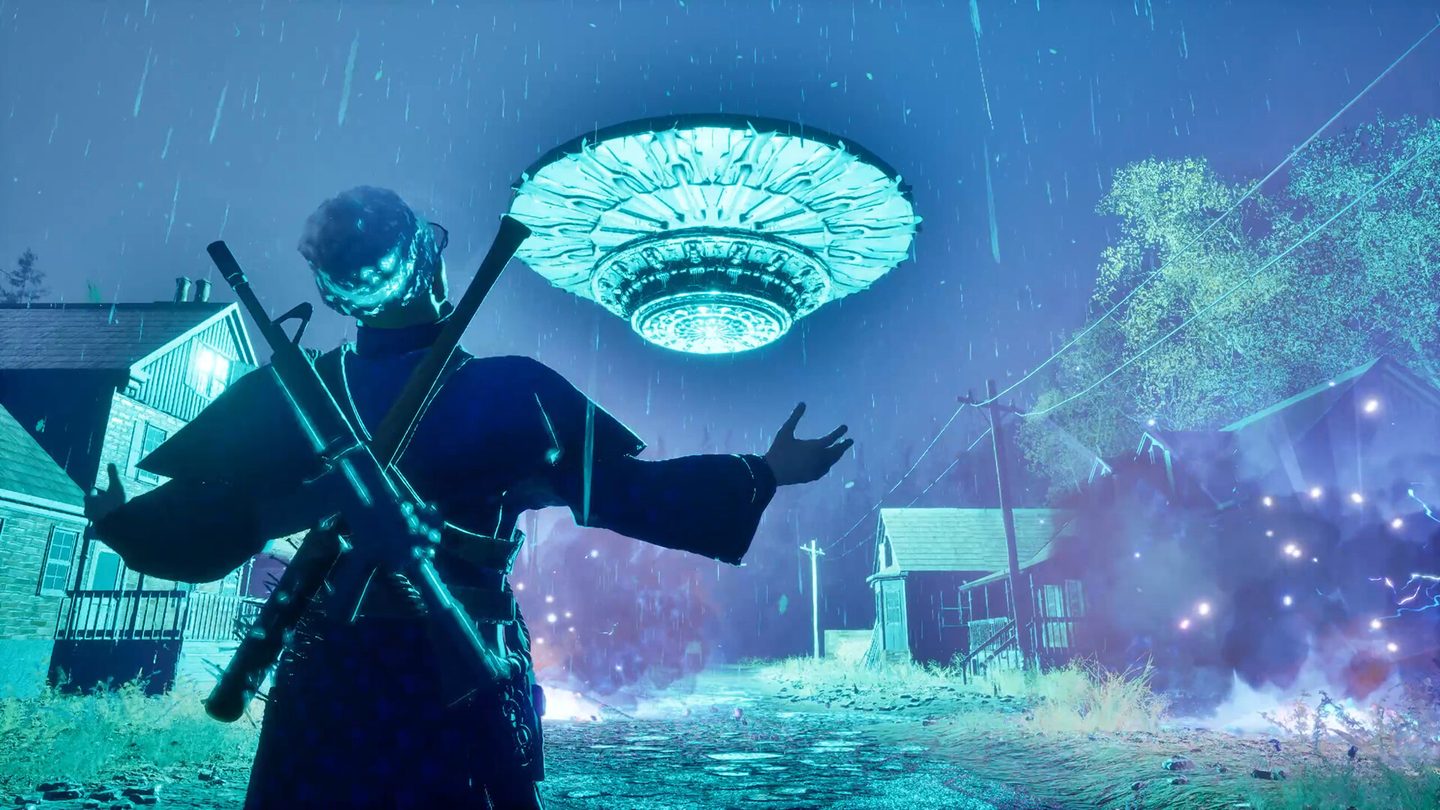
Join Us is a co-op survival game where you run a doomsday cult — recruit followers, build a belief system, ride around your compound on a pig with a machine gun. It’s dark comedy from Wolf Haus Games, a Montreal studio funded by Krafton (the PUBG people) and founded by a pair of horror filmmakers. It’s out on Xbox and Game Pass, day one, in March 2027.
What stopped me scrolling was something else. This did, from GamesIndustry.biz’s profile of the studio: Wolf Haus is about a dozen people — ten full-time, two part-time — building an open-world game with systems ambitious enough that the press is calling it “large-scale,” and they’ve committed to doing it without generative AI.
Twelve people is not enough headcount for “large-scale,” normally
I mean that literally, not as a knock on the team. A modern open-world project usually gets its scale from one of three places: a large in-house art department, a large outsourcing budget, or — increasingly, and this is the part that made the headline — a generative pipeline that lets a small team produce content at a rate their headcount doesn’t support. Take the third option off the table on principle, as Wolf Haus says it has, and you haven’t removed a shortcut. You’ve removed the thing most twelve-person teams attempting this scope would currently reach for first.
So the scale has to come from somewhere else, and the “somewhere else” is the part of this story that’s actually interesting to build, not the part that’s interesting to read a headline about.
Where the scale probably comes from instead
I haven’t seen Wolf Haus’s pipeline, so this is informed reasoning about how I’d have to solve it at that headcount, not confirmed detail from the studio. But the shape of the problem is familiar — I’ve scoped environments for teams this size before, and the levers are the same short list every time:
- Modular kits over unique assets, aggressively. A cult compound built by a handful of environment artists survives contact with an open world only if almost everything on screen is a reassembled piece of a small kit — wall panels, roof modules, trim sheets — not a bespoke prop for every building. The visual variety has to come from arrangement, not from asset count.
- Systems doing the content’s job, not art doing it. PC Gamer’s early coverage describes the cult’s belief system as “a dynamic skill tree that evolves as the game goes on” — that’s design and code generating player- facing novelty that a small art team would otherwise have to hand-build. Every hour of gameplay variety that comes from a system instead of a new asset is an hour the environment team doesn’t have to cover.
- World Partition and streaming discipline, not a hand-placed world. At twelve people you cannot afford to art-direct every square metre of an open map individually. You build rules — biome kits, placement logic, density curves — and let the engine’s streaming tools do the layout at a scale no one on the team hand-touches directly. That’s not generative AI; it’s the same procedural placement environment artists have used for a decade, just under more pressure to carry more of the map.
It is ordinary work. It’s the standard small-team playbook for punching above your headcount. What’s notable is that Wolf Haus is publicly committing to run that playbook instead of the generative shortcut, at a moment when plenty of studios are reaching for the shortcut quietly and hoping nobody asks.
The contrast that makes this worth flagging
This is the same week Saber Interactive is still cleaning up after its own AI-writer controversy — a studio that reportedly moved toward AI-generated writing and then had to walk it back publicly, disclaimer and apology included. Put the two stories next to each other and the interesting thing isn’t that one studio uses AI and one doesn’t. It’s that “we don’t use generative AI” is now a strong enough differentiator that a trade outlet leads a headline with it, for a twelve-person team nobody had heard of a year ago.
That’s a marketing choice as much as a production one — Wolf Haus’s founders have Hollywood roots, and “no generative AI” reads well to an audience that’s increasingly primed to ask the question unprompted. But marketing choices that also function as scoping constraints are the ones I actually pay attention to, because they force real decisions downstream: which kit gets built, which system carries the weight a bigger art team would otherwise carry, and which parts of the world simply don’t get built at all. Join Us is over a year from release. Whether the compound holds up once the belief system stops being a novelty is the actual test — but the production approach getting a hearing at all is the part I’ll keep watching for.
Team size, funding and release details from GamesIndustry.biz’s profile of Wolf Haus Games and the studio’s press materials; the belief-system detail is from PC Gamer’s early preview coverage. The pipeline breakdown is my own reasoning about how a team this size would have to approach the scope, not a confirmed account of Wolf Haus’s actual tools.