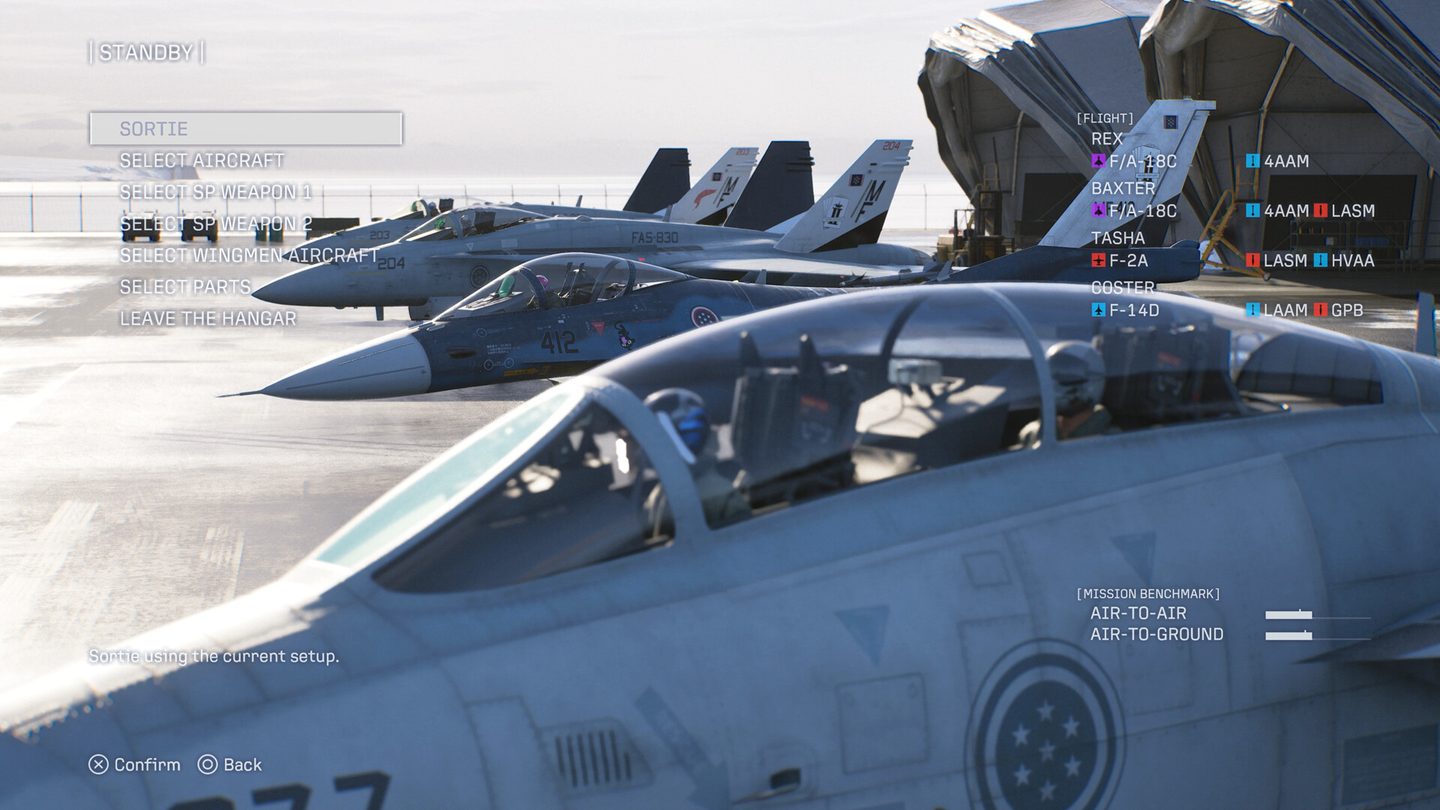
Across the eight scored verdicts I could verify on 30 September 2026, ACE COMBAT 8: WINGS OF THEVE averages 9.0, from a range of 8 to 10. OpenCritic had it at 88 from 45 critics the same day; Metacritic sat between 87 and 88 as more reviews landed through the morning, which is the normal drift of an aggregate still filling up. KitGuru’s read is that this is the highest-rated entry in the series in 25 years, with 2001’s Ace Combat 04: Shattered Skies holding first place at 89.
That is about as clean a critical result as a sequel gets. The Steam page tells a different story, and it is worth separating the two things going on there, because they have almost nothing to do with each other.
Two separate complaints, one Mixed rating
The first is a packaging decision. Pre-orders include Ace Combat 0: The Belkan War, a port of the PS2 entry. On console it installs as its own game. On PC it arrived as DLC — it will not launch unless Ace Combat 8 is installed, and Ace Combat 8 is roughly 150 gigabytes. Kotaku reported that an earlier version of the Steam page described The Belkan War as “a standalone application separate from” the full game, and that the page was later edited to match what actually shipped. Anyone who bought it to play a 2006 game on a Steam Deck is now looking at a 150GB prerequisite and no separate achievement list.
The second is performance. Players on the 29 September advance-access build report RAM usage climbing past 20GB, crashes, and no support for third-party flight sticks. Notebookcheck’s round-up of those threads puts the practical floor at 32GB of system memory. Reports from the Steam forums are inconsistent in a specific way — some people on weaker hardware describe smooth sessions while others on a 5090 describe stutter at maximum settings — and inconsistency across similar configurations is the signature of a leak rather than a scene that costs too much to draw.
Worth saying plainly: these are user reports from a store page during an advance-access window, not a benchmark suite. Nobody has published frame-time graphs yet.
Why the 20GB number is the interesting one
A game that is too heavy for your machine behaves predictably. It is slow from the first frame, it is slow in the same places every run, and it is slow in proportion to what is on screen. Memory that climbs across a session behaves differently: fine for twenty minutes, then progressively worse, and worst in long missions. That pattern points at something not being released — streamed assets, render targets, audio banks — rather than at an art budget nobody costed properly.
It also explains the contradictory hardware reports. If the leak rate is roughly constant, then the machine that survives is the one with headroom to absorb it, and 32GB absorbs a lot more than 16. A 5090 with 16GB of system RAM will fall over before a 3070 with 64. That is why the complaint threads read as noise until you sort them by RAM rather than by GPU.
We watched the same shape play out five days ago, when a 5090 cleared 60fps at native 4K and still hitched its way through Silent Hill — two distinct faults wearing one symptom, and a patch only arriving once somebody separated them.
The Belkan War decision is a build decision
The packaging complaint gets written up as a marketing failure. From a pipeline seat it looks like something else: attaching The Belkan War to the main application’s build rather than giving it its own app ID and its own depot. That choice is cheap at the time. One build, one set of scripts, one certification pass, one store entry to maintain. It costs almost nothing until the moment a customer wants the small thing without the large one, and then it costs everything, because the dependency was baked in months before anyone asked the question.
Bandai Namco can fix this. Splitting a depot is not hard. It is the kind of work that gets scheduled after launch precisely because it was never scheduled before it.
The memory leak is a better test of the studio. Project Aces built a game that critics put in the top two percent of everything released this year, and shipped it on PC with a fault that makes long missions worse the longer you fly them. The question is whether that gets a patch and an acknowledgement or a quiet month. Some publishers do own it — Activision named shader compilation as its own problem rather than the driver’s in August, which is rarer than it should be.
What the critics are actually praising
The reviews are unusually aligned on what works, which is part of why the average sits where it does. The flight model, the mission staging, the orchestral score, and a plot that commits fully to its own melodrama instead of apologising for it. GameSpot’s headline calls the game absurd and says it is better for being so, which is the correct reading of a series whose most famous mission involves flying a fighter through a tunnel.
From a craft seat the thing to watch is the sky. Ace Combat has always spent its rendering budget on weather rather than on surface detail, and it is a sensible trade for a game where the ground is four thousand feet away and moving. Clouds that hold their shape when you roll through them are expensive and hard, and getting that right matters more to how this game feels than any amount of panel-line work on the aircraft.
The flying, by every account, is the best it has been since the PS2 era. The build around it needs another month.