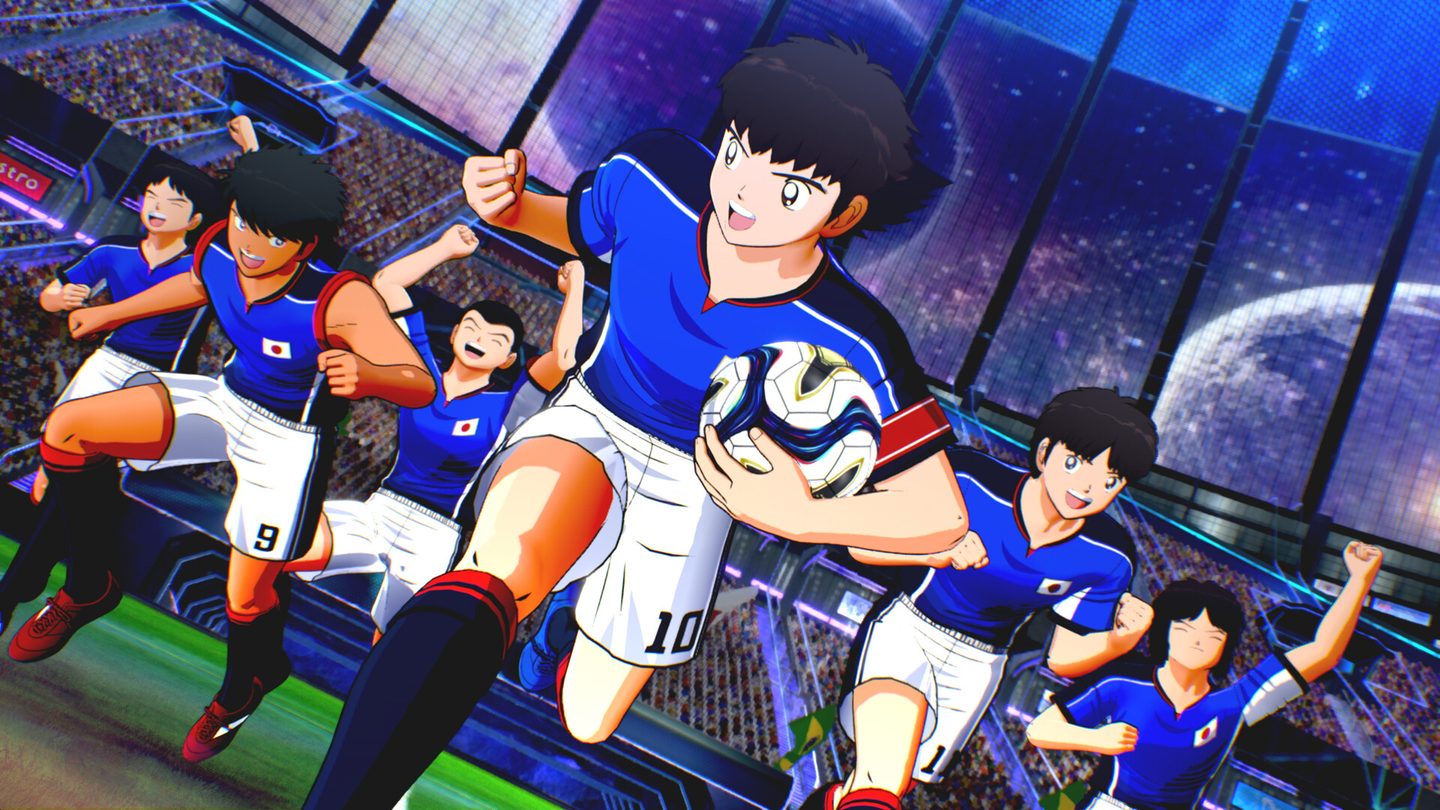
CAPTAIN TSUBASA 2: WORLD FIGHTERS is out today, 28 August 2026, on PS5, Xbox Series X|S, PC and Switch, at €59.99 on Steam. Tamsoft developed it, Bandai Namco published it, and the verdicts landed a day or two ahead of launch.
Five of them, converted to a ten-point scale and averaged, come out at 7.82, which rounds to 8.
- PlayStation LifeStyle — 9
- The Games Machine — 8
- GamersRD — 7.6 (76/100)
- TwistedVoxel — 7.5
- BaziCenter — 7
The aggregators counted more and disagree slightly with each other: OpenCritic had 78 from twenty critics this morning, Metacritic 76 from fourteen. Both sit inside the same band, so the picture is stable even if the decimal places are not. What moves between the 9 and the 7 is worth pulling apart, because the reviewers are arguing about a rendering decision without quite saying so.
The problem nobody else in football games has
A football sim wants to be continuous. Twenty-two bodies, one camera, ninety minutes. The art of it is never cutting away. Broadcast presentation exists to hide the seams that are already there.
Captain Tsubasa is adapted from a manga that works the opposite way. A single shot on goal takes pages. The pitch stretches to whatever length the panel needs, the ball leaves a trail you could see from orbit, and the goalkeeper gets an interior monologue on the way down. The source material’s entire visual language is the interruption.
So Tamsoft builds a football game that is, underneath, a fighting game. Contests resolve into authored cinematic sequences. The tactical camera is abandoned mid-play, a bespoke set piece runs, and then the simulation has to be picked back up — ball position, player positions, momentum, score state — as though nothing had happened.
That handoff is the expensive part. Every one of those transitions is a place where the game either feels like one continuous thing or feels like a slideshow with football in the gaps.
Which is exactly what the scores are arguing about
Read the five write-ups next to each other and the split is clean. The 9 is delighted by the spectacle. The 7.5 is titled, more or less, all flash and little flow. Nobody disputes that the super-shots look tremendous. They disagree about what the game costs you between them.
Pacing is what breaks first here, and it is the single hardest thing about this format. You have built the most exciting three seconds in sports games. Now you have to make the ninety minutes around them survive being repeatedly stopped.
The parry is the interesting bit of engineering
Tamsoft’s answer this time is to make the interruption itself playable. The sequel adds a parry and something called the Chain System, and reviewers keep describing them in the language of fighting games rather than sports games — reads, counters, contests that resolve over several exchanges.
Turn the cutscene into a contest and it stops being a payout. That is a genuinely smart fix. If the player has input during the set piece, the set piece is no longer dead time, and the transition back to the pitch reads as a consequence rather than a resume.
Whether it works well enough is where the review spread comes from. The people still marking it down are, I think, describing sequences they have now watched forty times, which is the thing canned animation always eventually becomes, however good the animation is.
The art side
Bandai Namco’s own figures for the game are 22 national teams, more than 110 playable characters and over 150 new moves. Take that seriously as a production number. Every one of those characters has to hold a 1980s manga line under a modern renderer, at whatever distance the tactical camera sits, and then hold up again in close-up during a super-shot where the camera is a metre from their face.
Cel shading is unforgiving that way. A physically based character can be a bit wrong and read as lighting. A flat-shaded one is either on-model or it is not, and the audience for this game grew up with the model. Anyone who has fought a toon shader through a camera range knows the two ends of it want different things: readable silhouettes far out, and enough interior detail up close that the face does not go to poster paint.
150 new moves is also 150 pieces of bespoke animation and effects work that most players will see in a handful of matches, which tells you where the budget went.
Worth noting for anyone about to buy
The recurring criticism outside the pacing is that the game makes few concessions to newcomers, and that the multiplayer offering is thinner than the single-player campaign. The campaign covers the World Youth arc, which is a reasonable entry point if you have never read a page of the manga and a straightforward nostalgia purchase if, like most of Italy, you grew up watching it under a different name.
An 8 is about right for something this specific. It is very good at the thing it is, and the thing it is remains strange.
Scores and aggregate figures as of 28 August 2026.