Black Pony Immersive went public on 19 August, in an exclusive interview with GamesIndustry.biz, followed same-day and next-day by Game Developer, GamesBeat, Engadget, PC Gamer, Kotaku and a dozen others. Harvey Smith — Arkane Austin’s studio director, and the designer behind Dishonored and Prey going back to Deus Ex — has started a new studio with fellow Arkane veteran Ben Horne. Twenty-six people, based in Austin with remote staff across the US, backed by a publisher nobody’s named yet. First project: unannounced, single-player, what Smith himself calls, in the GamesBeat interview, “an action RPG or FPS-RPG hybrid or an immersive sim, whatever” — he’s clearly tired of the genre-label argument and I don’t blame him.
I wrote yesterday about Warren Spector’s retirement and what immersive sim level design actually costs to build at modern fidelity. This is the same conversation from the other side: not a veteran leaving the genre, but two veterans trying to keep it alive after the studio that made them famous for it got shut down.
What actually got closed in May 2024
Microsoft closed Arkane Austin as part of a wider Bethesda restructuring, laying off 96 people according to the WARN notice filed at the time — reported by the Austin Business Journal, the Austin American-Statesman and Austin Chronicle among others. That studio didn’t just make Dishonored and Prey. It built and maintained the pipeline that made those games’ environments work: modular kit-bashing systems tuned for reuse across multiple traversal routes, lighting workflows built around player-triggered state changes rather than fixed camera beats, and a level-design-to-environment-art handoff where the blockout and the final dressing pass were expected to survive several rounds of systemic redesign without a full rebuild. Try handing that to a new hire as a document. It is tribal knowledge that lives in a team, and when the team is laid off, the knowledge scatters with it.
“Well-realized worlds” is a production sentence, not a marketing one
Black Pony’s mission statement, quoted by GamesIndustry.biz, promises “narrative-rich games set in well-realized worlds, where players create their own memorable experiences with expressive, emergent game systems.” Read that as a producer would and it’s fine, if generic. Read it as an environment artist and it’s a commitment to the exact cost structure I wrote about yesterday: every space has to hold up lit, dressed and collision-tested along routes the player invents rather than the ones a script anticipates. That’s expensive at any headcount. At 26 people, without an existing shared toolset to fall back on, it’s the whole risk of the studio.
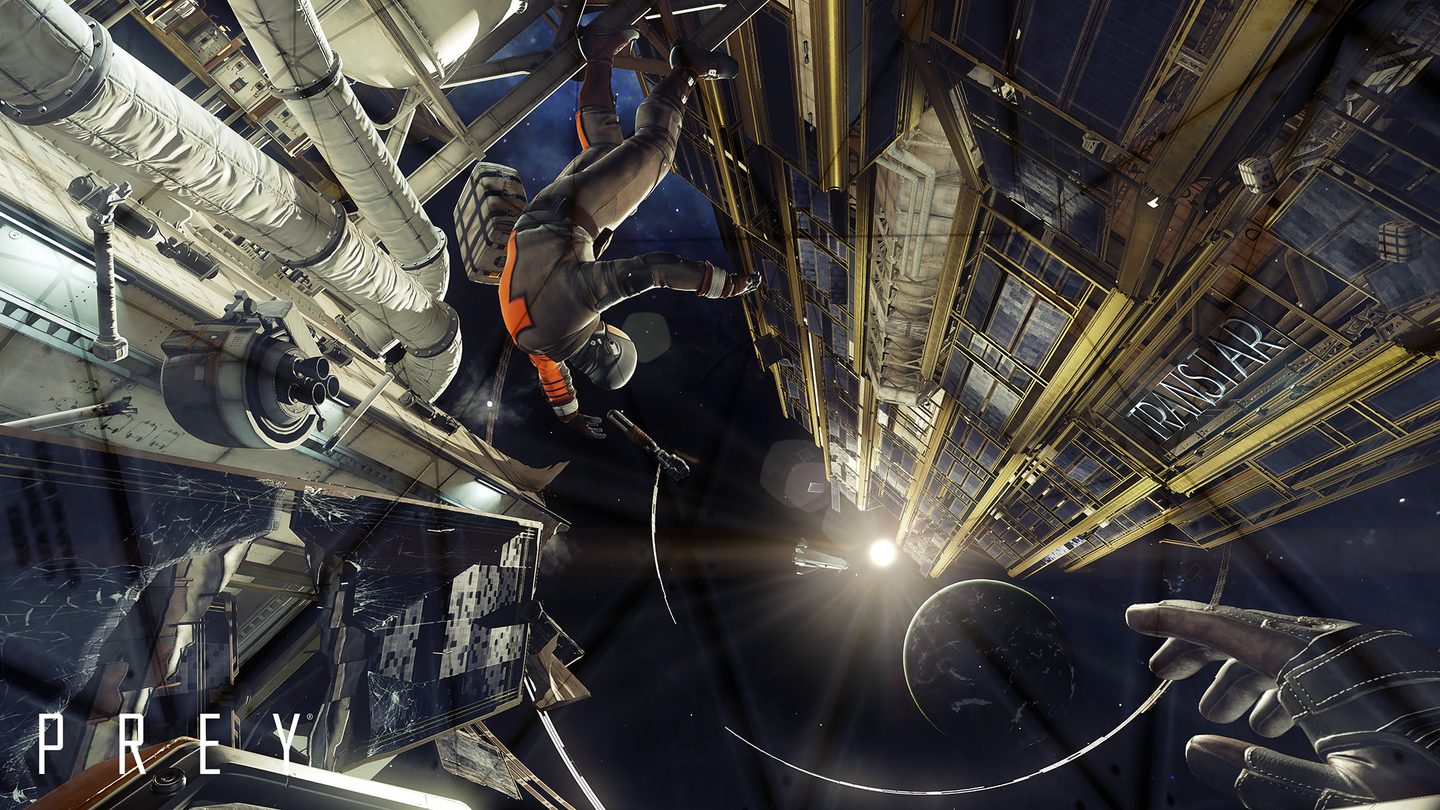
What’s genuinely interesting is that Smith is framing the smallness as an advantage rather than a constraint. He told GamesIndustry.biz the studio doesn’t have to “seek much approval from anyone else,” which makes it “very nimble” — and nimble, for an environment team rebuilding a pipeline from zero, matters more than headcount does. A 26-person studio can’t afford Arkane’s old approach of hand-authoring three redundant paths through every room at ship-quality fidelity. What it can do, if the founders are honest about the budget they actually have, is the cheaper version I flagged yesterday: reactive lighting states, moveable set dressing, systems that acknowledge player behavior without needing a fully simulated alternate route for every choice. Prey’s Talos I already leaned on exactly that kind of economy — GLOO cannon traversal reused existing geometry instead of building new rooms for it. If Black Pony’s environment team inherits that instinct along with the designers who built it, that’s the actual asset they’re carrying out of Arkane’s closure, more than any single artist’s name.
The team behind the name
The named alumni so far, per Gematsu and Console Creatures: Ricardo Bare (Deus Ex, Prey), Monte Martinez (Ion Storm, WolfEye), pulled together with staff from Insomniac, Epic, Avalanche and Volition. That’s a studio built around people who’ve each separately solved pieces of the systemic-world problem at different companies — which is either the fastest way to reconstruct Arkane’s old pipeline from institutional memory, or a recipe for several incompatible opinions about how a kit-bashing system should work. We won’t know which until there’s something to look at. Nothing about the project has shipped a screenshot yet, and the publisher backing it hasn’t been named. What’s confirmed is the harder, less quotable part: 96 people lost a studio that knew how to build these spaces, and a fraction of that knowledge is trying to reassemble itself at a fraction of the size.
Studio details and quotes from Black Pony Immersive’s 19 August interview with GamesIndustry.biz, corroborated by Game Developer, GamesBeat, Gematsu and Console Creatures. Arkane Austin closure details from the May 2024 WARN notice, as reported by the Austin Business Journal and Austin American-Statesman. The 4 August 2025 “quiet founding” date circulating on some outlets is single-sourced and not independently confirmed here.