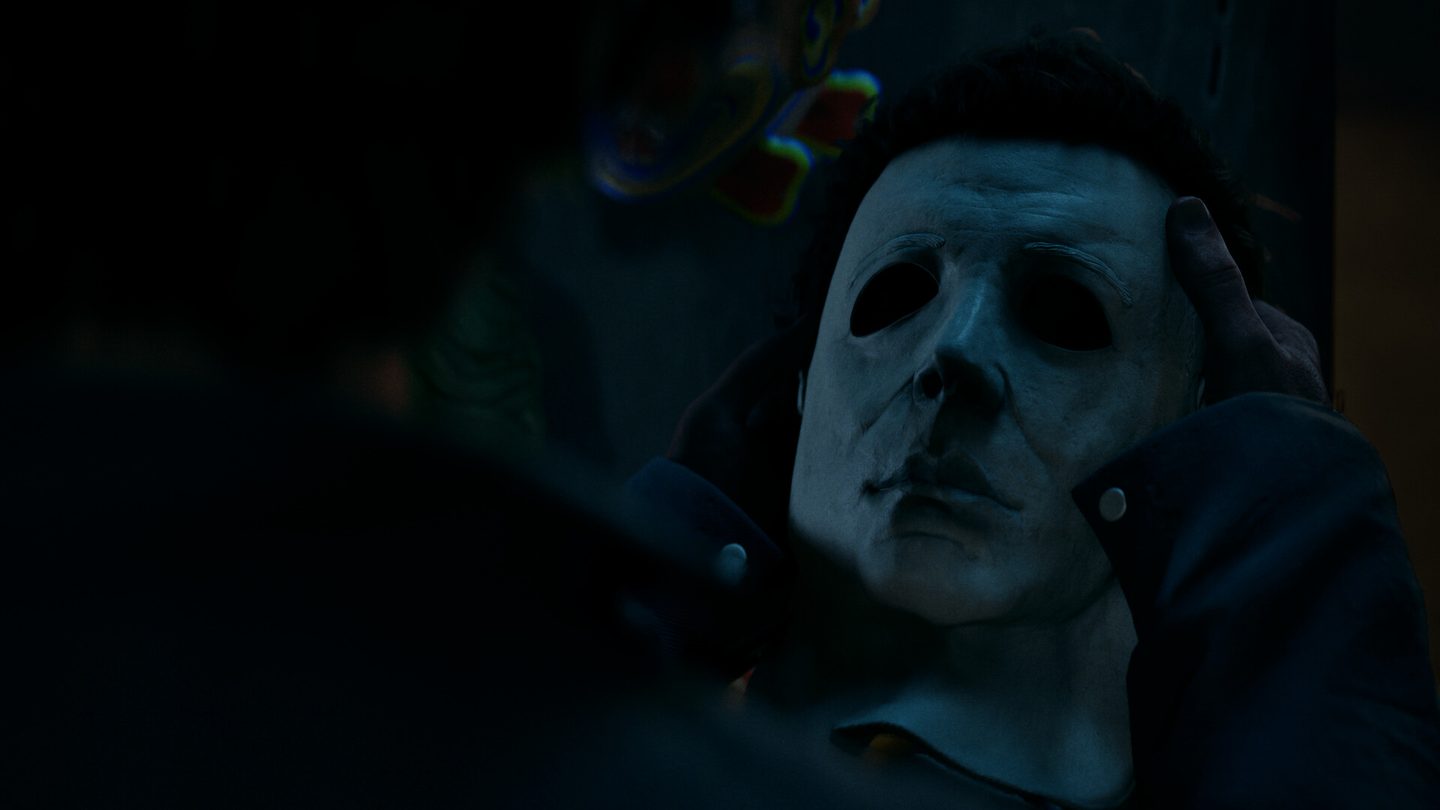
Reviews for IllFonic’s Halloween: The Game went up on 3 September. As of this morning, 5 September, Metacritic has it at 75 from eight critics and files it under “generally favorable”. OpenCritic has it at 56, with a quarter of critics recommending it.
Same game, same week, nineteen points of daylight.
Eight reviews is not a sample
Start with the size of the pool, because everything else follows from it. Eight scored verdicts is small enough that a single outlet swings the average by a point or more. Metacritic’s own breakdown, as it reads today, is half positive and half mixed with nothing in the negative band — which is a description of a game people found fine, not a game people fought over.
The two sites are not counting the same things. Metacritic assigns its own number to reviews that never published one, converting prose into a value so the review can join the average. OpenCritic works from scores the outlets themselves put on the page, and its headline “% recommended” is a separate measure entirely: a threshold count, not an average. One review that lands just under that line contributes a perfectly respectable number to the mean and a zero to the recommendation rate.
VGC is the clearest case of the problem. They published a single-player review — explicitly a review of the campaign, explicitly not a verdict on the whole game — because the multiplayer half could not be assessed yet. What does an aggregator do with that? Metacritic can convert it. OpenCritic, working from published numbers, has a different pool to average. Both methods are defensible. They answer different questions and print the answers in the same format, which is how you get a nineteen-point gap and two sets of headlines.
Gamereactor’s 6/10 is the one score I could confirm outlet-side: great fun as Michael, dull-looking, and a single-player mode they found uninspiring. That last complaint recurs. More than one reviewer described the campaign as an extended tutorial.
The game being scored does not exist until Monday
Here is the part that bothers me more than the arithmetic.
Halloween is 1v4. One Michael Myers stalking a Haddonfield street, four Heroes warning residents and moving civilians to safety, plus a neighbourhood of AI bodies to shepherd. Everything that determines whether that design works — whether the killer is oppressive or trivial, whether matches find five people in under a minute at 11pm, whether the fourth hero has anything to do — is a function of thousands of people playing at once.
On 3 September, when the reviews landed, nobody was playing at once. Deluxe preorders got in on 4 September; the standard €39.99 / $39.99 edition opens to everyone on 8 September. Reviewers played press lobbies against other reviewers and against bots, which is the only thing available and is not the game.
IllFonic has now shipped this exact shape four times. Friday the 13th in 2017, Predator: Hunting Grounds in 2020, Ghostbusters: Spirits Unleashed in 2022, Killer Klowns from Outer Space in 2024. Every one of them was reviewed in a window where the thing under review had not assembled itself yet, and every one of them changed character within a fortnight of launch as the population arrived, learned the maps, and worked out which of the four heroes was the one worth picking. A score published on day minus five is a score of the build. It cannot be a score of the game, and the aggregators have no column for that distinction.
The recurring criticisms in the roundups fit this precisely: unreliable AI, matches that run long, doubts about long-term variety. Two of those three are things a live population either fixes or makes much worse, and you find out on the Monday.
About “dull graphics”
Worth pushing back on gently, because I think the complaint and the art brief are partly colliding.
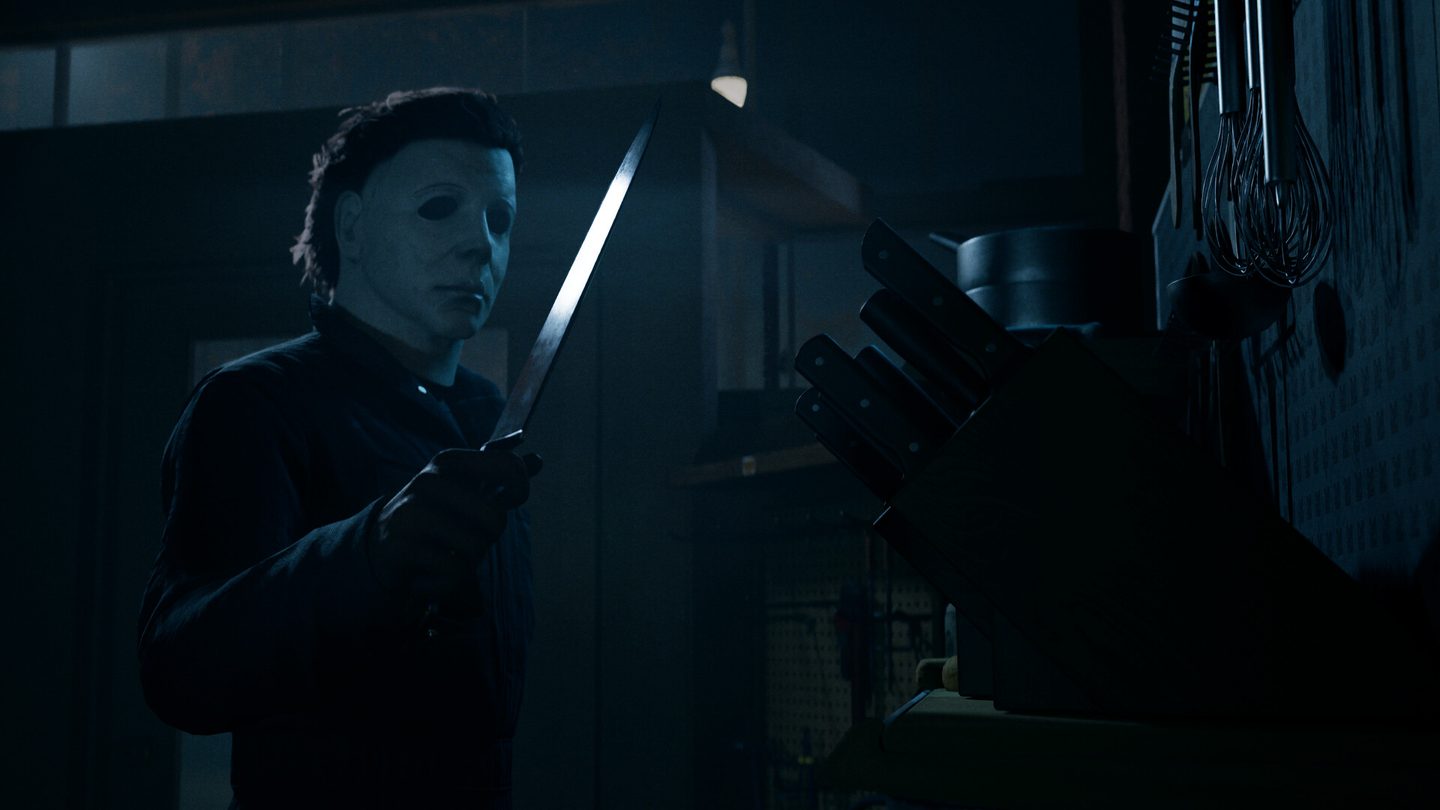
Carpenter’s 1978 film looks the way it does on purpose. Sodium street lamps, low contrast, a lot of mid-grey, and a mask that reads as a shape rather than a face precisely because nothing around it is bright. Build that faithfully and your screenshots will look flat next to anything else releasing this month. Flatness is the reference.
That said, there is a real budget argument underneath, and it is not flattering either way. An asymmetric horror game has to hold five networked players plus a street of simulated civilians at a stable frame rate on base consoles. AI routing, perception checks and pathing for a crowd of NPCs is CPU work, and it is work that does not go away when you turn the resolution down. Whatever is left over goes to the pixels. Games built this way tend to look a generation behind their release date, and the reason is sitting in the design document rather than in the art department.
Both things can be true. The palette is the film’s; the fidelity ceiling is the netcode’s.
What is settled
Confirmed: eight-critic Metacritic pool at 75 and an OpenCritic figure of 56 as of 5 September 2026; global launch 8 September on PS5, Xbox Series X|S and PC via Steam and Epic, with cross-play; a six-chapter Michael Myers campaign narrated by Loomis alongside the 1v4 mode; €39.99 standard, $59.99 Deluxe with advance access from 4 September.
Not settled: what either aggregate reads a fortnight from now. Both numbers are built on a pool small enough that four more reviews reshape them, and both are scoring a multiplayer game that had no players.
If you want a verdict on Halloween, the useful one is not going to be published this week.
Aggregate figures, outlet scores and review dates as they read on the morning of 5 September 2026; both move as more verdicts land. Release, edition and platform details from IllFonic and Gun Interactive’s launch announcement as reported. Steam listing: app 3219630.