Horizon Hunters Gathering, Guerrilla Games’ three-player co-op spin-off of its own franchise, is being rebuilt from the inside. Bloomberg reported on 19 August that PlayStation has spent since June stripping the live-service elements out of the game after closed playtests this year came back badly, and is turning it into a smaller, more traditional co-op title with a story mode instead. GamesIndustry.biz, Game Developer and multiple outlets picked up the same reporting the same day, all citing Bloomberg’s Jason Schreier. Guerrilla has reportedly been told to show real progress by the end of the year, and some of the team has already been reassigned to another project that is facing its own review.
The number that makes the retreat make sense: Hunters Gathering’s Steam playtest peaked at 561 concurrent players, according to Steambase tracking of the public sessions in February and May. For a live-service game — a category whose entire business model depends on a big enough standing population to keep matchmaking and content drops worth funding — that is a “turn it off before launch” number.
What it was pitched as, in February
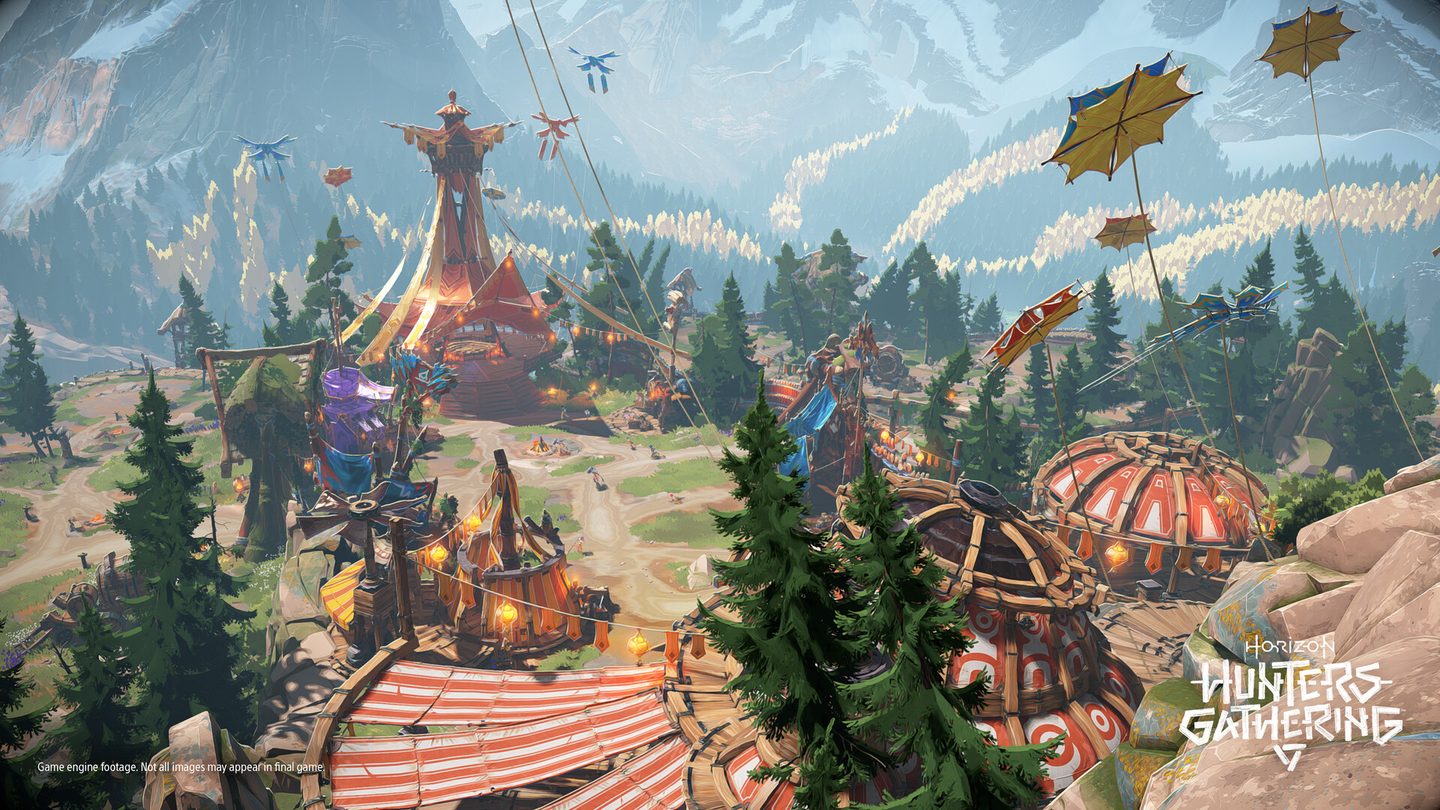
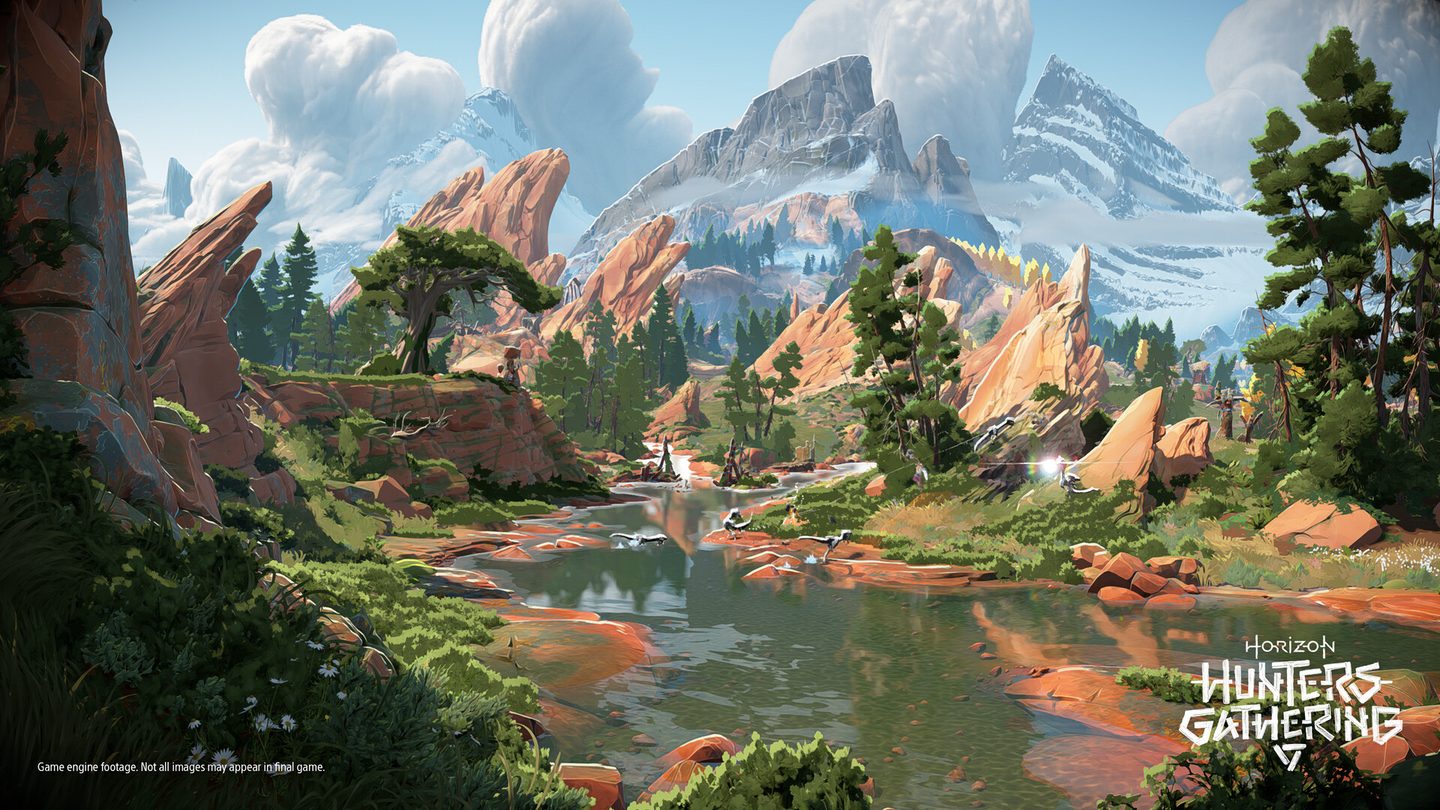
Guerrilla announced Hunters Gathering on 5 February, and the reveal was deliberately not another photoreal Aloy adventure. It’s a stylised, cartoon-leaning art direction on top of tactical three-player co-op hunts against machines — closer in spirit to a hero-shooter than to Forbidden West. That art direction choice was not incidental. A cel-shaded, graphic-novel palette is cheaper to iterate on than the mainline games’ photogrammetry-heavy realism, easier to reskin for cosmetics, and far more forgiving of the geometry and lighting compromises that come with running three players’ worth of characters, machines and VFX on screen at once instead of one. It is, in other words, exactly the art direction a studio picks when it knows the game has to ship new content on a schedule for years. I’ve written before about Avalanche staffing up for that same live-service art discipline on Hogwarts Legacy 2 — modular kits built for reuse and recombination from day one, rather than a world authored once and polished.
The pipeline problem is the same one, upside down
Hogwarts Legacy 2’s open question was whether a studio that built its reputation on “author one gorgeous static world” could retool for live-ops content cadence. Hunters Gathering’s problem is the reverse: an art pipeline that was already built and staffed for exactly that cadence — seasonal Hunter cosmetics, rotating hunt zones, matchmaking-friendly performance budgets — now has to become something closer to a fixed, authored campaign with a story mode, on whatever timeline gets the studio through its year-end review.
That is not free. Modular kits designed to be endlessly recombined into short repeatable missions read as generic and thin when a player is meant to sit in a space long enough to care about it as a place, which is exactly what a story mode demands. Environment art built to be cheap to reskin for a battle pass is not the same brief as environment art built to make a specific location memorable. None of that means the game can’t work — cel shading is a perfectly good look for a story-driven co-op game too, Guerrilla clearly has the technical bench, and Decima is proven at authoring detailed static spaces. But it means a chunk of tooling and asset planning that was built around one economic model now has to justify itself under a completely different one, on a deadline that was set by disappointing playtest numbers rather than by the art team’s own schedule.
What I’d watch for
Whether the stylised art direction survives the pivot is the tell. If Guerrilla keeps the cartoon look, that’s a signal the reboot is mostly about systems and pacing, and the art pipeline mostly gets repointed at new goals. If a future showcase quietly walks the art direction back toward something closer to mainline Horizon, that’s a signal the whole live-service premise — cheap-to-iterate look included — got junked along with the matchmaking, and Guerrilla decided it was cheaper to start the art bible over than to repurpose what live-service assets it already had.
Reporting on the reboot is from Bloomberg’s Jason Schreier, published 19 August 2026, and corroborated the same day by GamesIndustry.biz, Game Developer, Engadget, Kotaku and GamesRadar+. Playtest concurrent-player figures are from Steambase’s public tracking of Horizon Hunters Gathering’s February and May Steam playtests. Original announcement details are from Guerrilla Games’ own 5 February 2026 reveal.