The credit box on Manchuria Opium Squad now reads three names. Story by Tsukasa Monma. Art by Tsurushima. Original art by Shikako, who died in November 2025 at 37, of cancer.
Serialisation stopped with that. It restarted on 5 October, in the 45th issue of Kodansha’s Weekly Young Magazine, which carried two chapters at once and announced an anime adaptation in the same pages. From chapter 217 the drawing is Tsurushima’s. The series has passed 3.5 million copies in print in Japan, so there was never much doubt that Kodansha wanted it finished; the question was who could finish it.
The answer turns out to be somebody who was in the room.
The assistant desk is the archive
Tsurushima was Shikako’s senior colleague when both worked as assistants on Yasuhisa Hara’s Kingdom. That one line in the announcement explains the whole decision, and it is worth sitting with if you have ever tried to hand a look from one artist to another.
Kingdom is a crowd book. Ten thousand spears, lacquered armour, dust, horses, siege towers — the kind of work that cannot be done by one pair of hands and never has been. An assistant on that series spends years learning a specific set of answers: how thick the line goes at this distance, how much hatching a shadow gets before it reads as mud, where the detail stops because the eye will fill it in anyway. Nobody writes those answers down. They get corrected out of you, page after page, until your hand does them without asking.
Two people trained at the same desk come out holding the same answers. That is why a publisher reaches for a studio-mate rather than the best available draughtsman, and it is the one piece of this story that translates cleanly into what I do.
We document, and it still goes wrong
In 3D the equivalent problem is constant and we have built a lot of machinery for it. Master materials. Naming conventions. A style bible with reference boards and do-not-do pages. Shading guidelines that specify roughness ranges so two artists’ metal reads as the same metal. Rigs with locked controls so nobody animates outside the intended range.
All of it is real and all of it helps, and a character still comes back looking subtly wrong the first month after the person who set up the look leaves. Because what the documentation holds is the decisions, not the judgement that produced them. The doc says roughness 0.3 to 0.45 on worn steel. It does not say when to break that because the shot is backlit and the hero needs to separate from the background. The person who wrote it knew. The doc never did.
Manga skips the documentation layer entirely and goes straight to the only part that transfers: a person who absorbed the judgement. It is a worse system in every respect except the one that matters here.
Eleven months is what a handover costs
The gap between the death and the restart runs close to a year. Finding a successor, getting the estate and the writer and the editor to agree, then building enough finished pages that the series can come back weekly without immediately falling over — that is roughly how long that takes. This blog has made the same argument about schedules before, that a long break is usually a production buffer rather than a crisis, and a two-chapter return is the tell. You do not open with a double unless you have stock behind it.
The anime announcement landing in the same issue is editorial choreography, and good choreography. Pony Canyon has a site up and nothing else — no studio, no staff, no cast, no format, no date. Which means the adaptation is early enough that whoever gets it will be designing from Shikako’s drawings and Tsurushima’s continuation of them at the same time, deciding which of the two the character sheets follow.
That is a familiar job and a thankless one. Pulling a line that belonged to one person into a medium and a scale they never drew for is the same problem as building a 70-metre Shenron from an anatomy Toriyama never drew: the source material is authoritative and incomplete at once, and somebody has to invent the missing half without it showing.
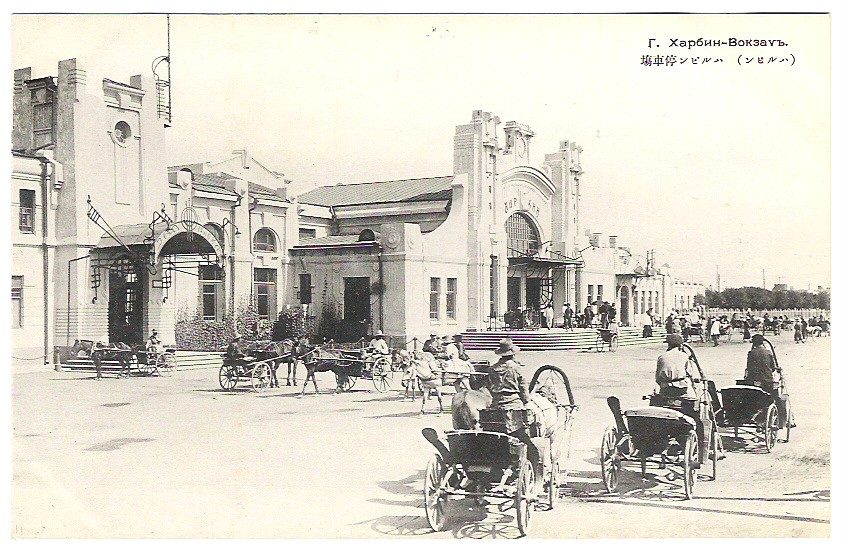
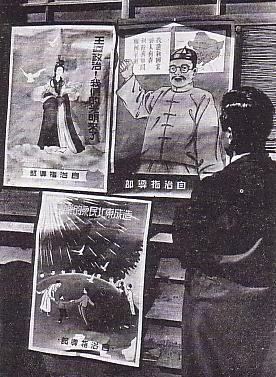
There is a second inheritance in a book like this one, and it is the dull half. Manchuria Opium Squad is period work. Harbin’s Russian facades, Kwantung Army collar tabs, the shape of a 1937 shopfront sign, what a refining bench actually held. None of that is drawing skill. It is a reference library, built over five years of somebody deciding which photographs are reliable and which are postcards, and it is the part of a handover nobody films.
I would rather inherit that folder than the style guide. A reference board tells you what the world looked like; the style guide only tells you what the last artist decided to do about it.
Manchukuo in 1937, Isamu Higata, the opium trade as a way out. The story was always going to be finished by somebody. Chapter 217 is where you can see who.