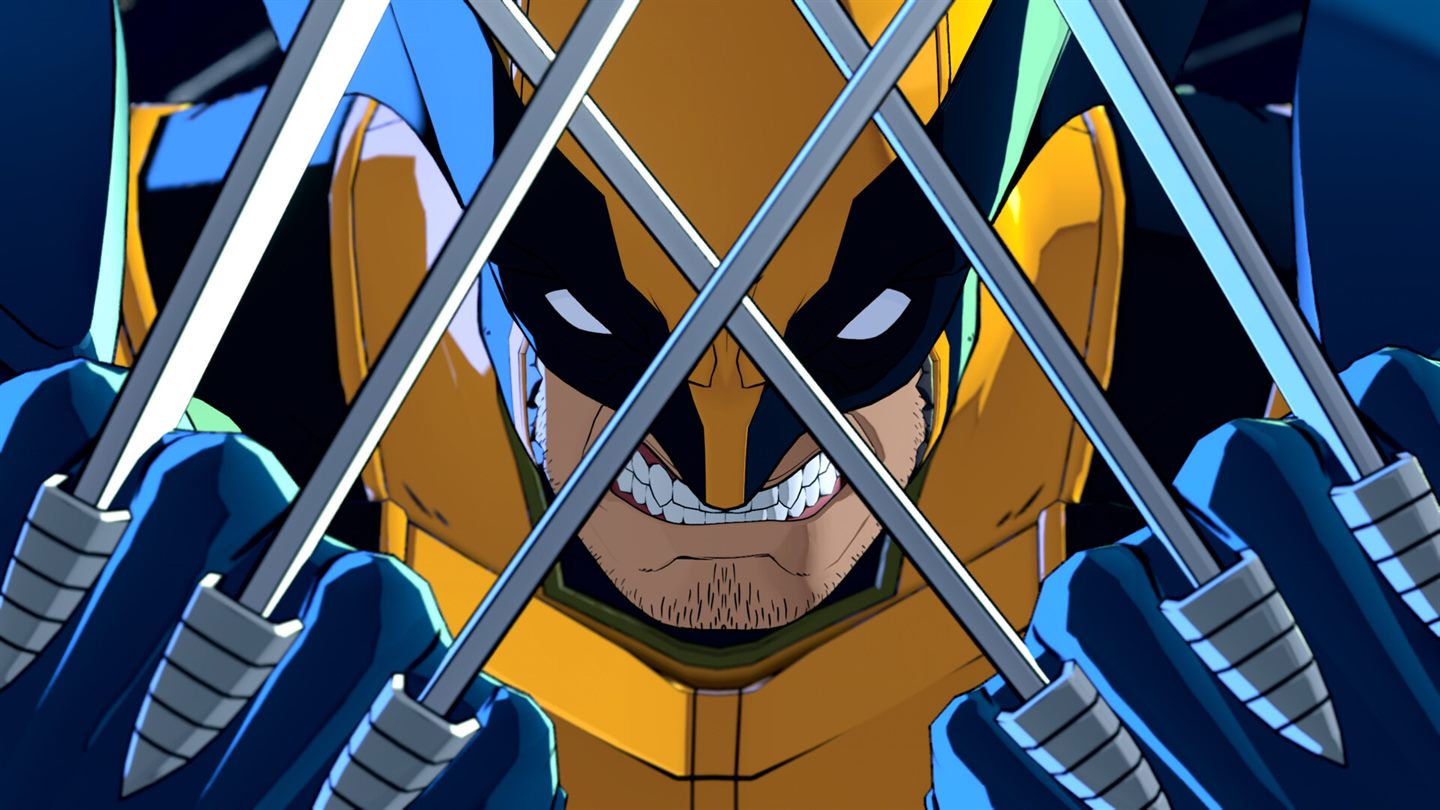
Arc System Works’ Marvel tag fighter landed on 6 August, the reviews have had a week to pile up, and the scoreboard is doing something I do not see often: it is telling two completely different stories at the same time.
Critics: 87 on OpenCritic, Mighty tier, 94% recommending it. 85 on Metacritic across 41 reviews, of which forty are positive and exactly one is mixed. Not a single negative.
Players on Steam: Mixed. 48% positive across more than five thousand reviews.
That is a forty-point gap on the same game in the same week. I went through the lot — the majors, the Italian sites, France, Spain, Germany, Japan, Australia, Malaysia — to work out where it comes from. Short version: almost none of it is about the game, and the part that is about the game is the bit I find most interesting as an artist.
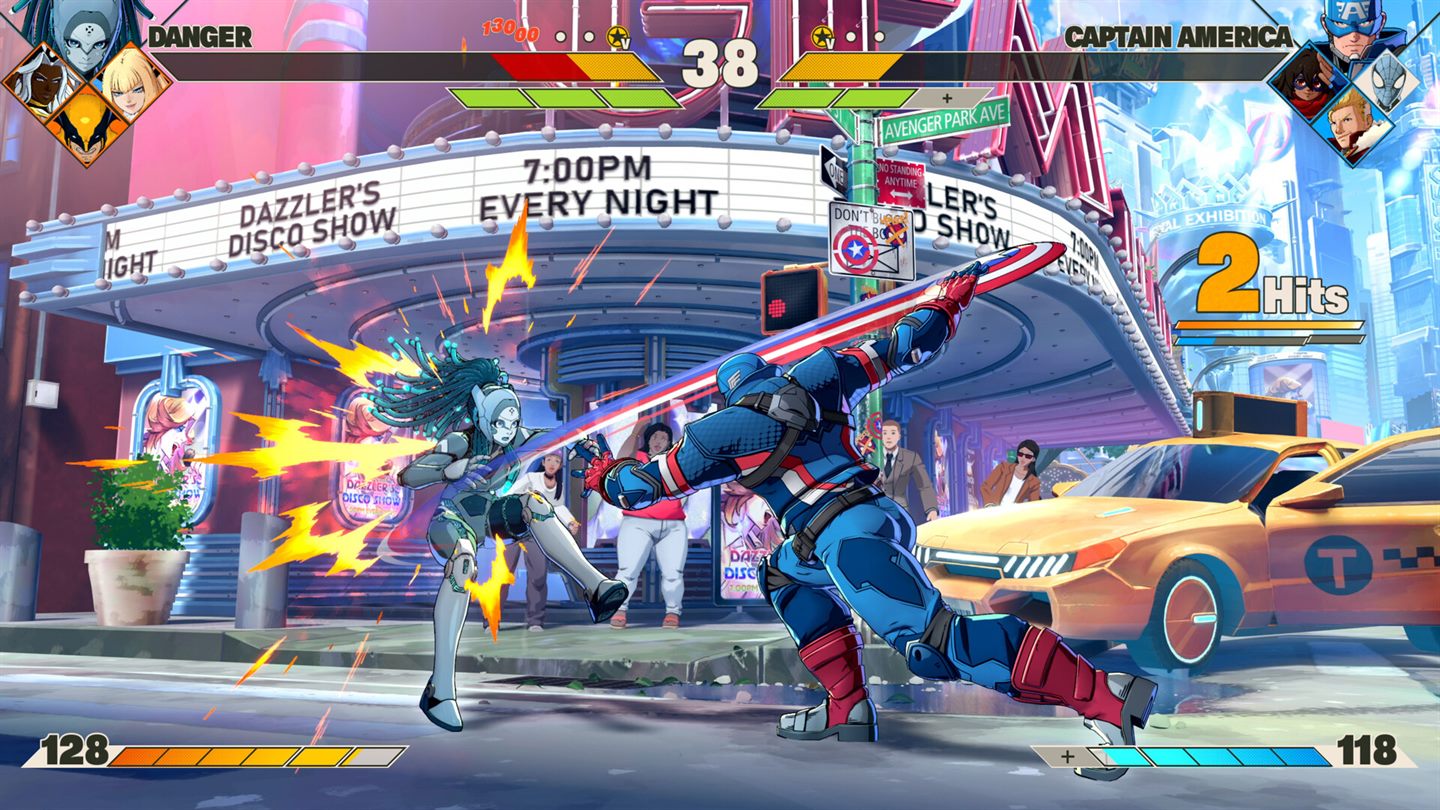
The scores, since that is why you are here
Numbers below are where they stood on 13 August 2026. Aggregates move — a couple of the early write-ups were published when OpenCritic had eight reviews in and the average was sitting at 89, which is exactly the kind of number that comes down as the sample grows. It did.
The international press
| Outlet | Score | The gist |
|---|---|---|
| IGN | 9/10 | Calls it the complete package — mechanics, teaching tools, story mode |
| Tom’s Guide | 4.5/5 | A 35-year fighting game veteran filing it under all-time favourites |
| Push Square | 9/10 | Most exciting fighter since Street Fighter 6, PS5 version near flawless |
| Destructoid | 9/10 | Flags launch balance wobbles and the odd desync, loves it anyway |
| DualShockers | 9/10 | The revival Marvel needed |
| GameSpew | 9/10 | Low floor, high ceiling; misses a proper Arcade mode |
| PlayStation Universe | 9/10 | Best Marvel brawler to date |
| COGconnected | 90 | Captures the frantic superhero-fight fantasy |
| Insider Gaming | 90 | Accessibility and depth in balance |
| DayOne | 90 | Enough content for both audiences |
| Game8 | 86/100 | Praises the systems, dings weak defence and missing Fantastic Four |
| ScreenRant | 8/10 | Complete package, but cluttered inputs and a confused UI |
| GameRant | 8/10 | Excellent in multiplayer, the solo campaign is a slog |
| Hardcore Gamer | 4/5 | Beautiful, undermined by netcode and bad matchmaking |
| Press Start | 8/10 | Marvel vs. Capcom energy with its own identity |
| GamingBolt | 8/10 | A dream, once the quirks click |
| Gfinity | 8/10 | Complete package for tag-fighter diehards |
| One More Game | 8.5/10 | Solid, deep, flashy |
| Polygon | — | The dissenting voice: says it has no coherent identity yet |
| Gamekult | 70 | Held the review back rather than score it blind at launch |
Italy
| Outlet | Score | The gist |
|---|---|---|
| 4News.it | 9.5/10 | Straight-up masterpiece of the genre |
| The Games Machine | 9/10 | Nails the balance between US comics grit and Japanese styling |
| Digitale Anime | 9/10 | Builds its own identity instead of imitating |
| ItaliaTopGames | 8.5/10 | Positive but deliberately cautious |
| Everyeye | 8/10 | Scored the PS5 version only, and says do not buy it on PC |
| Gamesurf | 8/10 | Enjoyable but chaotic; unbalanced roster, unreadable screen |
Everywhere else
| Outlet | Score | The gist |
|---|---|---|
| Meristation (ES) | 90 | The comeback Marvel fans were waiting for |
| Hobby Consolas (ES) | 90 | Arc System Works’ best work in years |
| 3DJuegos (ES) | Recommended | Great, but advanced players will feel the concessions |
| Vandal (ES) | Positive | One of the best fighters in years |
| IGN France | 9/10 | Accessible and hardcore at once |
| Jeux.com (FR) | 8/10 | Makes 4v4 readable, welcomes newcomers |
| jeuxvideo.com (FR) | Positive | Loves the craft, finds the tutorial indigestible |
| IGN Adria | 90 | Fresh for both Marvel and the genre |
| Indigo GEEK | 90 | Frenetic, precise, strategic |
| Eurogamer.pt | Positive | Fast, accessible, hugely fun |
| Digitec (CH) | — | Striking presentation, fresh takes on the icons |
| EvelonGames | 8.5/10 | Most electrifying team combat the genre has had |
| Eternal Games | 8/10 | Some of the most thrilling fights around |
| Gamer Social Club | 8/10 | Combo system respects the lore |
Add the outlets covering it as news rather than reviewing it — PC Gamer, GamesRadar+, TheGamer, EventHubs, God is a Geek, 4Gamer and Famitsu in Japan, Kakuchopurei, ScreenHub, But Why Tho, GamingTrend — and you have a press corps that is, by any normal reading, in love with this thing.
So what are the players so annoyed about?
The PC port, almost entirely
This is the whole gap. It is not subtle.
Look at the two user scores side by side. On Metacritic, where the ratings are overwhelmingly PS5 players, the user score is 8.0. On Steam it is 48% positive. Same game, same week, same patch level. The only variable is the platform.
The PC version shipped with frame pacing that fell apart on hardware that has no business struggling — the bottleneck turned out to be a single CPU core, so throwing a better GPU at it changed nothing. In a genre where the entire contract with the player is that the game reads your input on a specific frame, an unstable 60fps is not a blemish. It is a broken promise.
Then it spread. Because crossplay is on by default, PS5 players started eating rollback spikes in matches against struggling PC opponents, and the community’s own workaround became turn crossplay off — which is a grim thing to have to recommend for a game whose headline feature is a shared player pool.
And there is a second tier of complaints that has nothing to do with performance at all:
- A mandatory PlayStation Network login on a PC game, which players say drags background processes along with it
- Kernel-level anti-cheat, which means no Linux and no Steam Deck
- Players in countries where PSN does not operate simply cannot play a game they are allowed to buy
Arc System Works shipped a first big patch on 10 August that, by PC Gamer’s account, largely fixed the performance. The Steam score barely moved. That is how this works now: the review score is a record of the launch, not of the current build, and you do not get the launch back.
Everyeye were blunt enough to score the PS5 version and tell readers outright not to buy it on PC. Gamekult did something I respect more — they declined to publish a score at launch and explained why, rather than grading an online game on a broken sample. That is the correct call and almost nobody makes it.
Worth saying: it sold anyway. Nearly 24,500 concurrent players on Steam at peak and fourth on the platform’s sellers chart. Being furious and playing it constantly are not mutually exclusive.
Now the part that is actually about the game
Strip out the port and one real criticism survives, and it shows up in reviews that otherwise disagree about everything.
You cannot always tell what is happening on screen.
Gamesurf put it most directly — with a support character on top of your point character, the screen fills up and you lose track of what you are supposed to be hitting. ScreenRant found the UI failed to communicate. jeuxvideo.com choked on the tutorial. Polygon, the one properly sceptical voice in the whole pile, went further and said the game has not yet worked out what it is.
Here is that criticism in a single screenshot:
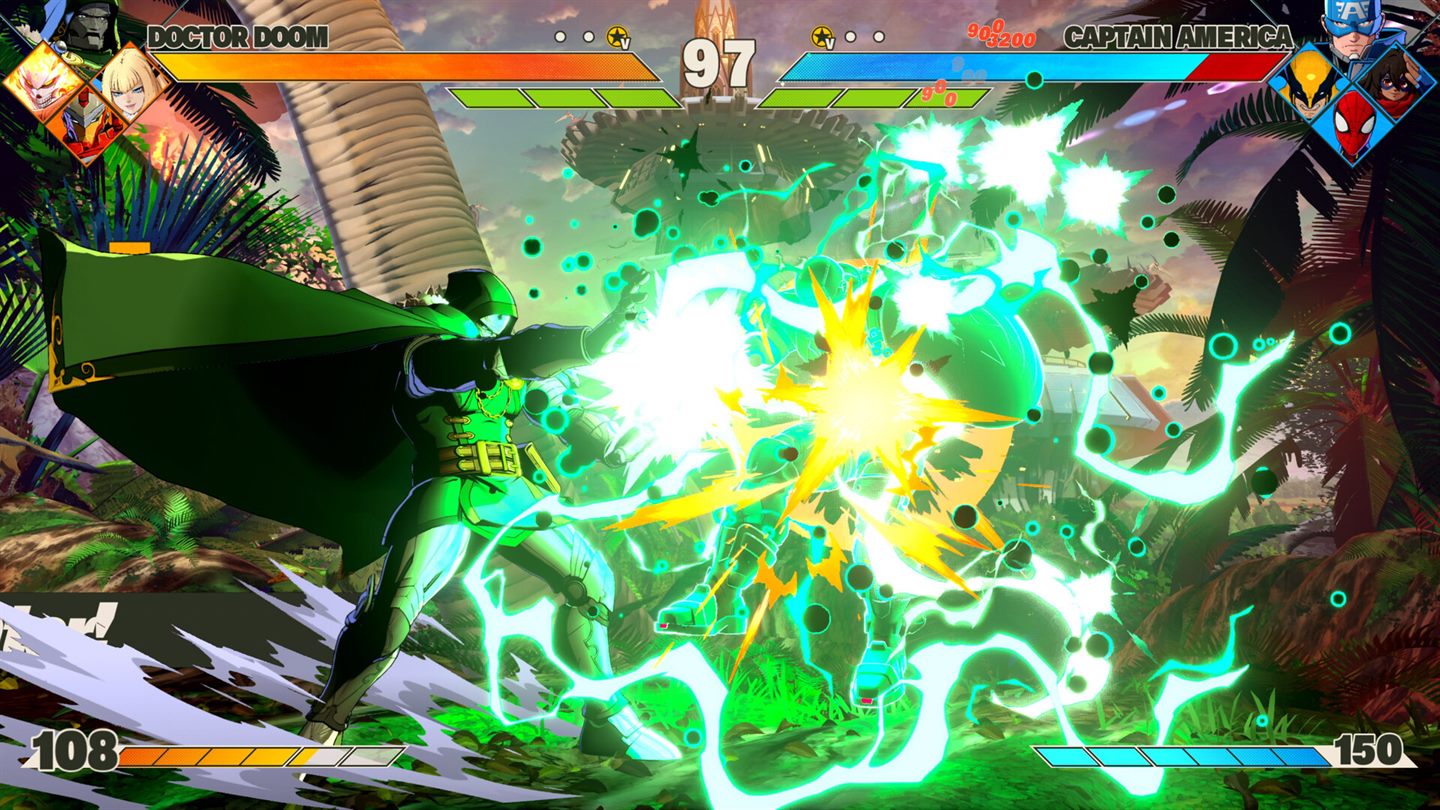
That is a gorgeous frame. It is also a fight I cannot read. Where is the opponent, what state are they in, and am I about to get hit?
I want to be fair about how hard this problem is, because it is my end of the job. Fighting games have the tightest visual brief in the medium. Every effect has to sell impact — that is the entire feel of the thing — and simultaneously never obscure the two silhouettes and the space between them, because that is the information the player is actually reading. Those two goals are in direct opposition. Turn the spectacle up and legibility goes down. There is no clever trick that gets you both; there is only where you choose to sit on the line.
Tokon sits further towards spectacle than any tag fighter I can think of, and then multiplies the problem by putting four characters per side instead of the usual two or three. Every extra body is another silhouette, another palette, another set of particles competing for the same screen. The 4v4 hook and the readability complaint are not two separate issues. They are the same decision, seen from the good side and the bad side.
The tools to fix it are the boring ones, which is usually a good sign: pull the saturation and the value range down on assists so the point characters stay dominant, put a stronger rim or a subtle desaturation on the non-active fighter, darken the stage behind a super instead of adding light on top of it. All of that needs is someone with the authority to say the effect is too loud and mean it. That is an art direction call, and it is patchable.
What they got completely right
I do not want the criticism to swamp this, because the presentation is genuinely special and it is why the scores are where they are.
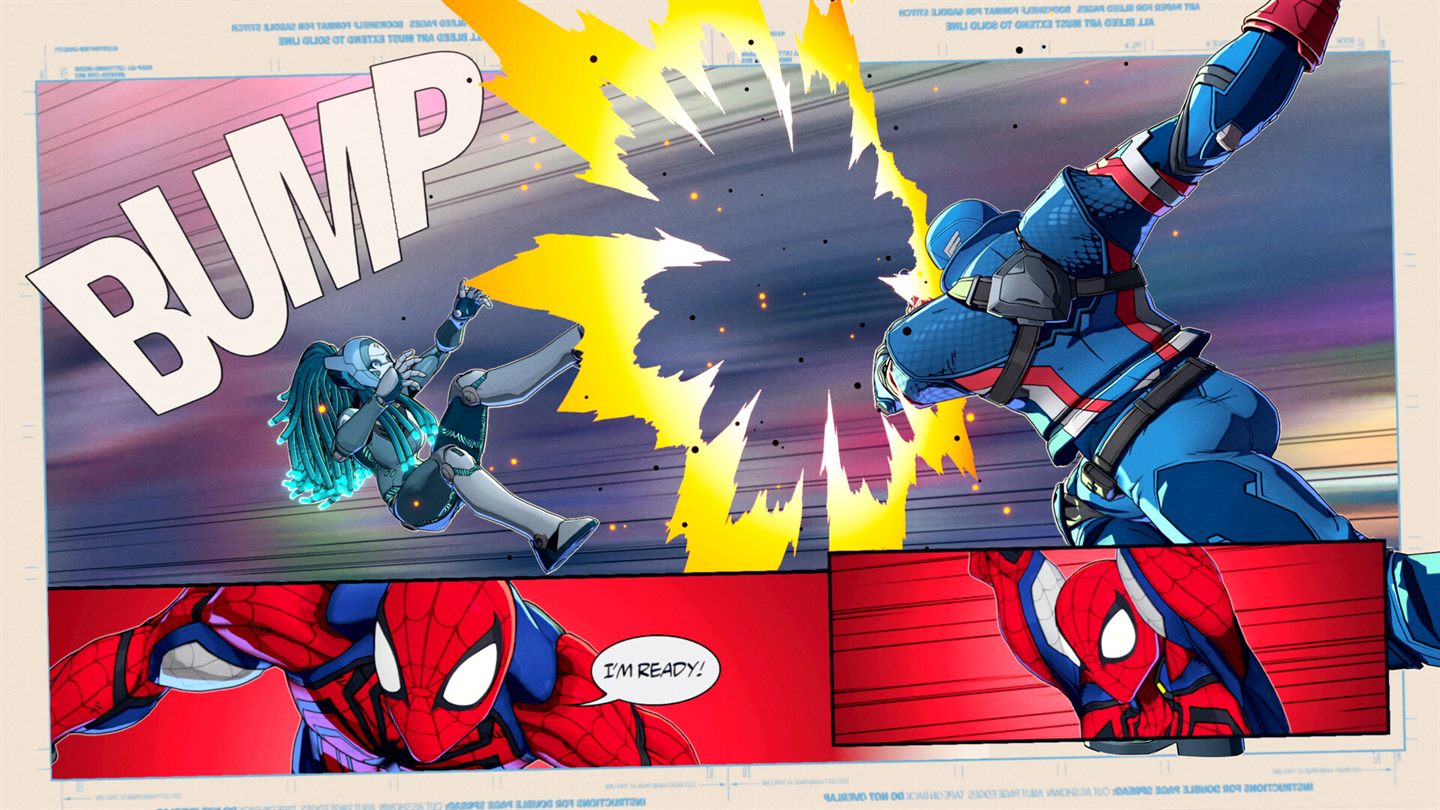
The comic-panel language is not a filter dropped over the top of a fighting game. It is used structurally — panels, gutters, sound-effect lettering, the printer’s registration marks running along the edges of the page. Somebody on that team looked at how a comic actually reads and rebuilt the transitions around it, rather than settling for halftone dots and calling it a homage. The Games Machine’s line about landing between American comics grit and Japanese styling is the right read, and holding both of those at once without the result turning to mush is the hard part.
The stages carry the same care, and this is the bit I keep going back to:
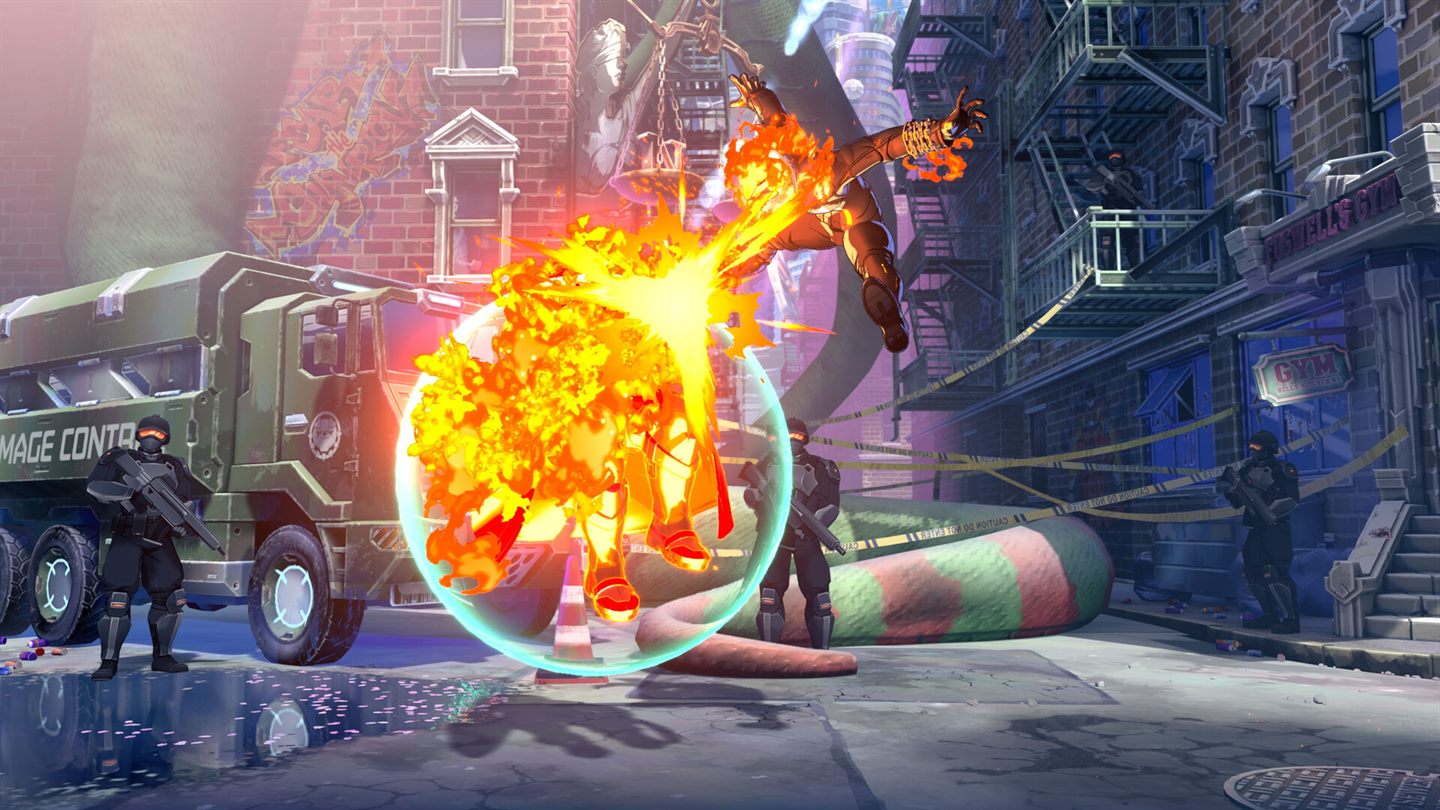
Look at what is in that frame. Damage Control have cordoned off the street. Their agents are standing behind the tape watching the fight. It is set outside Fogwell’s Gym, which is where Daredevil’s father boxed. You could strip every bit of it out and the fight would play the same. It is there because environment work at this level is world-building, and somebody understood that a background is a chance to tell you where you are and who is watching.
The rest of the consensus, briefly: the twenty launch characters across five teams of four, plus The Champion as an unlock, are mechanically distinct in ways that track their comics — Ghost Rider overheats, Captain America’s shield ricochets, Magneto zones with scrap. Kieron Gillen, an actual Marvel writer with X-Men, Thor and Iron Man runs behind him, wrote all five story arcs. The one-button specials get a newcomer into a real match in minutes without capping what an expert can do. The DualSense work drew specific praise, which is rare.
And the flaws the press agrees on, equally briefly: Episode Mode is repetitive and cutscenes recycle between arcs, so solo players get the least out of this. Defensive options are thin, which lets a snowballing opponent snowball. Launch balance is uneven, with Wolverine the name that keeps coming up. And there is no traditional Arcade mode.
What I would do
On PS5, buy it. The critical consensus is not wrong and the version they scored is the version you would be getting. It is €69.99, which is what everything costs now.
On PC, wait. Not forever — the August 10 patch reportedly did most of the work, and Arc System Works are clearly still on it. But let another patch cycle go by and check the recent Steam reviews rather than the overall score, because the overall one is carrying the launch week around with it and will for months.
If you are on Linux or Steam Deck, there is nothing to wait for. Kernel anti-cheat is a decision, not a bug.
The thing I will remember about this launch is not the 87. It is that a game this well made shipped in a state where the smart move for a PS5 owner was to switch off the feature connecting them to half the player base. The reviews were right about the game. The players were right about the product. Those are different things, and this week is a good reminder that a score measures one of them.
Screenshots are the official press assets from the game’s Steam store page. MARVEL Tōkon: Fighting Souls is developed by Arc System Works with PlayStation Studios XDev and published by Sony Interactive Entertainment. Marvel characters and artwork © Marvel.