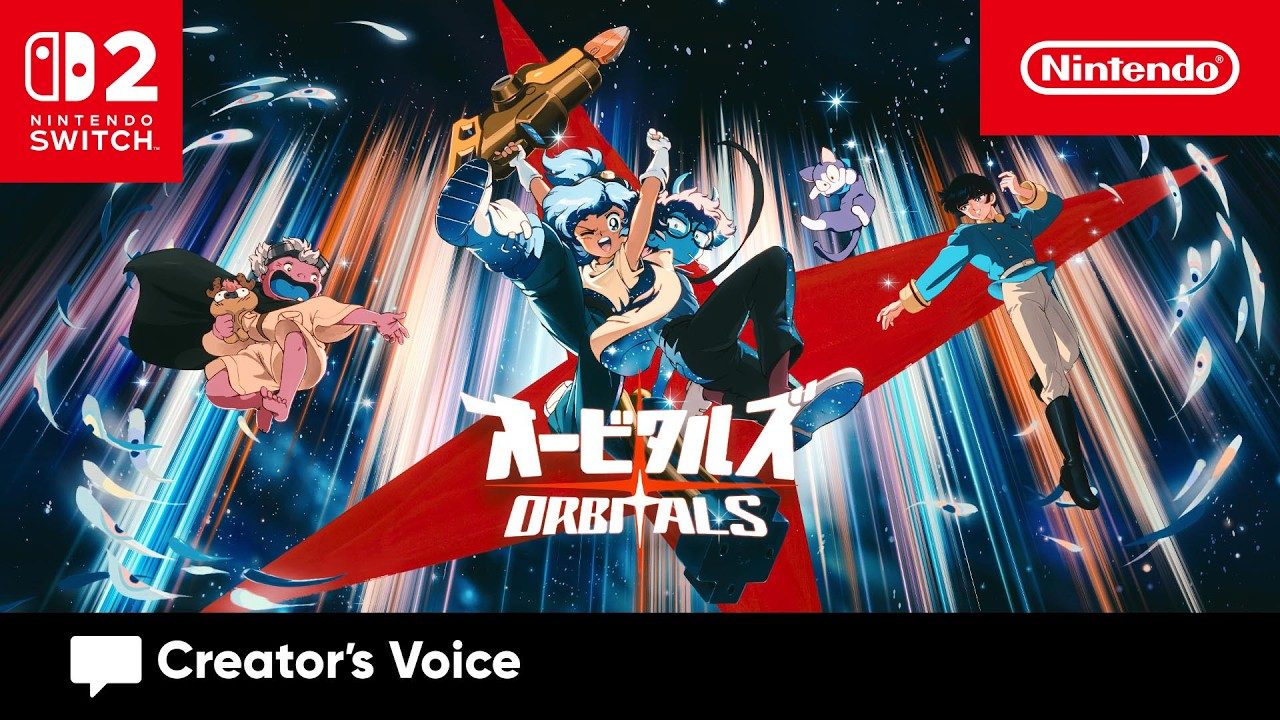
Shapefarm’s co-op puzzle adventure landed on Switch 2 on 3 September 2026, published by Kepler Interactive, and the scores came in split. Across the ten scored verdicts I could verify as of 4 September, the arithmetic mean is 8. The range runs from 6 to 9.5. That is three and a half points of daylight on a ten-point scale, which is a lot. Metacritic has the game at 81, OpenCritic at 83.
A gap that size usually means the reviewers were answering two different questions.
Two questions, two scores
The low end is scoring originality. Orbitals is a two-player, always-split-screen adventure about a pair of astronauts working separate halves of the same problem. Hazelight has been building that shape for a decade — It Takes Two, then Split Fiction. Kotaku’s write-up put “derivative” in the headline. Game Informer’s was titled Space For Improvement. Eurogamer’s three stars, the lowest number in the set, comes with the complaint that the second half stops introducing ideas and starts repeating them.
The high end is scoring execution. Nine and above from Nintendo Life, Screen Rant and CGMagazine, and the reasons are art direction, level design, and puzzles that genuinely need two people talking rather than two people pressing buttons. Both readings are defensible and neither is wrong, which is why averaging them into an 8 is the honest answer and also the least interesting sentence in this piece.
The split screen never turns off
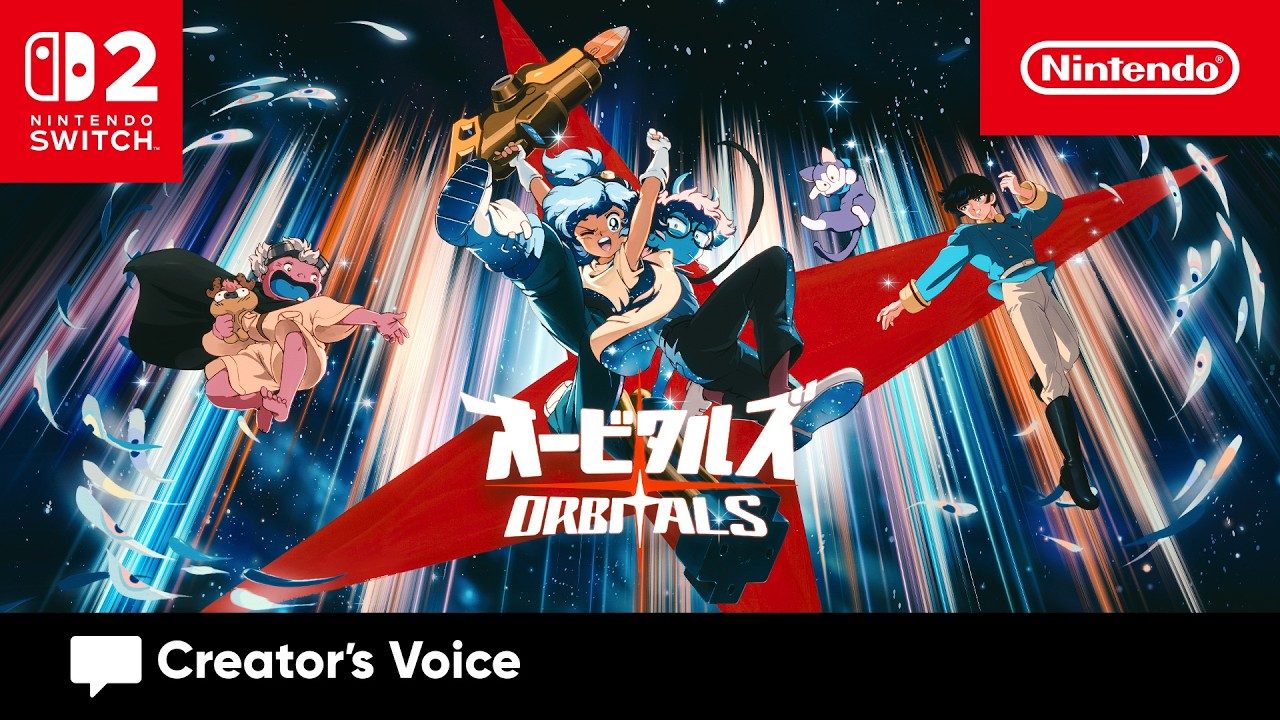
Here is the decision I would want to ask Shapefarm about. The screen is divided the whole time — local couch co-op, or online through the Switch 2’s GameShare, and either way you are looking at both halves. Several reviewers point out the design consequence: you can see the wall your partner is stuck behind, which makes it very hard to stop yourself telling them how to solve it.
The rendering consequence is the one that interests me more. Two viewports means two cameras, and two cameras means the scene gets submitted twice per frame. What that costs is widely misunderstood. Pixels stay roughly flat — each viewport is half the screen, so you are shading about the same number of fragments as one full-screen view. What roughly doubles is everything upstream of the pixels: culling, draw calls, skinning, and any shadow or reflection pass that has to be rendered per view. On a handheld-class part that CPU-side doubling is the thing that kills you, long before fill rate does.
So a game built this way is built backwards from that constraint. Low unique draw-call counts. Aggressive instancing. Static geometry that can be culled once and shared between both views. Lighting baked or cheap enough that running it twice is not a decision.
And then the art direction has to survive being viewed at half width. A detailed physically-based look falls apart at that size — the material response you paid for stops being legible and you are left with noise. Flat, high-contrast, graphic shading holds up. The 80s-anime style everyone is praising is also the style that reads in a small window, and I would bet those two facts are not independent.
Animating on twos, in real time
The other thing worth stopping on: reviewers report that the characters animate at 12 and 24 frames per second while the game itself runs smoothly. That is a style choice, and a very old one.
Hand-drawn Japanese animation has always been shot this way. A 24fps base, most action held for two frames — “on twos”, so twelve drawings a second — key beats punched through on ones, quiet held poses stretched to fours. Limited animation started as a budget measure and turned into a grammar. The snap you associate with 80s TV anime is that grammar.
Doing it in a real-time 3D engine is a different job. You sample the skeleton at a fixed low rate and hold the pose, which means switching off the interpolation the animation system exists to provide. The trouble starts with everything that is not keyframed. Cloth solvers, hair, IK foot placement and physics props all want to run at display rate, so if you step the skeleton and leave those alone you get a character whose body snaps while their ponytail glides — the single ugliest failure in the whole technique. Step them too and you have to make sure the stepping is phase-locked, or the hair lands on a different frame from the head it is attached to.
Then you decide what stays smooth. Camera moves, environment motion and UI almost always do, because a world that steps along with the characters stops reading as style and starts reading as a bad frame rate. Arc System Works worked all of this out for Guilty Gear Xrd more than a decade ago: stepped character animation, sixty frames a second on the screen. Getting the same effect on Switch 2 hardware, with two viewports live, is a harder version of that problem.
The cutscenes come from Studio Massket, and Nintendo’s own listing has full voice acting in English, Japanese and six other languages. For a two-player game that mostly happens in split halves, spending on cinematics is a choice worth noting.
The number
8, from ten scores between 6 and 9.5, collected on 4 September 2026.
Treat that mean with more suspicion than usual. An average is a reasonable summary when the verdicts cluster and a poor one when they do not, and a three-and-a-half point spread is not a cluster. What the numbers are telling you is that this game is very well made and not very new, and where you land depends entirely on which of those two you were shopping for.
Scores collected on 4 September 2026 from the outlets’ own pages and published round-ups, converted to a 1-10 scale and averaged. Eurogamer’s three stars converts to 6, DualShockers’ 80 to 8. The Metacritic and OpenCritic figures at the top are those sites’ own aggregates, not part of the average.