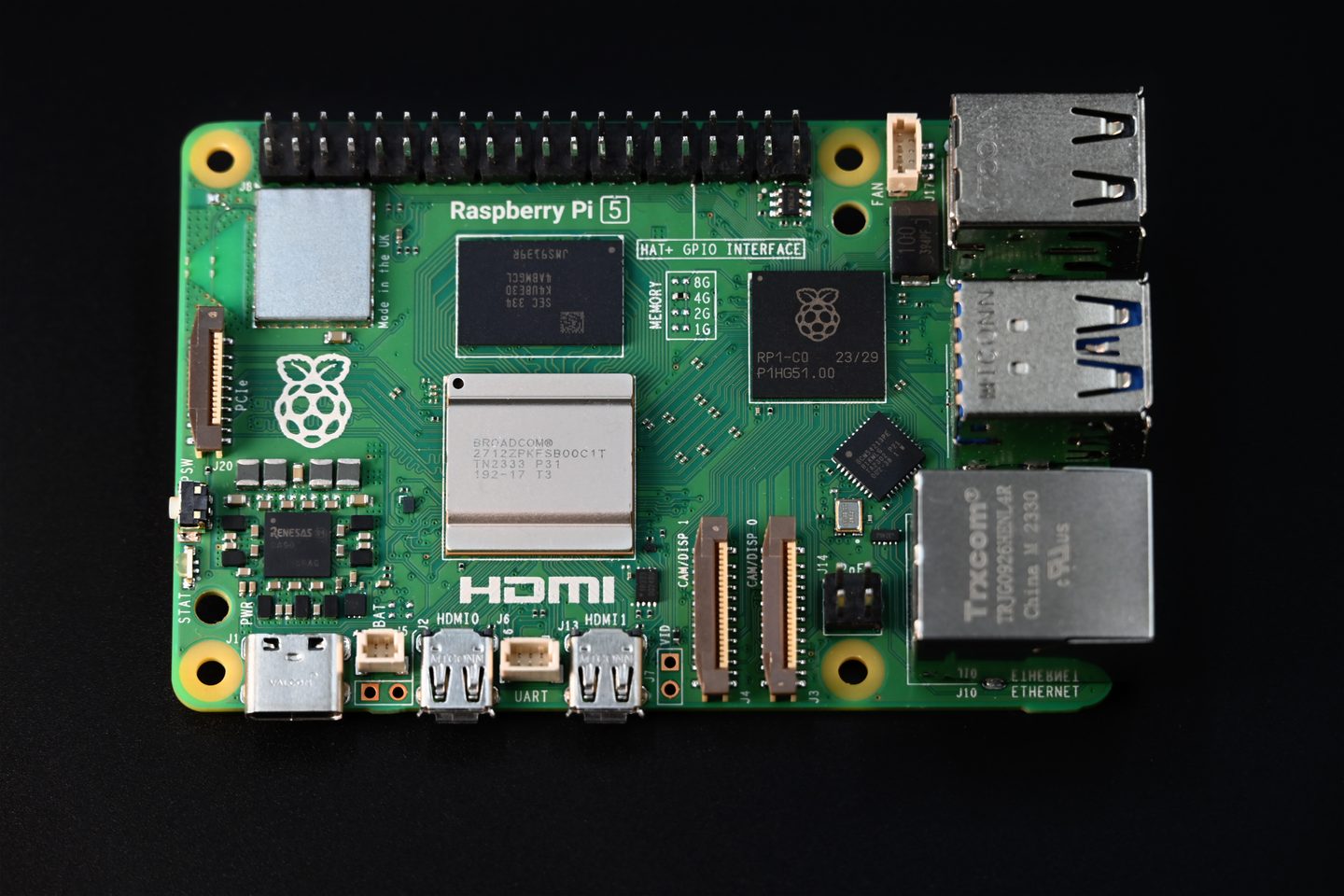
Somebody desoldered the memory package off a Raspberry Pi 5, put a 16GB one in its place, did the rework cleanly enough that the board powered up — and got a machine that stops dead before anything reaches the screen.
That story went around the Raspberry Pi forums, then Tom’s Hardware, then Hackaday, and on 21 September Jeff Geerling published a full write-up of it. The response from Raspberry Pi’s own engineers, posted on the company’s forum, was that this is deliberate and has been for a while.
What the bootloader is doing
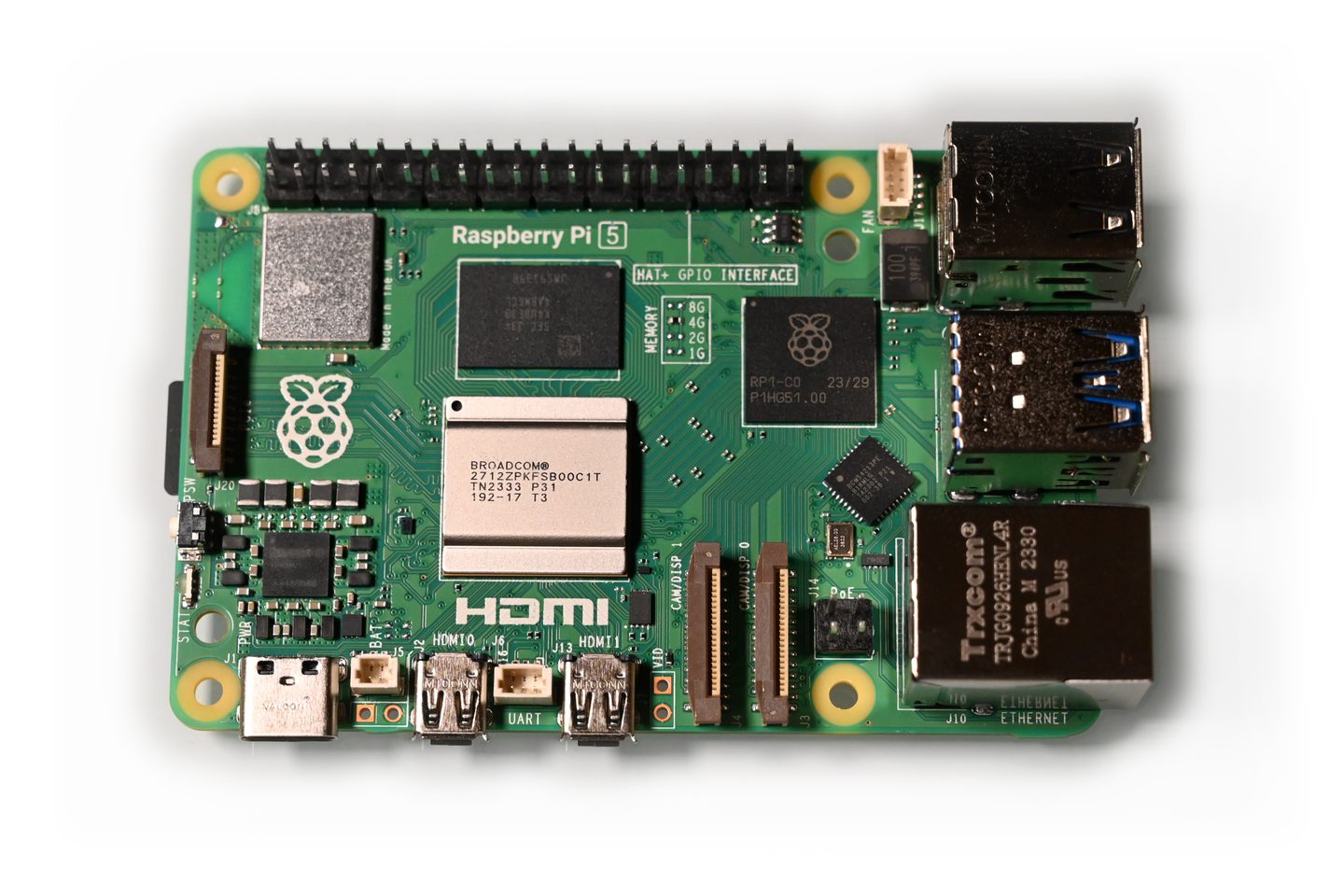
A Pi 5’s RAM is a soldered LPDDR4X package. There is no slot, no SPD chip to read, nothing you can swap with a screwdriver — changing it means hot air and a steady hand.
Since the EEPROM firmware build dated 23 September 2024, the bootloader does something it did not do before: it checks the memory it finds against a record of the memory the board is supposed to have, held in the SoC’s one-time programmable memory. OTP is exactly what it sounds like. Fuses, blown once at the factory, readable forever, not rewritable by you or by anyone else. If the part on the board disagrees with the fuses, the boot stops there.
Reports of what that failure looks like do not agree, and I could not confirm either first-hand. Some describe an explicit SDRAM mismatch reported as code 9. Others describe the activity LED blinking out the Pi’s SDRAM failure pattern, with nothing on screen because nothing has got far enough to put anything there. Both are the same wall from the user’s side.
The awkward part is that the fuses record more than a capacity number. An engineer posting as timg236 said a swap using an identical part code, for repair, can still work for someone skilled enough — which tells you the check is matching the part, not just the size. Fit a same-capacity chip from a different supplier and you can still end up outside the allowlist. Another engineer, posting as PhilE, put the policy plainly: the company has been locking devices to their original RAM size for some time.
Why anyone would bother faking it
Here is what makes this worth a Pi’s engineering time rather than a shrug.
Buy a 1GB or 2GB Pi 5 at the low end of the range. Solder on an 8GB package of uncertain provenance — untested, possibly reclaimed, possibly failing at temperature. Sell it as a genuine 8GB board. The margin on that swap used to be modest. It is not modest now.
Memory is the component that has broken the pricing of every small computer this year. Valve’s standalone headset landed at $1,059 in September, and the 16GB of LPDDR5X inside the Steam Frame was the part Valve could not shrink to hit a cheaper number. A Tom’s Hardware headline this week reads like a joke until you sit with it: memory chips now cost more per unit of die area than compute chips do. Acer’s chief executive told reporters in Taipei on 20 September that the talk of a shortage lasting to 2030 is nonsense, that warehouses are full, and that the peak lands somewhere in mid-2027. Whatever the endpoint, the gap between a 2GB board and an 8GB board right now is wide enough that counterfeiting it pays.
So the lock is a supply-chain defence wearing firmware clothes. The counterfeiters were arbitraging DRAM, and the Pi happened to be a convenient wrapper for it.
The cost lands on repair
Fraud prevention that works by refusing to boot has a second population it hits, and it is the one Raspberry Pi built its name on.
A board with a cracked memory package is now a board you can only fix with a chip of the same part code, sourced from somewhere, fitted at BGA rework temperatures. Get it wrong by one supplier and the machine you repaired is a machine that blinks at you. For a company whose product sits in school electronics clubs and on hackspace benches, that is a strange place to end up — the board is still open, still documented, still yours to solder, and the bootloader has an opinion about what you soldered.
There is a way around it, which is the part that makes the whole thing feel unfinished. Stay on an EEPROM image from 10 September 2024 or earlier and turn off the automatic firmware updater, and the check is simply not there. So the capability is locked, the lock is a software policy, and rolling back the software rolls back the policy. Anyone running a counterfeit operation can read that paragraph as easily as anyone repairing a board. The person likeliest to be stopped is the one who let their Pi update itself, which is everybody sensible.
Part pairing is ordinary now. Phones do it, consoles do it, and a component that knows its own serial number is standard practice across the industry. Seeing it here still stings. A Pi 5 is open hardware with published schematics, sold to people who are told to take it apart, and somewhere in that SoC sits a small permanent statement about what it shipped with that you are not invited to edit.