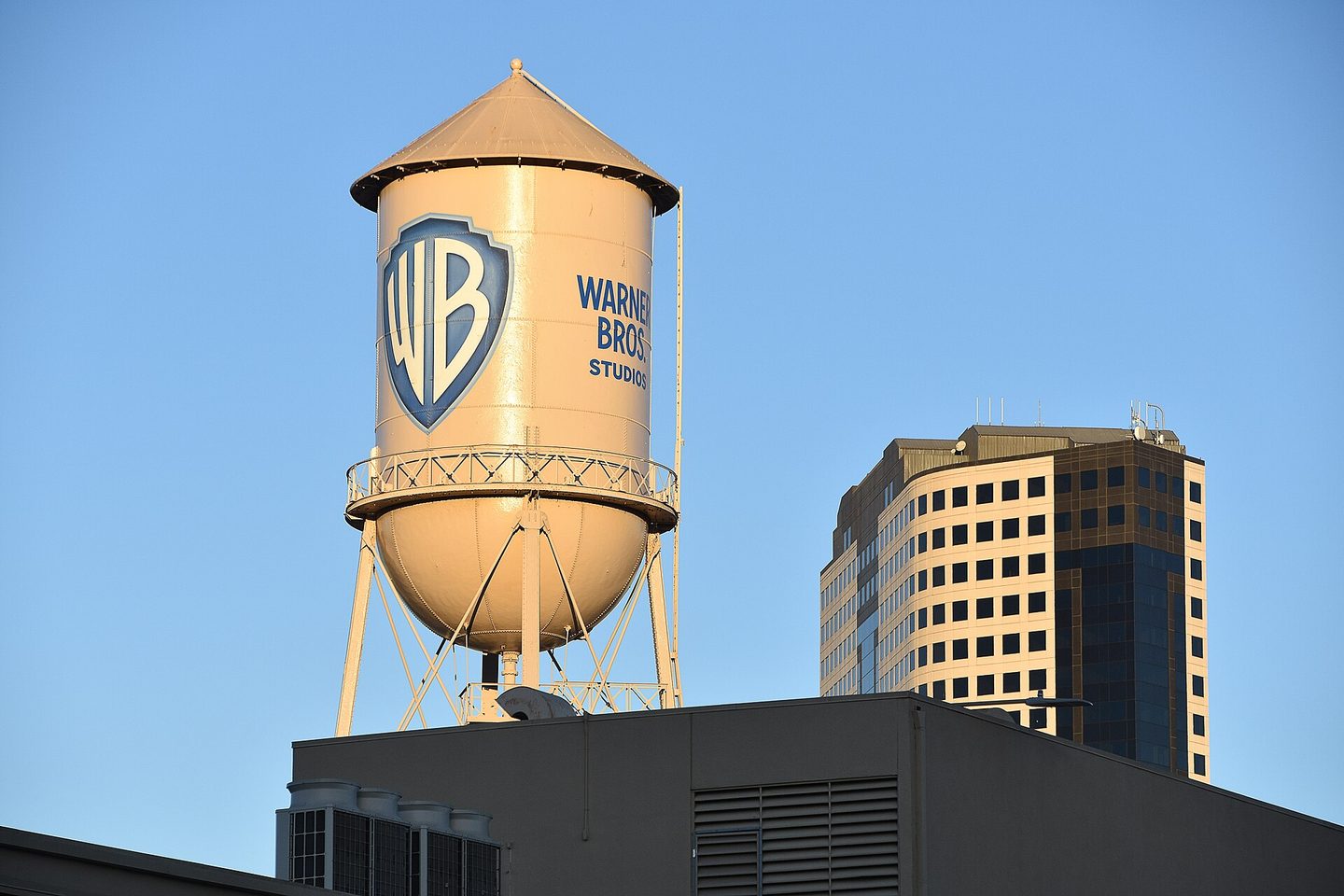
The Warner Bros. water tower in Burbank was repainted on Tuesday morning. A new line, “A Skydance Corporation”, went up within hours of the merger with Warner Bros. Discovery formally closing — Variety and Deadline both filed on the paint from the lot the same afternoon.
Signage is the fastest-moving part of a merger. Everything underneath it moves at the speed of asset databases, colour configs and delivery spec documents, which is to say years.
What closed
The transaction completed on 6 October 2026 at a reported $111 billion, the largest media deal on record, and the merged parent is called Skydance. Paramount and Warner Bros. keep their own names as labels under it. The portfolio that now sits in one company includes Paramount Pictures, Warner Bros., CBS, CNN, HBO, TNT, and both streaming services.
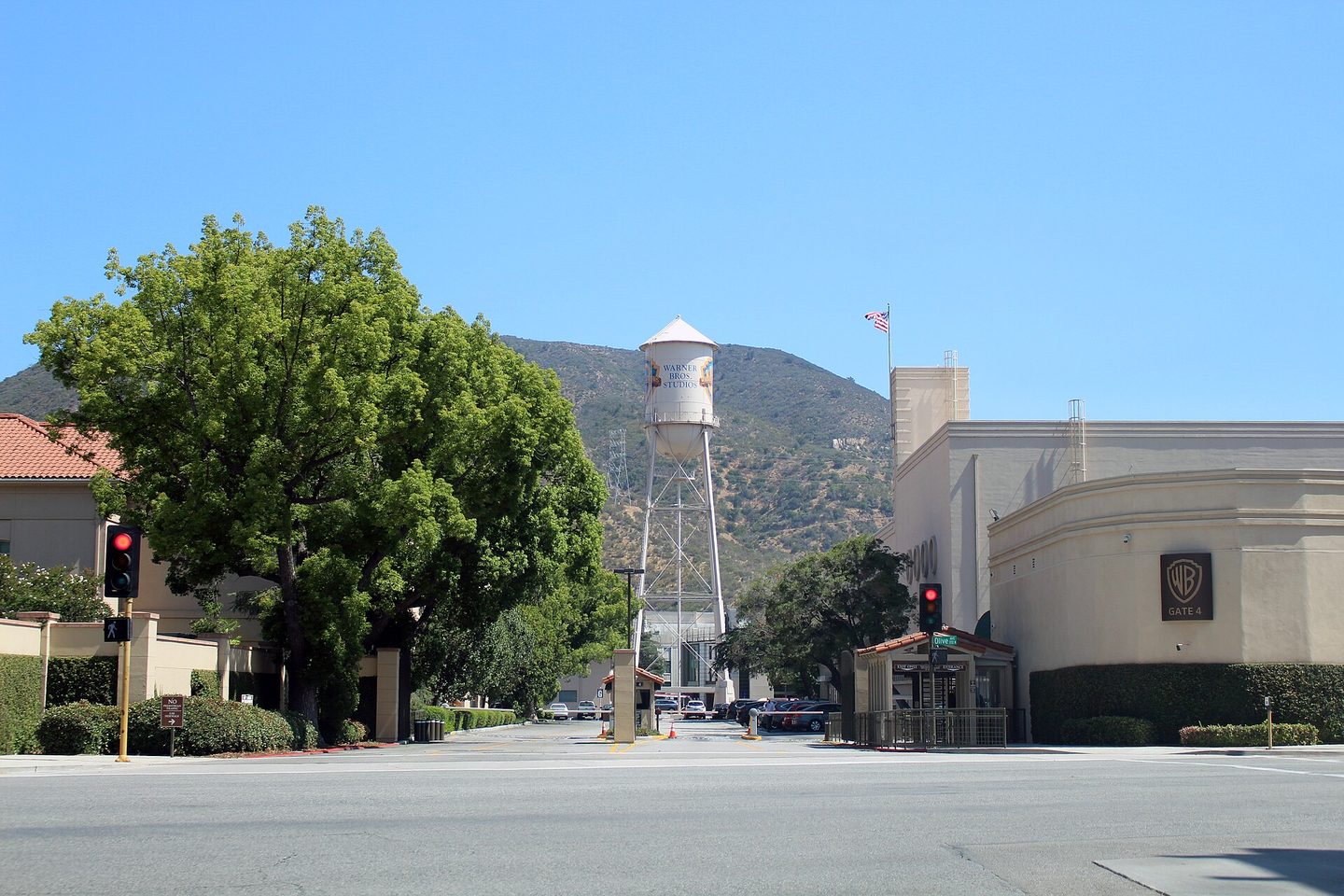
David Ellison and Ynon Kreiz held the first all-hands on the Burbank lot the same day. Per The Wrap’s account of it, Ellison told the room the company was built to compete for attention against technology companies rather than other studios, promised aggressive investment in storytelling, and said there would be difficult decisions in bringing the two organisations together. Those three things were said in the same meeting, and the order they arrive in downstream is usually the reverse of the order they were said in.
The number that reaches a vendor
Thirty. This blog went through it in September, when twelve state attorneys general settled and the reported terms put thirty theatrical films a year on the record with a penalty attached for every one it misses. A slate size normally lives in an investor deck where it can be quietly revised. This one is written into a settlement.
Set that against what the ratings agencies did on the way in. Fitch cut its debt rating on the new Skydance on Monday evening, citing significant execution and integration risks and the higher leverage of the combined company, per Deadline; S&P Global had moved the same way in late September. RedBird Capital put a further $4 billion into the WBD takeover on top of the $2 billion it had already committed to Skydance’s acquisition of Paramount Global, which Variety and The Wrap both reported.
So: a legally binding commitment to produce a fixed volume of theatrical film, sitting on top of borrowing expensive enough that two agencies marked it down before the deal even closed. A company in that position has a short list of levers. It can make fewer films, which the settlement penalises. It can make the same number for less. Or it can push the compression to the end of the schedule, where the shot count lives.
The third one is the cheapest, and it is the one artists feel. A film does not get cancelled when the money tightens. It gets fewer hero shots, more environment reuse, a shorter window between lock and delivery, and a bid conversation that opens with a number instead of a scope.
Integration risk, in pipeline terms
“Execution and integration risk” is a phrase built for a ratings note, and it has a very physical meaning for anyone delivering into either studio.
Two companies means two asset management systems with two sets of naming conventions. Two colour pipelines, often on different ACES config versions, with different show LUTs layered on top. Two delivery spec books that disagree on frame handles, audio stems and HDR mastering targets. Two vendor rosters with different rate cards for the same work. Two MPA security audit regimes, which is the one nobody mentions and the one that takes longest, because a facility cleared to receive Warner plates is not automatically cleared to receive Paramount’s.
None of that resolves because a water tower was repainted. It resolves when somebody picks a winner for each system, and the period before that happens is the period in which work already in flight gets routed through whichever half of the organisation still answers its email. HBO has work in post right now. Rodeo FX published its House of the Dragon season three breakdown the day before the merger closed — 394 shots and six CG dragons, with around a hundred crowd shots inside the Battle of Tumbleton alone. That is the shape of work — long, iterative, many vendors deep — that notices an org chart changing underneath it.
On the streaming side the direction is at least clear. Paramount+ and HBO Max are to be combined into a single platform, which the company has framed as more than 200 million direct-to-consumer subscribers in one place; Ellison has said the HBO brand keeps operational independence under Casey Bloys. Whether the two libraries fully merge or one sits inside the other has not been settled publicly. For a post house that currently masters the same title twice to two spec sheets, one destination is genuine relief — eventually. The migration will not be.
The phrase worth marking
In the town hall list, alongside the investment and the difficult decisions, was embracing new technologies to compete. Every media company says this. It lands differently coming from one that has just been downgraded for leverage, because the question of where machine learning belongs in a production pipeline stops being a craft argument the moment finance is the one asking it. There are places it genuinely helps — rotomation, cleanup, retiming, the unglamorous middle of the pipe — and places where it quietly adds a review round instead of removing one. My worry is not the technology. It is a cost target that arrives with the tool already chosen, and a schedule built on the saving before anyone has measured it.
One more detail, reported by IndieWire on Tuesday: the first film announced under the new parent is an eighth Transformers, executive produced by Steven Spielberg. Thirty a year has to come from somewhere.