Tom’s Hardware and a handful of other outlets covered a Hydra update this week that’s aimed squarely at enthusiasts, but it landed on my radar for a different reason.
What actually shipped
Hydra is a free overclocking utility built by 1usmus (Yuri Bubliy), the same person behind DRAM Calculator for Ryzen — someone with a real track record in this space, not a random tray-icon app. Version 2.3B, released this week, adds three things Nvidia doesn’t normally hand you on RTX 50-series cards:
- Direct VRAM overclocking, with a memory offset up to +3000MHz. 1usmus demoed it on his own Asus ROG Astral LC RTX 5090 pushed to 36 Gbps on the GDDR7.
- Power limit control up to 125%, on the entire RTX 50 line rather than the one or two flagship SKUs (MSI’s Lightning OC, mainly) that previously shipped with any headroom there at all.
- Direct XBAR offset control and second-generation rail offsets for the memory and core voltage domains, which is deeper access than the usual “drag the slider in MSI Afterburner” experience.
1usmus has said the initial limits are deliberately conservative and that a future release could go further, so treat 36 Gbps and 125% as a starting point rather than a hard ceiling. The story is well corroborated — Tom’s Hardware, VideoCardz and WCCFTech all ran it within hours of each other, all citing the same Patreon post.
Why I’m not excited about this on my machine
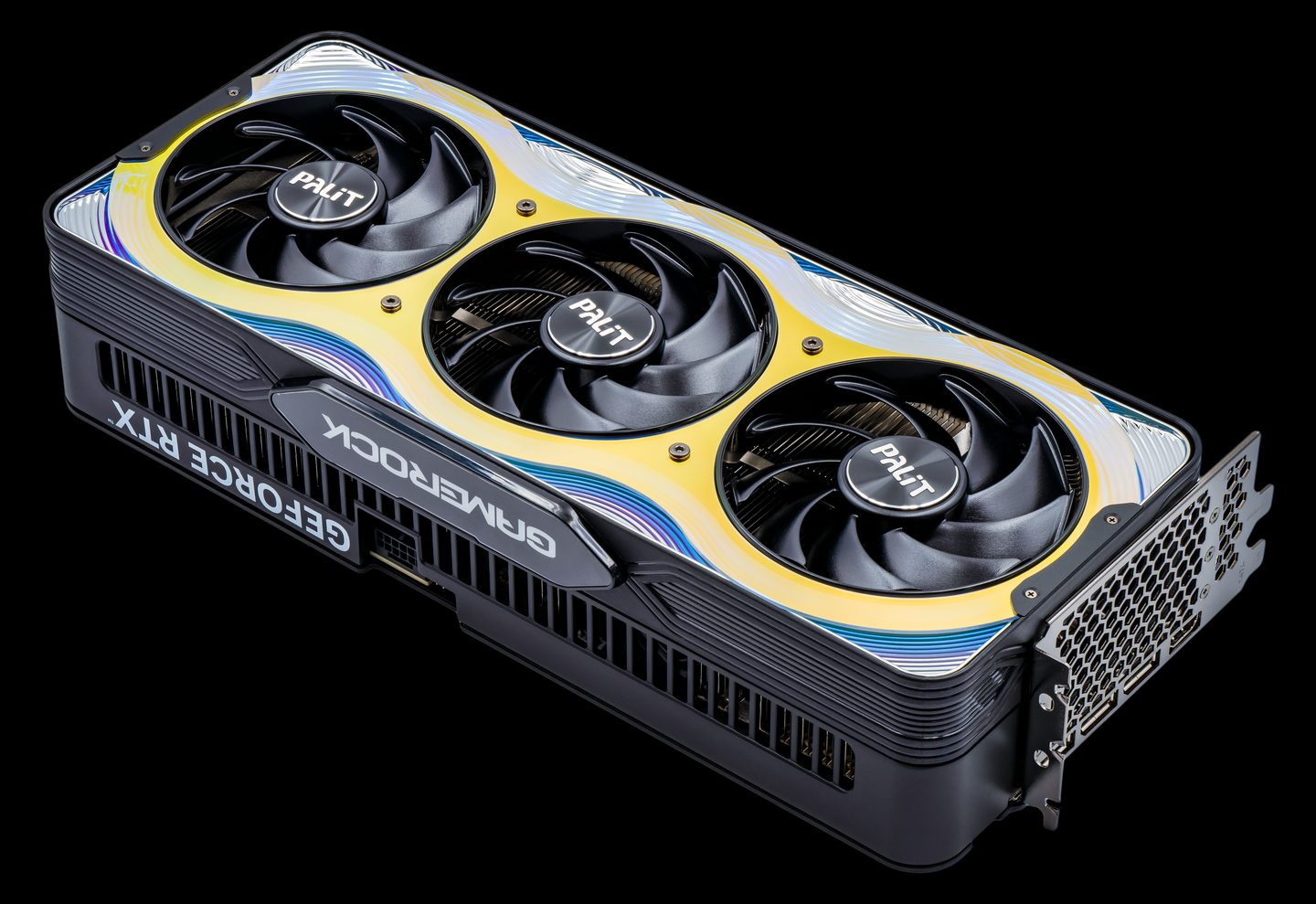
For a gamer, an unstable memory overclock is the friendliest possible kind of failure. Push it too far and you get a driver crash, a black screen, a recognisable artifact smeared across the frame you’re looking at right now. You back off five megahertz and move on with your evening.
That is not how memory errors behave when the GPU is doing production work instead of rendering a game frame you’ll forget in half a second. A single-bit error in a texture atlas, a vertex buffer, or an intermediate buffer inside a GPU renderer doesn’t necessarily crash anything. It just changes a value. Depending on where it lands, that’s a pixel that’s slightly wrong in a way that reads as noise you’d blame on the sampler, a texel that’s subtly off in a texture bake you won’t zoom into until a client does, or a simulation cache that’s silently corrupt three frames before the shot that actually matters. GPU renderers like Redshift, Octane and Cycles’ OptiX path generally don’t checksum their intermediate buffers the way, say, ECC system memory does. Nothing tells you it happened. You just get a wrong answer that looks plausible enough to ship.
I’ve chased exactly this kind of bug before, minus the overclocking — a denoiser artifact that turned out to be a driver issue, not a shader problem, and it cost most of a day before I stopped blaming my own node graph. Add a memory offset that’s stable in a ten-minute benchmark but not in a forty-minute production render, and you’ve built the same problem on purpose.
Why the temptation is real right now
I wrote about GPU pricing and then RAM pricing both going sideways this year, largely for the same reason: AI data centres are eating the memory supply that used to go to consumer and prosumer parts. When upgrading is expensive, extracting more performance from the card you already own gets a lot more attractive, and that’s exactly the position a lot of freelance and small-studio artists are in with their existing RTX 40 or 50-series card. Hydra’s timing isn’t a coincidence so much as a predictable response to that squeeze.
What I’d actually do with this
Not on the box that renders client work, full stop. If a render comes back wrong two days before a deadline, you want your list of suspects to be your scene, your shaders and your plugins — not “also maybe my memory clock.”
If you want to try it, try it on hardware you’re not shipping from, and validate with actual production content, not a synthetic benchmark. Benchmarks are built to catch crashes and thermal throttling; they’re not built to catch a texture that’s one texel off in a way a human reviewer would need to spot by eye. A long GPU-render soak test on a real scene is a much better test than three minutes of a stress tool reporting “stable.”
If you do run it anywhere near production, disable it before the shot that matters, the same way you’d back off an experimental driver before a delivery. The performance Hydra is chasing is real. It’s just not free, and on a machine whose job is to produce a correct image rather than a high frame rate, the bill comes due in the one place you’re least likely to notice it until it’s too late.
Sources: Tom’s Hardware, VideoCardz, and WCCFTech, all citing 1usmus’s own Patreon post announcing Hydra 2.3B.