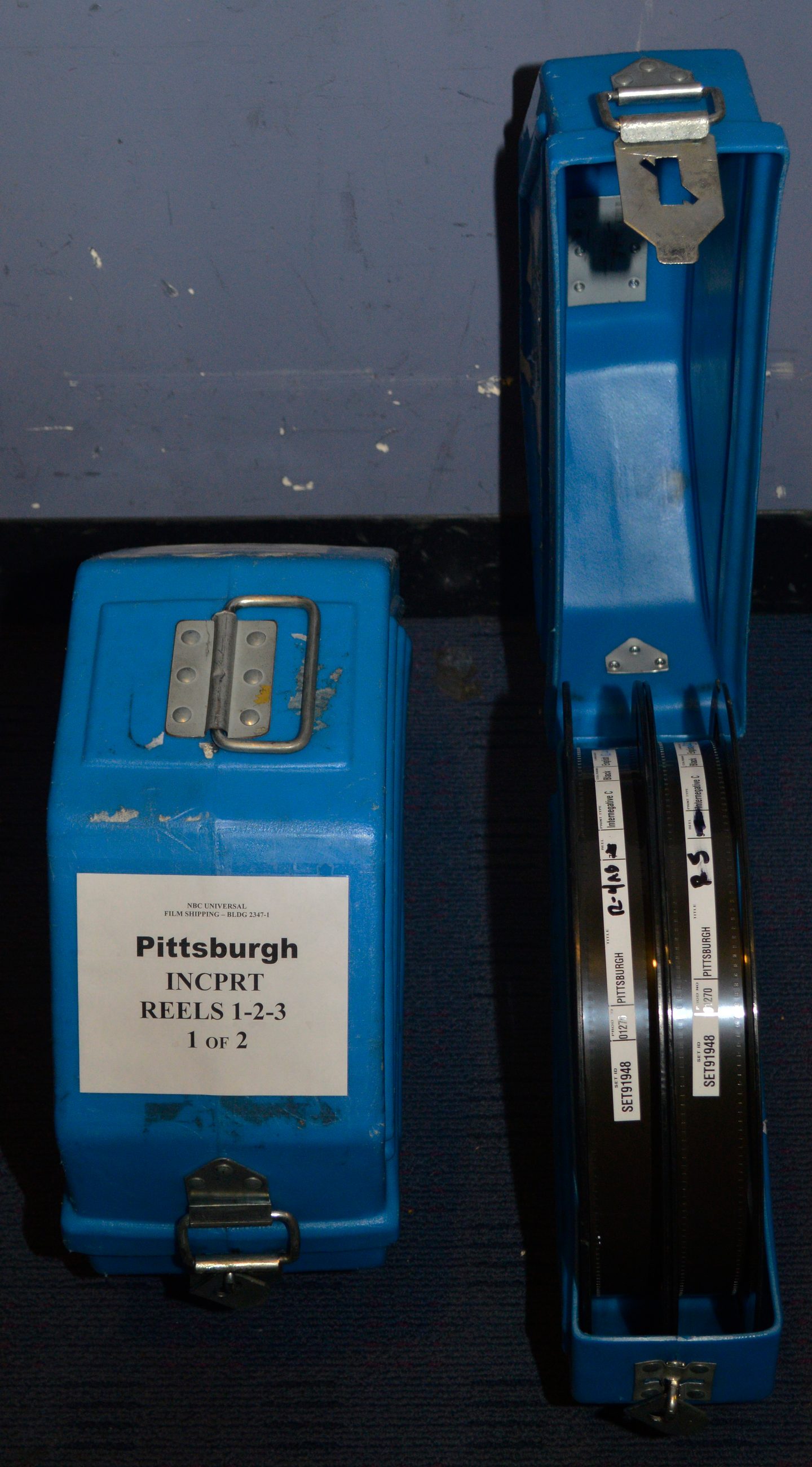
Before anyone argues about whether Han shoots first, there is a duller question that decides what the audience actually sees in February 2027: which piece of film goes into the scanner.
Disney laid out its Star Wars 50th anniversary slate this week — Lego sets, Hasbro collections, immersive experiences, a year of it — and the centrepiece is the one thing the anniversary merchandise cannot deliver. The original 1977 theatrical cut, restored, back in cinemas. Lucasfilm’s own announcement puts it at 19 February 2027 for a limited run. Reporting disagrees slightly on the day: at least one outlet has 17 February, and earlier coverage had the re-release pencilled for 30 April, close enough to May the 4th to look deliberate. The 19th is what Lucasfilm’s site says.
What Lucasfilm has not said is how.
The choice nobody announces
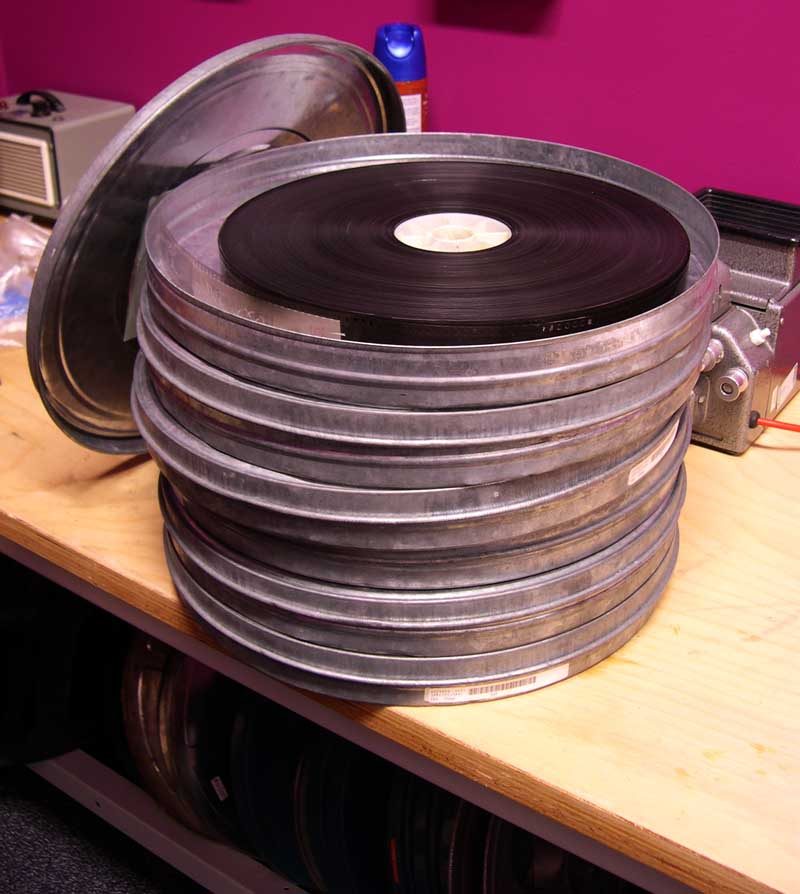
A restoration is a sequence of decisions, and the first one is irreversible: you pick a physical element and you scan it. Everything downstream — the grade, the clean-up, the resolution you claim — is constrained by what you picked. Press releases talk about 4K. Archivists talk about elements, because 4K describes the scanner and the element describes the information.
The ladder, roughly, from closest to the camera outward:
- The original camera negative. The exposed film. One generation, no copies, the best information that exists.
- Separation masters. Three black-and-white records of the red, green and blue content, struck off the negative onto black-and-white stock. They sit a generation down and they are soft by comparison, and they have one enormous advantage: black-and-white silver images do not fade the way colour dye layers do. An archive that made separations in the seventies made the most boring and most useful decision available to it.
- Interpositives and internegatives. Colour duplicates, one or two generations down, on stock that fades — and fades unevenly, cyan layer first, which is why so much film from that era ends up sitting in pink.
- Release prints. Furthest out, but a surviving print is the only element that was ever graded for an audience, which makes it evidence about intent even when it is poor evidence about detail.
For the 1977 Star Wars, what condition each of those is in has been argued over by preservationists for twenty years, mostly from outside the vault. The widely repeated version of the story is that the original negative was conformed to the 1997 Special Edition edit during that work, leaving no assembled original. I have seen that claim in a dozen places and a primary source in none of them, and the loudest denials come from the same forums as the loudest assertions. It is not something to state as fact.
What is on the record is narrower and still telling. In 2004, Lucas told the Associated Press he would not spend money refurbishing the original cut, because to him it no longer really exists. Read that as a man describing an edit he had moved on from, or as a man describing a negative full of replacement splices. Either reading is available, and he did not clarify.
So the honest position in November 2026: there is a dated theatrical release, and no public statement about what it was built from. Everything else is inference.
The effects shots were already copies
Here is the part that makes this film a strange restoration candidate, and it has nothing to do with 1997.
Every effects shot in Star Wars is an optical composite. ILM had no digital compositor; they had an optical printer, which means re-photographing film onto more film, once per element. A shot with a ship, a starfield, a planet and a laser bolt is a stack of exposures, and each pass through the printer costs grain, contrast and edge definition. The finished effects shot in the release print is therefore sitting several generations below the dialogue shot that cuts next to it.
ILM knew exactly what that cost, which is why the effects elements were shot on VistaVision — 35mm film run horizontally through the gate, eight perforations per frame, roughly twice the negative area of a standard Academy frame. You spend that much extra area at the start because you know the pipeline is going to eat it. It is the same instinct as rendering at 2x and downsampling, for the same reason, forty years before anyone phrased it that way.
The consequence for a restoration is that Star Wars does not have one texture. It has a dialogue texture and an effects texture, and the cut moves between them constantly. That unevenness is not damage. It is the film.
Which sets up the actual risk in 2027, and it is not an editorial one.
“Restored” has quietly changed meaning
A restoration in 1995 meant cleaning, repairing and reprinting. A restoration now includes a stage that did not exist then: machine denoise, grain management, and some amount of learned upscaling, applied as a matter of routine because distributors ask for a clean master.
Point that pipeline at a film whose effects shots are five generations deep in optical grain and it will do what it is designed to do. It will even them out. The X-wings will stop looking like they were photographed separately, the starfields will lose the printer’s texture, and the result will be smoother and more consistent than any 1977 audience saw — and consistency is the one thing this film’s imagery never had.
This is the same trap I wrote about when Pakeezah was rebuilt in 4K from an interpositive, a print and a faded internegative: the scan resolution is the headline, and the decisions that determine the result are the ones nobody puts in a press release. There, with no original to return to, the grade became an argued reading that will be treated as canonical for being the only version in 4K. The same mechanism is waiting here. Whatever ships in February becomes the original Star Wars for everyone who watches it after February, including the people who spent twenty years asking for the original.
A restoration that announces its elements invites that scrutiny. One that announces a date and a logo does not.
Why the silence is the interesting part of the announcement
Studios are not usually coy about this. A restoration with a clean 4K scan of the camera negative is a selling point, and it goes in the first paragraph: the BFI, Criterion, Arrow and the Film Foundation all lead with their elements because the element is the credential. Disney announced Lego sets.
That may be nothing more than a marketing calendar — technical notes tend to arrive later, closer to the date, often in a disc booklet nobody reads until the film is already out. It may also be that the element list is complicated, in the way an element list is complicated when the obvious candidate is not available. EA went to a videotape when nobody could find Wing Commander’s masters, and the reason that story is worth telling is that the fallback was a reasonable engineering answer to an unreasonable situation. Fallbacks are normal. Not naming one is a choice.
There are about fifteen months before this plays. The thing worth watching is not the trailer. It is whether Lucasfilm ever says what it scanned, and whether anyone asks.