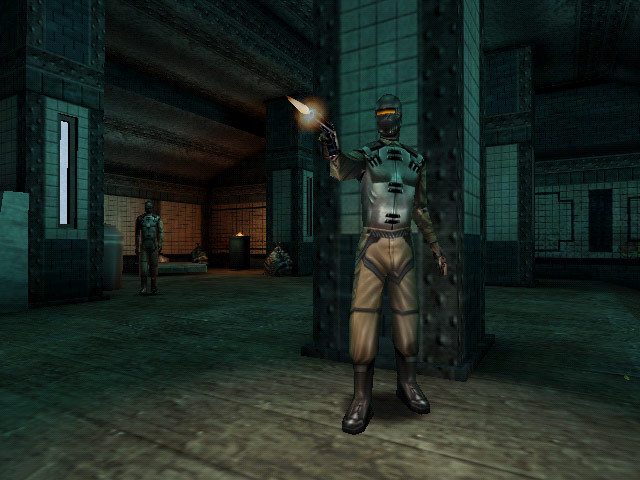
Warren Spector announced his retirement from game development on 18 August, in a LinkedIn post covered same-day by Time Extension, Kotaku, GameSpot, GamesRadar+ and Game World Observer, among others. He’s 70, cites age and health catching up with him, and says plainly that “it’s just not as much fun for me anymore.” He’s not slamming a door — he mentions consulting, lecturing, writing, and getting his piano chops back — but after 44 years he’s done shipping games.
The CV is the part every obituary-shaped piece leads with, so I’ll keep it short: Ultima VI and Underworld at Origin, System Shock at Looking Glass, Deus Ex and Thief: Deadly Shadows at Ion Storm Austin, later Disney Epic Mickey. He didn’t invent the immersive sim single-handedly — Looking Glass was a team, and Doug Church and Ken Levine are as central to that lineage as he is — but Spector is the one who kept saying out loud, in interviews and postmortems, what the genre was actually for. That’s the part I want to talk about, because it’s a level-design and environment-art problem before it’s anything else, and it’s still not solved.
The pitch was never “more freedom.” It was “the world remembers.”

Spector’s own framing, repeated across two decades of talks, is that a designer should act like a tabletop game master: build the rules and the pressures, then respect the player who tries something you didn’t script for. The test isn’t whether the player can go somewhere unexpected. It’s whether the space acknowledges that they did — a guard’s patrol route shifting because a body went missing, a vent that was always there once you think to look up instead of forward.
That second half is the hard part, and it’s squarely an environment art and level design budget problem, not a narrative one. A scripted setpiece needs one version of a room: the one the camera sees. A Deus Ex-style multi-route space needs every version simultaneously live — the vent route, the hacked-door route, the social-engineering route, the loud route — built, lit, and tested as though each were the main path, because for some fraction of players it is. You can’t fake redundancy the way you can fake a skybox. Either the alternate route exists as real geometry with real collision and real lighting, or the promise of choice is a lie the first time someone tries it.
Why that’s more expensive now than it was in 2000
Deus Ex got away with this partly because its rooms were, by current standards, small and geometrically cheap. A vent shaft was a tube with a texture on it. In 2026, an equivalent space ships with baked or real-time GI, physically based materials per surface, and a texel density budget that assumes most of what’s built gets seen head-on in a trailer. Building three redundant paths through a room used to cost three sets of blockout and scripting. Now it costs three sets of blockout, scripting, lighting passes, and asset variation — because a vent nobody was “supposed” to use still has to hold up at the fidelity the rest of the game promises.
That’s the real reason full immersive sims are rare and mostly small-team or retro-styled now (Peter Molyneux’s genre-adjacent stuff aside, look at how much of the recent wave — Dishonored’s spiritual successors, the Prey reboot, Underworld Ascendant, Spector’s own last credited project — either shrank in scope or struggled to ship on schedule). The design philosophy still works, but it assumes every room is built at least three times over, and modern production budgets one build per room and hope the scripted path covers it.
What I’d actually take from this
The lesson for anyone doing environment work today is that “immersive” was never about density of detail — it was about a space that stays true under player behavior nobody explicitly designed for. That’s a cheaper trick than full multi-route level design: reactive lighting states, destructible or moveable set dressing, NPCs that path around a mess the player made instead of ignoring it. Half-measures like that are how a handful of recent games (Baldur’s Gate 3’s environmental interactivity is the obvious current reference point, even outside the immersive sim lineage proper) get a sliver of that “the world remembers” feeling without needing a Looking Glass-sized simulation budget.
Spector spent 44 years arguing that a level is a promise to the player, not a camera path. Whoever picks that argument back up is going to be doing it with render budgets he never had to plan against.
Retirement details from Warren Spector’s 18 August LinkedIn post, as reported by Time Extension, Kotaku, GameSpot, GamesRadar+ and Game World Observer. Design-philosophy framing draws on his own recurring public talks and interviews over the years, not a single source.