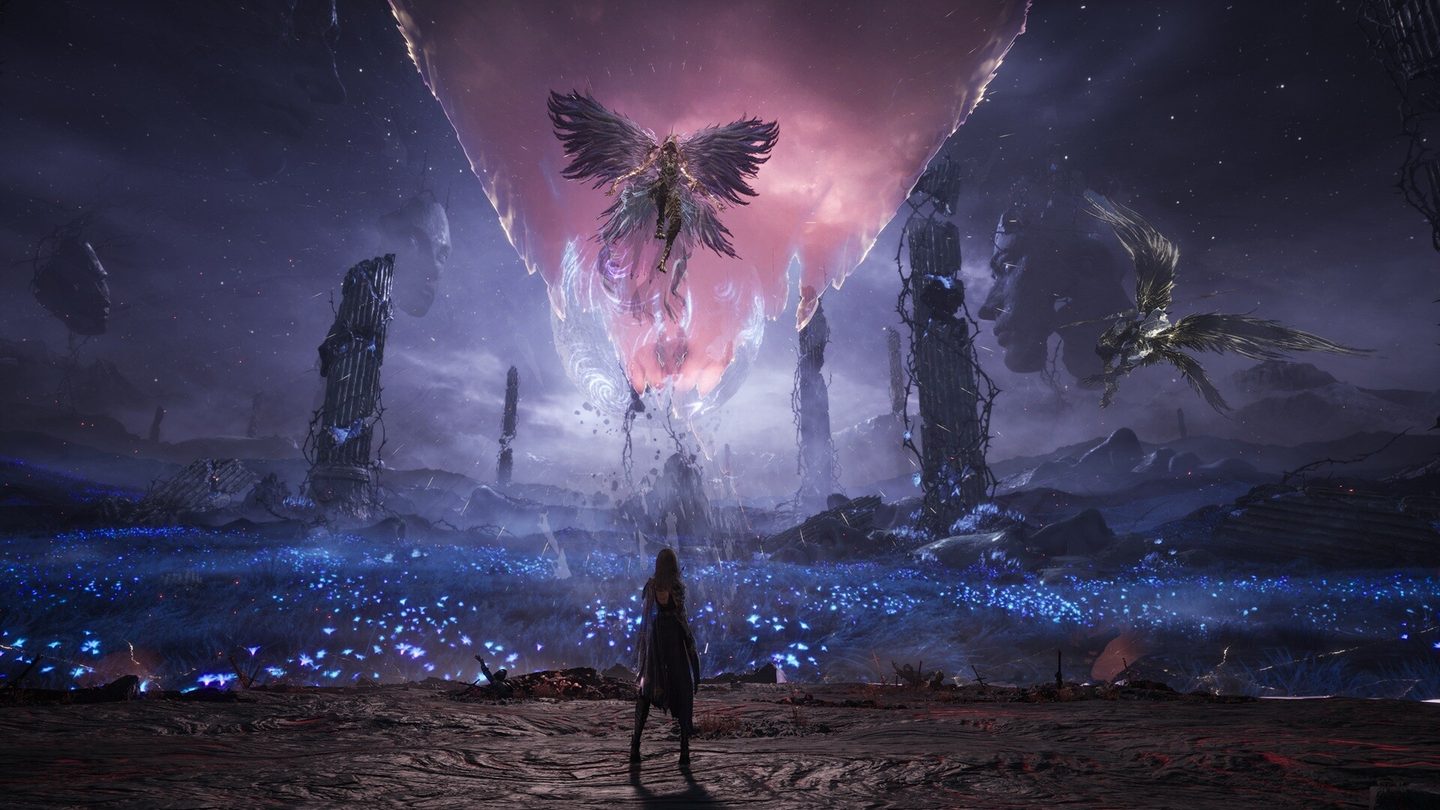
Tides of Annihilation got its first wave of hands-on previews on 19 August, from Game Informer, Push Square and Insider Gaming among others, all filed the same day and all landing somewhere between “stunning” and “immense production value.” Game Informer’s framing was the most specific: spectacle on the level of Final Fantasy XVI. That’s a real claim to make about a studio that’s only two years old.
The preview access itself is the story before the story. Eclipse Glow Games — Tencent-backed, staffed with people who’ve worked on Assassin’s Creed, Persona, For Honor and Like a Dragon — didn’t put this game in front of press at a booth. It built a full-scale cathedral in the centre of Chengdu, China, ran a two-hour hands-on inside it, and is now doing it again at gamescom (26–30 August, Hall 6, booth B-050) as the game’s second public demo. That’s two purpose-built venues before most players have seen a second of uncut gameplay.
What it actually is
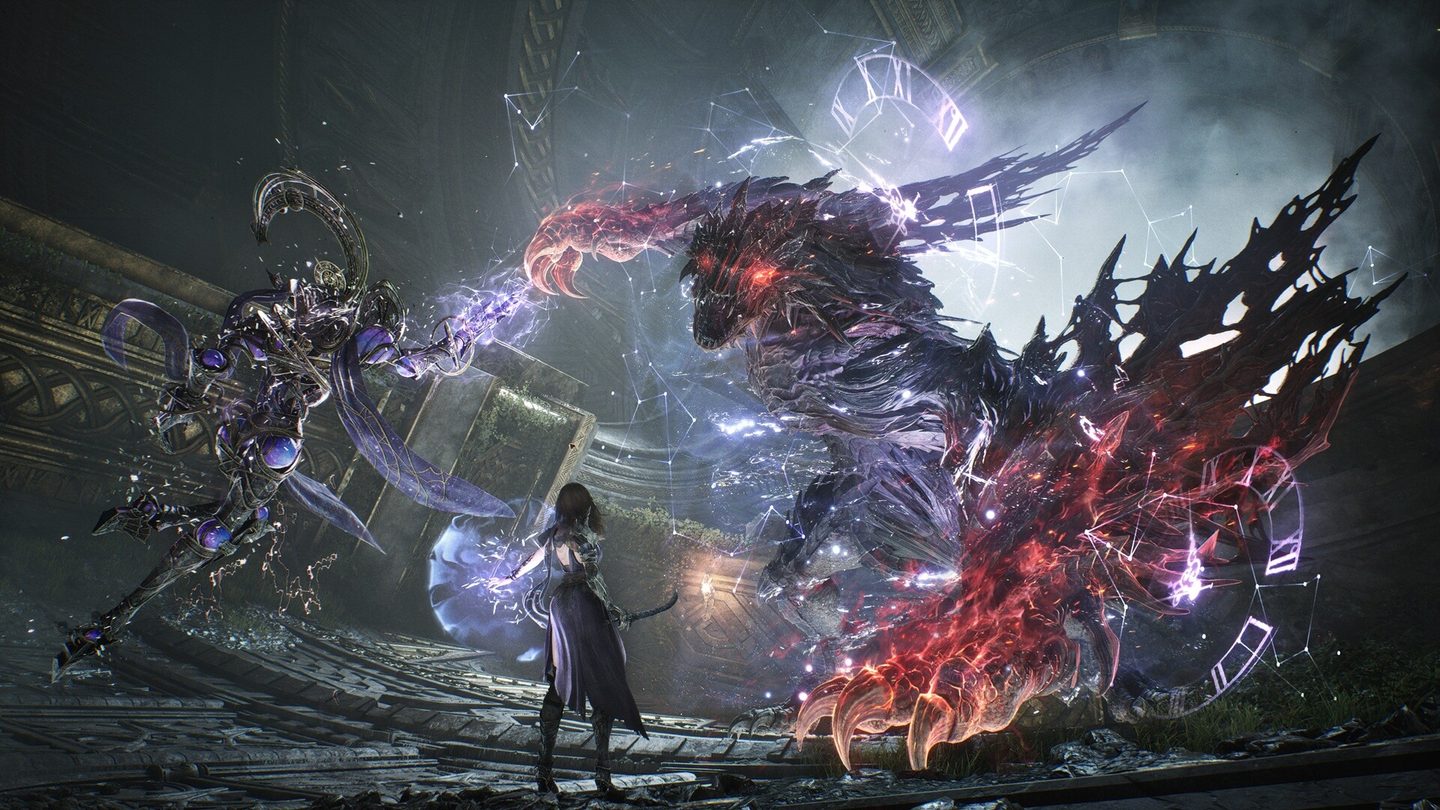
Tides of Annihilation is an Arthurian-flavoured action-adventure: London in ruins after a cataclysm the game calls the Outworld invasion, a protagonist named Gwendolyn chasing personal revenge and a missing sister across two connected settings — a fog-shrouded modern metropolis and the mythical realm of Avalon. It’s coming to PC (Steam and Epic Games Store), Xbox Series X|S and PS5, with no date attached yet beyond “currently in development.”
That is standard for the genre. What’s unusual is how much engineering detail the studio has already put into public statements about it, months before release.
The number that matters more than the cathedral
Back in May, Eclipse Glow Games and Nvidia jointly announced what they called a deep technical collaboration, built around Unreal Engine 5’s Nanite and Lumen. The headline claim, repeated near-verbatim by every outlet that covered the May announcement: a custom Nanite-based hierarchical setup, purpose-built to render the game’s giant knight bosses, compressing mesh data by 73% while holding sub-millimetre surface detail, at a claimed 8.2 million polygons per frame — over seven times what Eclipse Glow says Horizon Forbidden West renders. Nvidia’s side adds path tracing and DLSS 3.5, plus driver-level optimisation work with Epic for both PC and current-gen consoles.
Worth being clear about what’s confirmed here and what isn’t. The polygon count, the compression figure and the Horizon Forbidden West comparison all come from Eclipse Glow’s own May press materials, syndicated by outlet after outlet without an independent benchmark attached anywhere I could find. Treat those specific numbers as a marketing claim, not a measured one, until someone runs a frame capture.
What I’d actually flag as interesting, and what the press releases mostly skate past: Nanite was not built for what they’re describing. Its whole trick is virtualised micro-triangle clusters with LOD chains baked against a mesh that isn’t expected to move relative to itself — it was designed for static environment geometry, rock faces and building facades, not skinned, animated hero-scale characters. Getting a giant boss that has to run an attack pattern and read as a threat at co-op camera distance into that pipeline means either treating it as a rigid assembly of Nanite-enabled parts hung off a skeleton rather than true per-vertex skinning — which is what “hierarchical setup” is doing a lot of quiet work to describe — or leaning on Unreal 5’s still-limited native Nanite support for skinned meshes and working around its constraints case by case. Either way, that’s a harder and more interesting engineering problem than “giant knight looks pretty,” and it’s the part I’d want a technical deep-dive on before I believed the 8.2 million figure means what it sounds like it means.
Why build a cathedral to say all that
Studios have been building physical structures to sell unfinished games for as long as trade shows have existed — it’s the same logic as a world’s fair pavilion. But it’s a specific kind of tell when a two-year-old studio spends real money on a single-use practical build in the same season it’s publishing granular claims about triangle counts: it’s buying trust in production value before anyone’s hands are on a controller, because “sub-millimetre detail on a giant animated boss” is not something a press release can actually demonstrate. The Chengdu event was stage-managed, hands-on but guided. Gamescom’s showing is the first chance for less controlled coverage — that’s the one to watch for footage that isn’t cut to the studio’s own trailer rhythm.
Scores, dates and any of the numbers above are current as of 20 August 2026 and will move as the game gets closer to a release date it hasn’t announced yet.