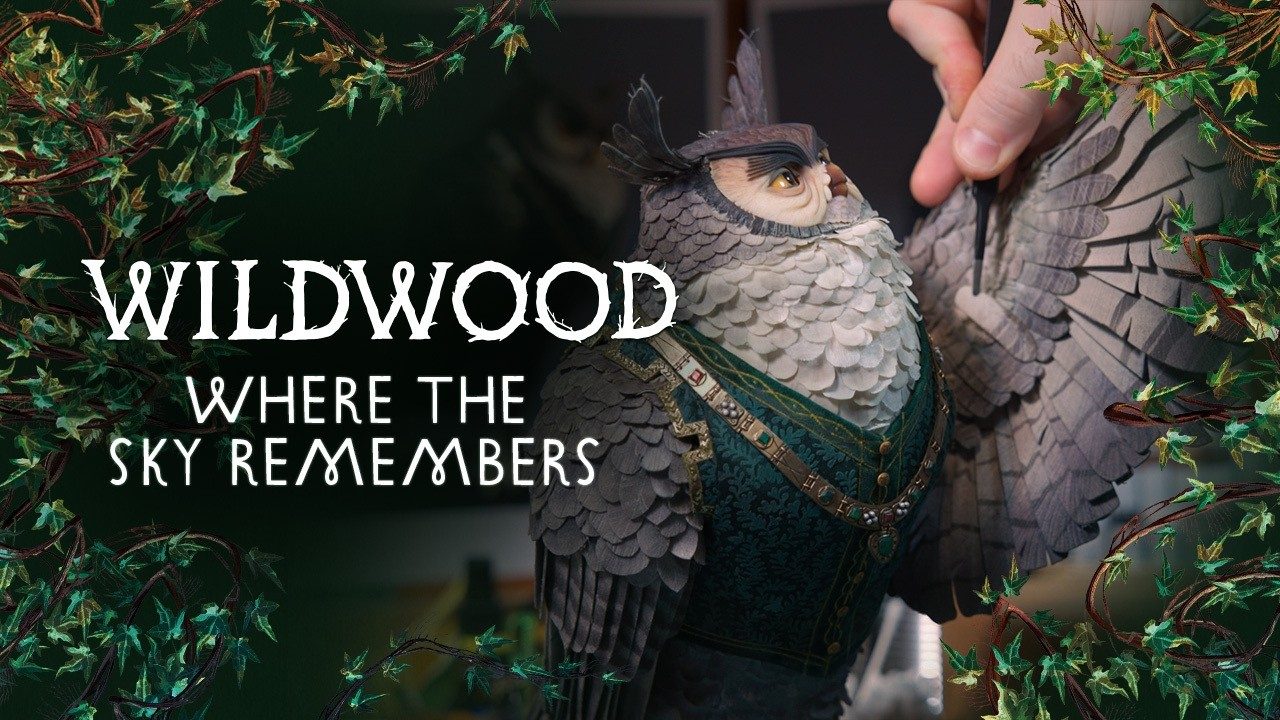
Wildwood opens in American cinemas this Friday, 23 October, after premiering at the BFI London Film Festival on 11 October. It runs 131 minutes, which the coverage around it calls the longest stop-motion feature ever released. A couple of listings say 132. Either way, it clears everything Laika has made before by a wide margin.
That runtime is a scheduling number, and the schedule is the most interesting thing on the sheet.
What 131 minutes of stop-motion costs
Laika has been open about its throughput for years. The studio’s stated target is roughly 4.3 seconds of finished animation per animator per week. On Kubo and the Two Strings the reported reality came in nearer three, with 27 animators shooting their own scenes in parallel across the stages.
The sums below are mine, not Laika’s. 131 minutes is 7,860 seconds, about 188,000 frames at 24 a second. At the 4.3-second target that is somewhere near 1,830 animator-weeks of shooting. At the three seconds Kubo actually averaged, about 2,620. Kubo ran 101 minutes, so the same arithmetic puts it between 1,400 and 2,000.
The gap is what I keep looking at. Wildwood’s extra half hour, on those rates, is between 420 and 600 animator-weeks that Kubo never had to find. Those are person-weeks on a stage, one frame at a time, by animators each finishing about three seconds of usable footage before the weekend.
The edit cannot help
Twenty years of pipeline engineering, in games and in VFX both, has gone into one thing: making a late change cheap. Non-destructive everything. Caches you can swap. The Houdini workflow I wrote about last month exists purely so that a second fracture can inherit motion a director has already signed off, because re-simulating the approved shot is the expensive part. We build tools whose entire value is that somebody can change their mind in week 90.
Stop-motion has nothing of the kind. A shot is a physical event that happened, on a stage that has since been struck, using a puppet that was repositioned by hand for every frame of it. Trimming two minutes in the edit deletes something like 40 animator-weeks of a named person’s work. That is not a reason to keep a slow scene, but it is a very good reason why the pressure runs the other way.
Which pushes all the story risk upstream. Because the shoot is ruinous, the boards get frozen hard before anything moves, and the pacing has to be solved on paper by people looking at panels years out. A CG feature screens its reels, decides act two drags, and re-boards it. Twice, if needed. Laika gets one go at that decision, in pre-production, and then spends two years committing to it.
Where the reviews landed
Forbes reported the film at a clean 100% on Rotten Tomatoes on 11 October, off 15 reviews — an early count that has almost certainly moved since, and one worth treating as a sample rather than a verdict. The craft praise is unanimous. Empire called the animation astonishing. Variety called it a spectacular success as both a formal achievement and a crowd-pleaser, while noting that familiar story elements abound.
Then the split. IndieWire’s reading is that the film is the antidote to the worst trends in mainstream animation and still gets lost somewhere between reality and imagination, lacking the magic of Laika’s best. A syndicated wire review went further, arguing the technology outstrips the story and that enormously labour-intensive world-building has been spent on only slightly tweaking fairy tale conventions.
Craft unanimous, story contested, and the contest is specifically about pacing and familiarity in a 131-minute film. That is the schedule showing up in the reviews.
The production numbers still disagree
Worth flagging, because I quoted some of them myself. Back in August the reporting around the trailer had Wildwood at 120 built sets and 231 practical puppets. A syndicated wire review this month cites 132 sets and 230 hand-controlled puppets. Nobody is lying; set counts move as locations get split or combined, and “puppet” means different things depending on whether you count the stunt doubles and scale variants. I have not found a figure from Laika itself that settles it, so treat any single number you see as approximate.
The film goes out domestically through Fathom Entertainment, with FilmNation handling international sales — a pairing Laika announced in January. Travis Knight directed, from a script by Chris Butler, adapted from Colin Meloy and Carson Ellis’s novels.