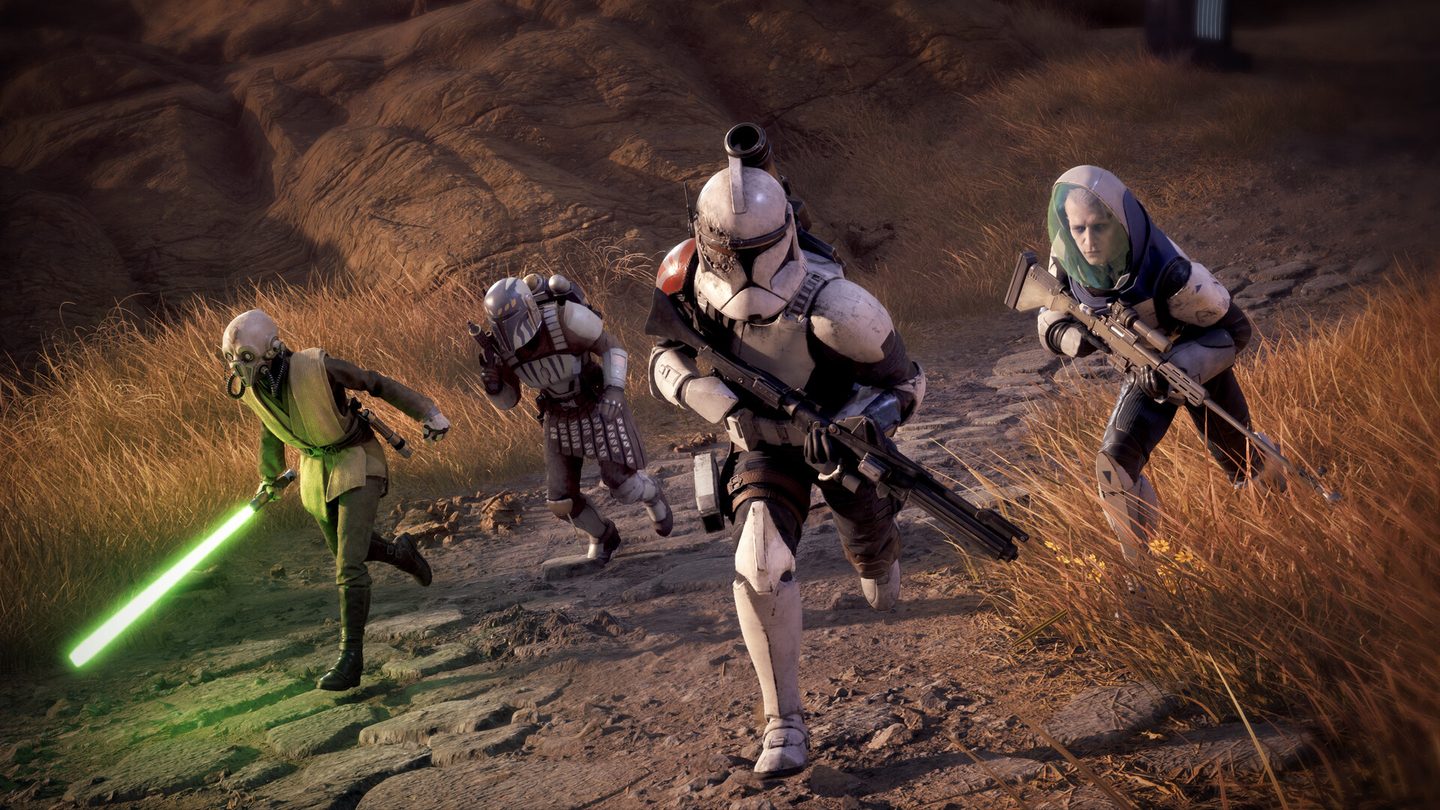
Star Wars Zero Company shipped on 27 August and went straight into Steam’s top sellers by revenue. I wrote up the reviews here the same week — an 8.5 across six outlets, with the recurring note being that somebody had finally made a Star Wars tactics game that understood tactics games.
Most of the people who made it were off payroll while those reviews were going up.
Game File broke it, and Game Developer, PC Gamer and Aftermath have all since carried it: developer Bit Reactor furloughed staff in the weeks before launch, with one source putting the figure at around 80 per cent of the team. A studio representative confirmed the furloughs and said the hope is to reinstate people and restore their pay if the game does well. The decision was the studio’s own — not EA’s, and not Disney’s.
Furlough is a specific word
It is not a layoff. Furloughed staff are still employed, still on the org chart, and not being paid. No severance, because nobody has been terminated. The arrangement is designed to be reversible, which is genuinely different from a redundancy round, and it also means the people involved cannot draw a line under it and go and find other work without walking away from whatever they are owed.
So the income of the team now depends on the sales performance of a game they have already finished and cannot touch. Every patch note they read is about their own work, from the outside.
Where the money runs out
The gap this fell into is structural, and anyone who has worked at a studio that builds somebody else’s licensed property will recognise it immediately.
A developer like Bit Reactor is funded on milestones. Money arrives when work is delivered and signed off, and the last milestone is the one where the game goes gold. After that the deliverables stop, which means the payments stop, and the revenue share — if the deal even has a meaningful one, which on a licensed property split between a publisher and a rights holder it often does not — turns up quarters later. Meanwhile the studio still has a lease, a hardware refresh, a render farm and forty-odd salaries.
Gold to launch is usually six to twelve weeks of certification, ratings, disc manufacture and marketing runway. Payroll does not pause for it. A studio without its next contract signed is paying full freight through the exact window where it has nothing left to invoice.
Nobody talks about this window because it is boring right up until it isn’t.
The part that gets expensive later
Zachariah Scott, a former senior technical artist at the studio, criticised leadership publicly for celebrating the game’s reception without acknowledging the people who were furloughed. That role is the reason the story landed differently for me than another studio-in-trouble headline.
A technical artist is the person holding the parts of a production that were never written down. The export chain from DCC into engine. The naming conventions the level scripts silently depend on. The shader library and which three of its variants are load-bearing. The rig that makes the camera behave. When my own review of this game had a criticism, it was the camera — and a camera in a squad tactics game is not a content fix. It is a system with constraint solving, collision, and a hundred hand-tuned exceptions for the rooms where the generic solution looks bad.
A skeleton crew can triage crashes and ship a stability patch. Reworking a camera means going back into the rig, and the rig lives in somebody’s head alongside every reason it is shaped that way. Furlough that person for three months and the knowledge does not sit in a wiki waiting for them. Some of it goes to whichever studio calls first.
That is the cost nobody has on a spreadsheet. It gets paid in the patch that takes eight weeks instead of two.
What success means now
The studio’s stated condition for bringing people back is the game performing. No threshold has been published — no unit count, no revenue figure, no date by which the call gets made. Zero Company is currently among Steam’s top sellers, which sounds like it ought to settle the question and does not, because a top seller position on a launch week says nothing about whether the developer’s share of it clears a payroll that has been running unfunded since gold.
There is also an unresolved dispute between the studio’s founders that has been in the reporting since 2024, which I am not going to characterise from second-hand summaries beyond noting it exists and is part of why the picture is messy.
The game is good. The reviews were earned by people who were not being paid when they came out. Both of those are true on the same Tuesday.
Furlough details as reported by Game File on 1 September 2026 and corroborated by Game Developer, PC Gamer and Aftermath. The 80 per cent figure comes from a single source in that reporting and has not been confirmed by the studio. Release date and platforms from the official Steam listing. Steam sales position as observed at the time those reports were filed.