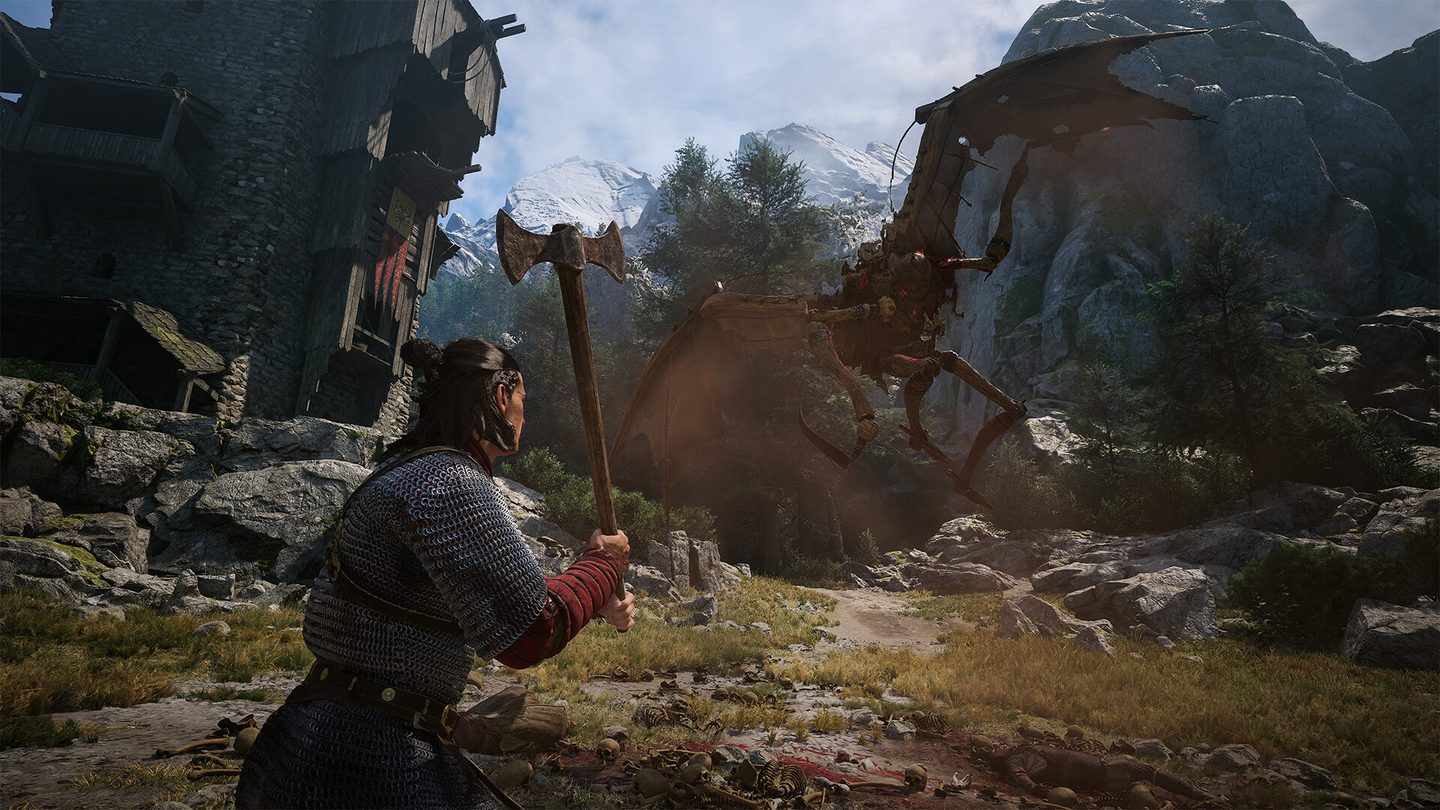
Konrad Tomaszkiewicz was asked this week whether the thirty-day clock at the centre of The Blood of Dawnwalker would come back in whatever Rebel Wolves makes next. Speaking to Eurogamer on 16 September, the game director said the studio would use it where a story fits it and would not force it where one does not, and that the team is looking at other ideas for future RPGs.
No sequel has been announced. No date, no platforms, nothing. So this is a director talking about a design principle rather than a game, which is the looser kind of statement and worth reading as such. It still tells you something, because of what that clock was holding up.
What the clock was paying for
Coen gets thirty in-game days and nights to stop a coronation and pull his family out of it. Every quest costs a slice of that, and the slice you spend in one place is gone from everywhere else. When I wrote up the reviews at the end of August, the split was wide — an average of 8 across twelve verdicts running from 6 to 9.5 — and the clock is what the disagreement was about.
Here is the part that matters if you build these things for a living. A timer like that is a compression scheme. It lets a world of ordinary size behave like a much larger one, because no single run can exhaust it. The player finishes, looks back at the doors they walked past, and the game reads as bigger than the disc it came on.
Take the timer out and the arithmetic inverts. Now a player can see all of it, in one run, at their own pace — and once they can, they will. Every corridor of reused kit, every quest that shares a beat with another one, every interior dressed from the same prop library, all of it lines up end to end where it can be compared. Density that felt generous under a clock reads as repetition without one. Ask anyone who has shipped an open world how many hours of it were designed on the assumption that most players would never stand in that particular room.
So a sequel without the clock arrives carrying a bill. It has to buy the sense of scale back some other way: more distinct content, or a harder structural idea, or a world small enough to be honest about its size. The first of those is the expensive one, and it is the one studios usually reach for.
The complaints were about legibility
Worth separating what reviewers disliked. The low scores in August kept landing on the same thing: you could not tell which quests were the important ones until the time had gone. That is a signposting problem. Which threads are load-bearing, how much a given errand will cost you, what the consequence of skipping something looks like — all of that is surfacing and UI work, and it is enormously cheaper to fix than the structure underneath it.
Games have solved versions of it before. Dead Rising’s case files, Persona’s calendar, Pathologic’s brutal little schedule — each one found a way to tell you the shape of your remaining time without telling you the answer. None of them removed the clock to do it.
Whether Rebel Wolves reads it that way, I have no idea. Tomaszkiewicz’s phrasing leaves room for both: keep the mechanic and sand the edges, or set it aside for a story that wants something else. The studio has form for revisiting a position quickly — they found a 60fps mode three days after saying the ceiling was fixed, which was the right call and also a reminder that stated positions here move.
The thing a first game buys you
Rebel Wolves shipped on 3 September 2026 with a structure nobody had built at that scale. Some of it worked, some of it produced the roughness the reviews flagged, and the studio now has a year of telemetry on which of the thirty days players spent where. That telemetry is the asset. It will say, in numbers, whether the doors people walked past were content worth building or content worth cutting.
I would rather they kept the clock and fixed the signposting. But the version of this I would not want is a sequel that quietly drops the timer, keeps the same production budget, and hopes nobody notices the world got easier to see all of.
Release date and platform details from Bandai Namco and the game’s Steam listing. Tomaszkiewicz’s comments from Eurogamer’s 16 September interview, as reported there and by GamesRadar; the direct quote is short and I have paraphrased rather than reproduced it. Score figures are from the review round-up published here on 31 August 2026. Reports that the game passed a million copies in its first three days are widely repeated but I could not confirm the figure against a Bandai Namco release, so it is left out above.