
Nvidia published a revised DLSS 5 model on 13 October. The headline figure is the parameter count: around 118 million, down about 24% from the version that shipped in September. The company says the smaller model runs roughly twice as fast, costs about half the GPU overhead, and uses 20% less VRAM at 4K, with image quality held at a similar level.
Those are Nvidia’s own numbers. Nobody outside the company has benchmarked them, and I could not reach Nvidia’s own post from here to read how it measured, so everything below treats them as claims.
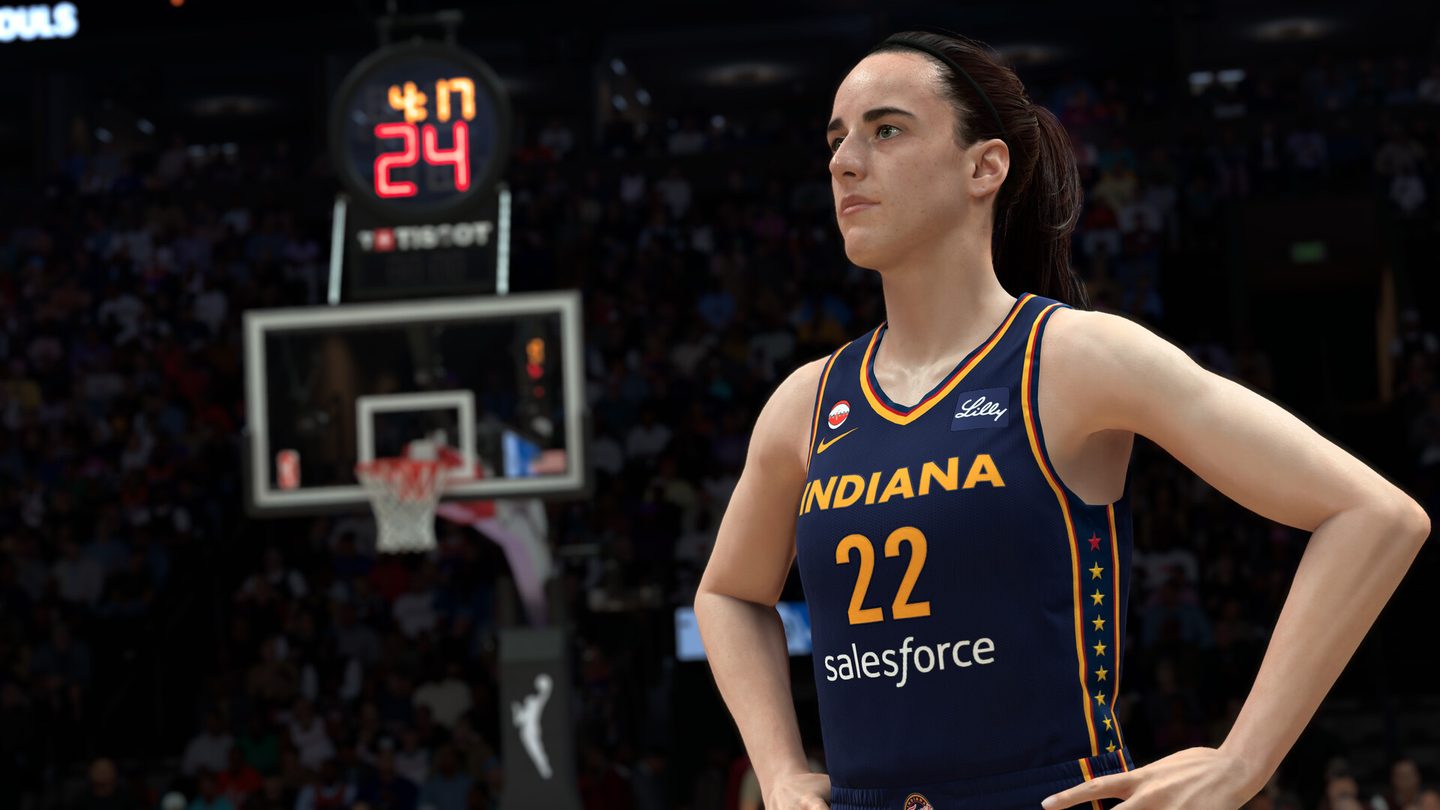
They are worth sitting with anyway, because of what the September model cost. When DLSS 5 arrived in NBA 2K27 on 3 September, the neural pass took something close to half your frame rate before frame generation got involved — the problem somebody then worked around by handing the pass to a second card over ReShade. Tom’s Guide, citing PC Gamer’s testing, put the drop at 50 to 60%. 91mobiles, on an RTX 5070 Ti at 4K, measured 126.8 fps falling to 41.8, which is nearer two thirds. TechSpot came at it from the other end: Nvidia’s own 370 fps slide runs DLSS Performance mode with 6X Multi Frame Generation, and the RTX 5080’s 233 fps result on the same slide implies a render rate of about 39 fps underneath all that interpolation.
24% smaller, twice as fast
Those two figures do not divide into each other. Cutting a quarter of the weights does not double inference speed on its own, so something else moved — layer shapes that map better onto the tensor cores, lower precision in places, a graph restructured so fewer passes go out to memory. Nvidia’s own framing is refined training data and a smaller model.
Whatever the mix, the September version was not shaped for the hardware it ran on. Anyone who has shipped a tool knows that order of events. Get it correct, then get it to fit.
The sources disagree on what it shrank from. Guru3D puts the previous model around 155 million parameters; a German report working from a leaked build says about 148 million. Take 24% off 155 and you land on 118. Off 148 you land on 112. I would not lean on the percentage.
The VRAM line is the one I keep coming back to. Twenty percent less at 4K reads like housekeeping until you set it beside the week’s other story — the leaks saying the RTX 5090 is discontinued and the top GeForce drops from 32GB to 24. A neural pass that lives in the frame buffer competes with everything else you put there. On a box that also has to hold a heavy scene for GPU rendering, any feature wanting resident memory is a feature you end up switching off.
A parameter count in the frame budget
Something shifted quietly here in how a renderer gets planned. Shadow map resolution, screen-space reflections, ray counts: those have been budget lines for years, and a technical artist carries a rough feel for what each one costs in milliseconds. A model’s parameter count now sits in the same list. When Nvidia trims 37 million weights to buy back frame time, that is the trade you make yourself when you drop a cascade or halve a probe grid.
The dial is in someone else’s hands, though. You can cut your own shadow cascades. Retraining Nvidia’s model is not on the table, and until last week the only lever available was off.
There is some control. Developers can pick between models and apply the pass separately to gameplay, cutscenes and individual scenes, which was the company’s answer to the art-direction complaints that followed the reveal. Edward Liu, who runs applied deep learning research at Nvidia, walks through those controls in the company’s own explainer. Per-scene control is genuinely useful. It is also more surface for an art director to supervise, on a system whose output they cannot art-direct in the usual sense.
The updated model reaches NBA 2K27 on 16 October, Hogwarts Legacy on 5 November, and Where Winds Meet later that month. NBA 2K27 is the one to watch, being the only title with a September baseline anybody has actually measured. If the drop falls from 50-60% to something near 30, this becomes the first version of the feature with a defensible performance story. If it does not, the second-GPU trick stays the most honest answer anyone has found.