
VRAM is a cliff. That is the thing worth holding on to while reading this week’s reports, because every other number on a graphics card is a slope — more cores render the same frame faster, a higher clock shaves a percentage off. Memory does not behave that way. A scene fits on the card or it does not, and the two sides of that line are not 20% apart.
So when leakers started saying over the weekend that Nvidia has stopped making the GeForce RTX 5090, the figure to look at is 32.
What is actually being claimed
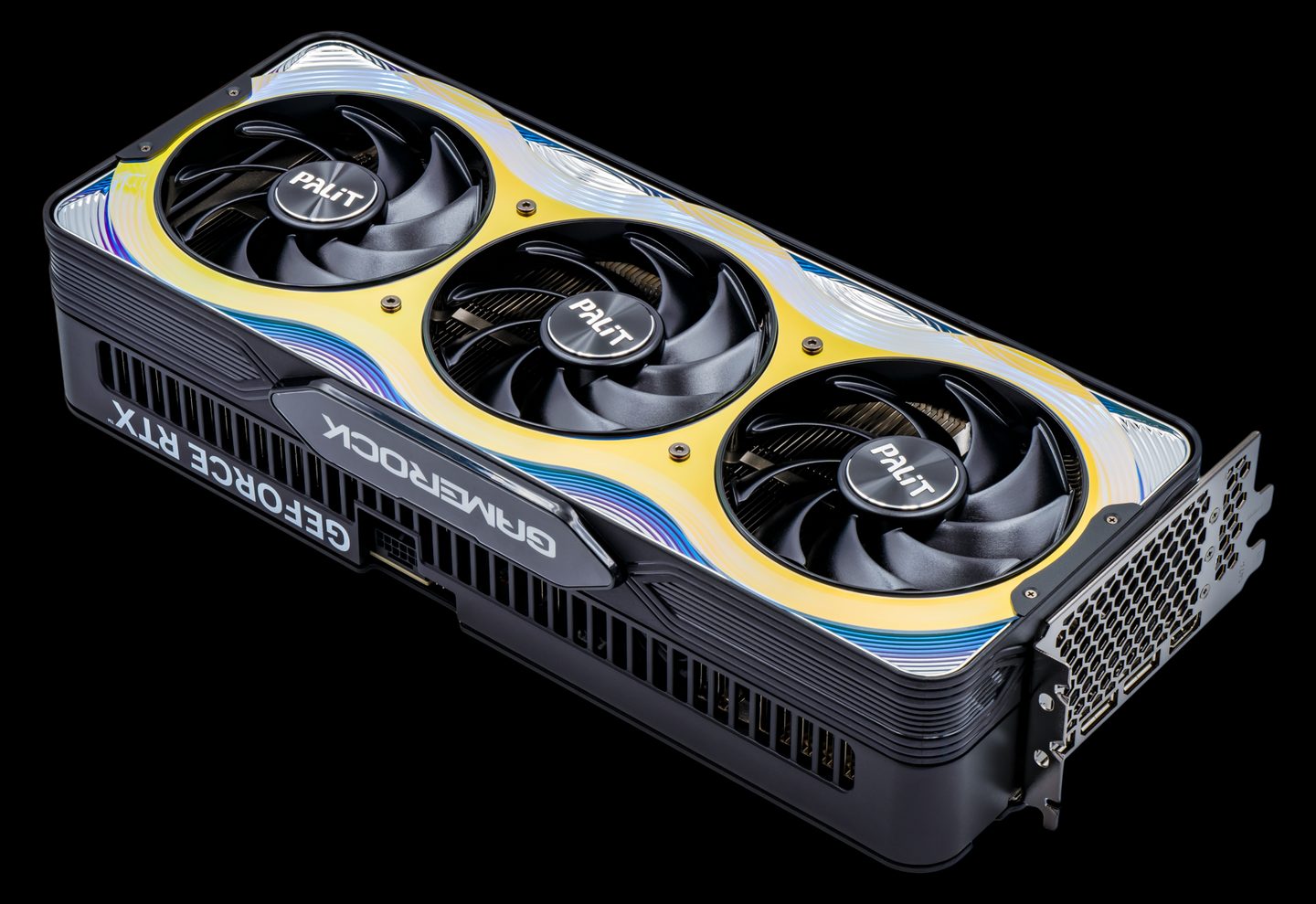
Hardware leakers MEGAsizeGPU and hongxing2020 say a factory notice dated around 10 October 2026 ends production of the RTX 5090, China-market D variants included, so the GB202 die can go to professional and data centre cards instead. A third leaker, Zed Wang, is reported as backing it up. The same leak says a 24GB RTX 5080 steps up to become the top GeForce part, with the current 16GB model dropped.
Nvidia has confirmed none of it. As of 12 October the company had said nothing, and that silence is worth reading carefully rather than treating as agreement — Nvidia has denied this shape of story before. In January, Hardware Unboxed reported RTX 5070 Ti production had finished and the 16GB 5060 Ti was being wound down; Nvidia’s answer was that it continues to supply all GeForce SKUs to its partners. Moore’s Law is Dead claimed the 5090 had been quietly discontinued since late 2025, which, if you believe it, means this week’s notice is documenting something eleven months old.
Three leakers and a factory document is more than the usual rumour carries. It is still not a statement from the company.
What is not in dispute: the card launched at $1,999 and VGC puts street prices now at $4,000 to $5,000 and up. Whatever the production line is doing, the thing has been priced out of a freelancer’s reach for a while. I went through why a graphics card now costs what a used car costs back in August, and nothing in it has aged badly.
Why 32 to 24 is not an 8GB difference
Here is what the cliff looks like at a desk.
You have an environment — a street, a hero interior, whatever — with the texture sets at the resolution the shot needs, displacement on the hero geometry, a volumetric or two. You hit render on the GPU. Either the whole thing is resident on the card and it goes at GPU speed, or it is not, and then one of two things happens. The renderer spills to system memory and every access to the spilled part crawls across PCIe instead of staying on the board. Or it stops.
Most of the renderers people actually use will spill rather than die. Redshift was built around out-of-core from the start. Cycles will fall back to host memory. V-Ray GPU handles it. They all slow down when they do it, sometimes by a lot, and the slowdown is not proportional to how far over you went — a scene 1GB past the limit can lose a large fraction of its speed, because what got evicted is being touched constantly.
Which is why 24 versus 32 is a question about what work you can take rather than how fast you do it. Eight gigabytes is a 4K texture set on a few hero assets, or the simulation cache for a medium effect, or the headroom that lets you leave the viewport in Cycles while a background render runs. On a 24GB card those are decisions. On 32GB they mostly are not.
And it is not only offline rendering. Substance Painter with 8K texture sets, a UE5 scene with Nanite and Lumen while the editor holds its own copy of everything, a Houdini sim cached to the GPU, the ML denoisers and upscalers that now sit in the middle of comp — all of it is competing for the same pool. The RTX 50 series was already a card where people went looking for headroom in odd places; I wrote earlier about overclocking RTX 50 VRAM and why it is a bad idea on a render box, and the instinct behind that is the same one at work here.
The tier above costs four times as much
The obvious answer is the pro card. The RTX Pro 6000 Blackwell has 96GB of GDDR7 with ECC and 24,064 CUDA cores, which is three times the 5090’s memory and genuinely the right tool for a heavy scene.
It is also a different purchase entirely. The card appeared in US retailer listings in early 2025 at around $8,435, and current quotes have gone well past that — one report has Nvidia’s own marketplace at $13,250 and out of stock, with resellers somewhere between roughly $8,900 and $11,500. Those are snapshots from pages with unclear dates, so treat the spread as a spread rather than a price. Direction is the only part that is clear, and the direction is up, for the same reason the 5090 is reportedly going away.
So the ladder an artist climbs has a missing rung. Below: a 24GB consumer card. Above: a workstation card at four to six times the money. The 5090 sat between those two and did most of what the pro card did for a quarter of the cost. That is the position being vacated.
One die, two products, one allocation decision
GB202 is a single piece of silicon. Nvidia decides what it becomes — a GeForce flagship, an RTX Pro card, something in a server — and those are the same wafers either way. Which means consumer buyers of the top card were always receiving whatever was left after a commercial decision made somewhere else, and this week’s reports describe that decision changing.
Add the memory shortage underneath it. High-bandwidth memory demand from AI build-outs has been squeezing supply across the industry all year, and it has reached a long way past graphics cards — console makers are living with the same problem. A GDDR7 allocation argument that ends with 32GB consumer parts being the wrong use of the memory is exactly the shape you would expect.
What to do about it
If you are running a 5090, you are fine, and you now own something the second hand market will treat kindly. If you were planning to buy one, the planning window may have closed, and a 4090 — also out of production — is not the fallback it was.
If you are specifying a machine for the next year or two, the honest advice is to stop treating consumer VRAM as a number that goes up every generation. It went 11, 24, 32, and the next step may be down. Build the scene budget around what you can buy rather than what you expect to be able to buy, which mostly means being serious about instancing, texture streaming and not shipping 8K maps on things nobody sees at 8K.
Wait for Nvidia to say something before treating the 24GB 5080 as a plan. It has denied this before.
Production claims from hardware leakers MEGAsizeGPU, hongxing2020 and Zed Wang as reported by Tom’s Hardware and VGC on 11-12 October 2026, with additional context from Dexerto. Nvidia had made no statement at the time of writing. RTX Pro 6000 Blackwell listings are retailer snapshots of uncertain date and are given as a range for that reason. The January 2026 RTX 5070 Ti report and Nvidia’s response to it come from Hardware Unboxed’s coverage.