
Bethesda left a title card on the internet for eight years and on 3 November it added a word. The Elder Scrolls 6 is called Sentinel. Todd Howard said so at the end of the studio’s 40th-anniversary video, and the teaser that followed runs a few seconds of desert with an Elder Scroll pushing up out of the sand.
No date. No platforms. No gameplay. Kotaku counted it as the first new teaser for the game in over eight years, which is a long time to arrive at a noun.
The noun earns its keep, though. Sentinel is a walled port on the Iliac Bay, the Redguard capital, and it has been on Tamriel’s maps since Daggerfall in 1996. Pointing at it points at Hammerfell, which the closing card says outright. One reading of the teaser dates it to 4E 206, five years after Skyrim — read that as a reading, not an announcement. Bethesda’s follow-up said only that development continues and it will be a while before there is more.
Hammerfell takes away the trees

Every Bethesda world since Oblivion has been held together by clutter. Pines and birch in Skyrim, collapsed suburbs in Fallout 4, rock spires and wrecks dropped onto Starfield’s tiles. The clutter is not decoration. It is the budget. A stand of trees occludes the next cell so the streamer can take its time. A ridge gives the LOD system somewhere to swap a mesh out of sight. A scatter layer breaks up a terrain texture that would otherwise tile visibly at forty metres.
Sand removes all three in one move.
An open dune field is a long sightline with nothing in it. Everything from your boots to the horizon is in frame at once, so the imposters have nowhere to hide and the moment where a distant mesh becomes a near mesh happens in the middle of an empty picture. Terrain blending gets the same treatment: with one albedo running for kilometres, the eye starts reading the macro-noise as a pattern almost immediately, and the usual fix — throw scrub and rocks on top — is the fix Hammerfell will not fully pay for.
This is the reading-a-reveal problem I keep coming back to. A single plate tells you a surprising amount about what a team has solved, which is why Campaign Evolved’s Forerunner ring reads wrong to people who build environments for a living: ancient scale, new-build surfacing, and the mismatch visible in a still. A dune is a harder still to fake than a ring. There is nowhere to put a detail that distracts from the ground.
Shading a dune is a roughness problem
Dry sand is boring in albedo and interesting everywhere else. Its whole character sits in the specular response — a sheen that climbs hard at grazing angles, so a crest lit from behind goes almost white while the slope two metres below stays flat. Quartz grains glitter on the sun side. Wind packs the windward face and leaves the lee loose, and the two surfaces catch light differently enough that an artist who textures them the same gets brown felt.
None of that is exotic in 2026. Film has done it for twenty years and a few games have done it very well. But it is work that sits in materials and lighting, not in the asset pipeline Bethesda has spent four games optimising, and it does not survive being authored once and tiled.
Then there is deformation. A desert invites footprints, tracks, drifts that move — and a world where the player returns to the same square mile for fifty hours has to decide whether any of that persists. Persistent terrain deformation at Bethesda’s world size is an expensive promise. Skipping it is survivable, and noticed.
The city is the other half
Sentinel itself asks for the opposite thing: density, walls, interiors, crowds, market streets where thirty people are visible at once in a space you cannot thin with distance. Outdoors you can cull a crowd by pushing it past the fog. In a souk you cannot.
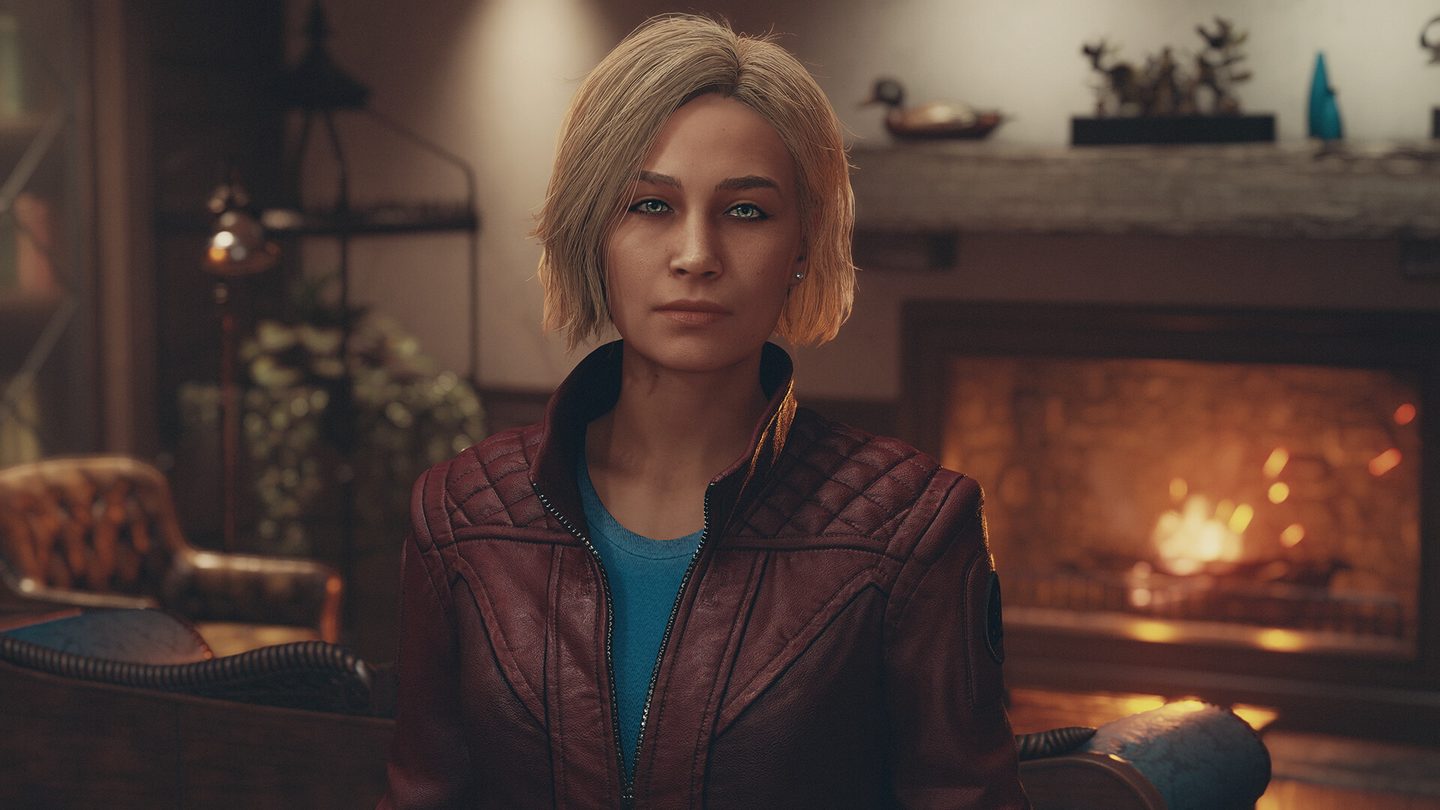
Bethesda’s answer to dense interiors has always been the loading door, and the loading door is the single most dated thing about their games. Starfield shipped in 2023 with one in front of every ship ladder and took a beating for it. Whether Sentinel’s gates and houses open seamlessly is the one technical question I would put to Howard before any question about frame rate, because the answer tells you whether the streaming system was rebuilt or inherited.
Nobody said which engine
The reveal did not mention one, and that silence is normal this early. Starfield ran on Creation Engine 2. Oblivion Remastered went the other way in 2025, with Unreal Engine 5 doing the rendering while Creation kept running the game underneath — a hybrid that tells you the studio is willing to replace the part you look at without touching the part that simulates.
Which puts Bethesda in an interesting minority. Plenty of studios are dropping in-house tech outright: Creative Assembly is rebuilding Alien: Isolation’s 1979 look in Unreal Engine 5 rather than carrying Cathode forward. Bethesda’s games are closer to simulations wearing a renderer, and the simulation is the part nobody else’s engine does for you. Hauling it onto someone else’s foundation is a rewrite, not a port.
So the likeliest shape of Sentinel is Creation Engine 2 with another few years of rendering work bolted on, pointed at the one biome that gives their toolset the least to hide behind. Eight years for a word. What I want now is a minute of that sand running at speed.
Reveal date, the teaser’s contents and the absence of a release date from Kotaku and The Escapist, 3 November 2026. In-universe dating is one outlet’s reading of the closing card and has not been confirmed by Bethesda. Engine details for Sentinel have not been announced; the Starfield and Oblivion Remastered comparisons are to shipped work. All images are Starfield press shots from the official Steam page, used to illustrate the toolset rather than Sentinel, which has none.