A company dissolution in Japan leaves a paper trail. On 2 November a notice appeared in the Kanpo, the government gazette, recording that Nagoshi Studio had been dissolved by a shareholders’ resolution on 31 October 2026. That is the whole announcement. No statement, no farewell post, no “we are proud of what the team built”.
Toshihiro Nagoshi left Sega’s Ryu Ga Gotoku Studio — Yakuza, Like a Dragon, the whole lineage — and set up again with NetEase money. The studio never shipped a game. Its first and only announced project, GANG OF DRAGON, was revealed at The Game Awards on 11 December 2025 and is now ten months from its reveal and nowhere.
Seven billion yen short
Per Bloomberg’s reporting, NetEase stopped funding the studio in May 2026, and the figure behind that decision was an estimate that finishing the game needed at least ¥7 billion more — somewhere around $44 million at the time it was reported. For a single unproven title from a studio with nothing shipped, that is a number a publisher scaling back its overseas bets does not write a cheque for.
Nagoshi reportedly spent the months after looking for another backer. Nobody came.
The part worth sitting with is what NetEase is said to have offered instead. It was apparently willing to let the studio go independent and continue — provided it covered the costs of keeping the existing development assets and the intellectual property.
Buying back your own work
Read that clause as an artist rather than an accountant.
A publisher that funds a studio ends up owning every intermediate object made along the way: the source meshes before decimation, the UDIM texture sets, the rigs with their control shapes and corrective blendshapes, the mocap library and its cleaned takes, the shader graphs, the lookdev scenes, the Houdini setups, the level blockouts with their revision history, and — the expensive, invisible part — the tooling. Importers. Naming conventions enforced in code. A build pipeline that somebody spent a year making boring.
That tooling is invisible in a trailer and it is most of what a team owns at the moment it stops existing.
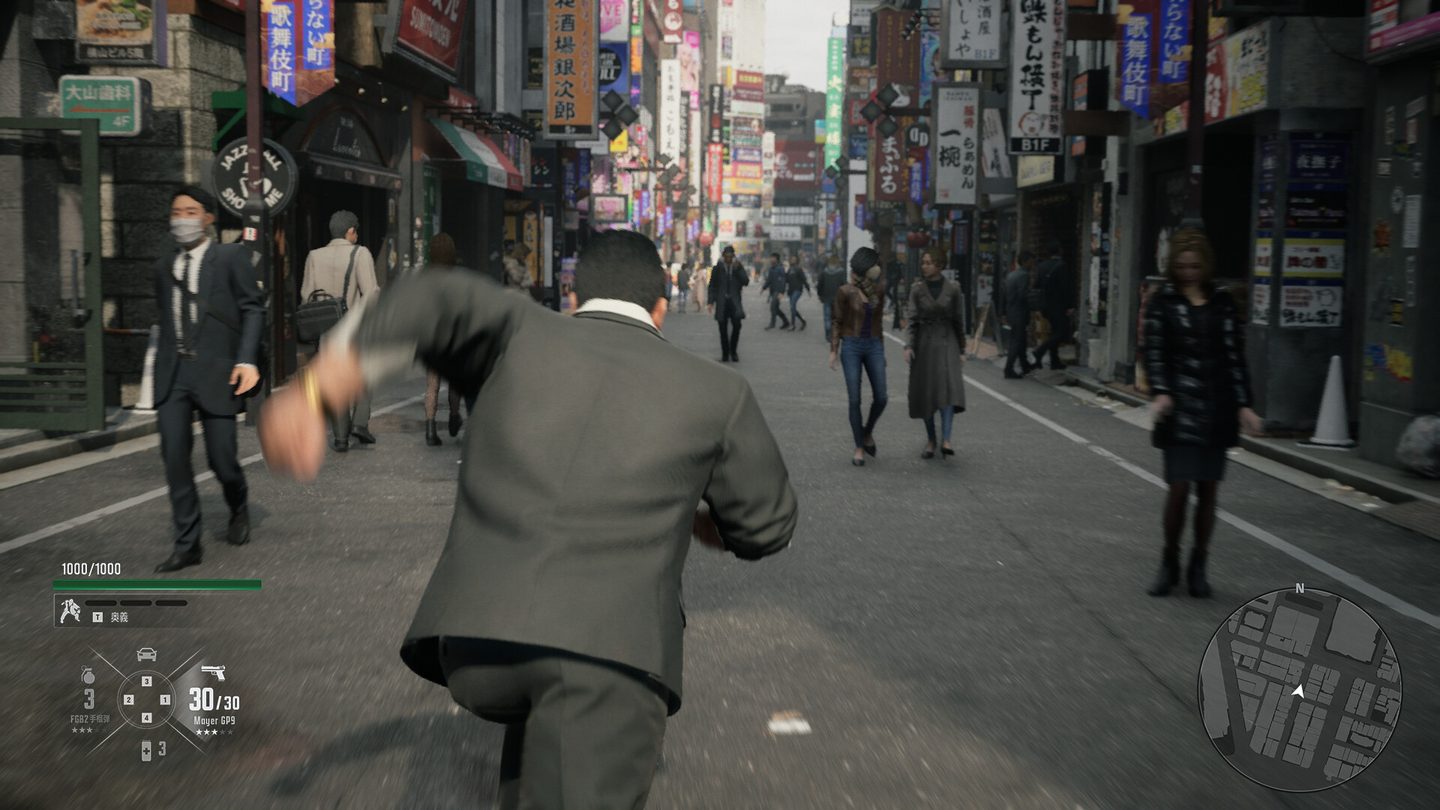
So when the offer is “you can go, and the work can come with you if you pay for it”, the negotiation is over the replacement cost of four years of someone else’s specificity. And here is where GANG OF DRAGON was unlucky in a way a generic fantasy project would not have been. The game is set in Kabukicho, Shinjuku. A real district, a few streets across, rendered at the density you only commit to when the player will walk the same corner two hundred times. Reference photography, signage cleared or redrawn, interiors modelled because the player goes inside them, a wet-asphalt material authored for one specific kind of night.
Assets like that are worth an enormous amount to the people continuing that game and close to nothing to anybody else. You cannot take a Kabukicho block set into a sci-fi project. You can barely take it into a different Tokyo. Which makes the price simultaneously hard to argue down and hard to justify paying.
This blog has watched the other version of that maths play out: when Liquid Swords went bankrupt and its trustee started taking bids on Samson, an unfinished world went to market as an estate asset, and the people who built it were not the bidders. One route prices the work and sells it to a stranger. The other prices it and offers it back to the authors. Neither ends with the team finishing the game.
The teaser is now the archive
What survives is two minutes shown on a stage in Los Angeles. Ma Dong-seok plays Shin Ji-seong, described in the studio’s own announcement as a high-ranking member of a Korean crime syndicate operating in Kabukicho, with hand-to-hand combat built around his physical presence and car chases alongside it. No platforms beyond PC were confirmed. No date ever was.
The Steam page, app 4146000, is still up. It still says the release date is to be announced, which is technically true.
Neither NetEase nor Nagoshi has formally cancelled the game, and that matters for how this gets written: outlets calling it dead are making a reasonable inference from a dissolved developer, not reporting an announcement. The distinction is thin but it is real, and a studio dissolving without a word about its only project is its own kind of statement.
What usually leaks out eventually is the work itself. A year after Star Wars Magellan was shuttered, an ex-developer posted footage, and four years of environment art turned out to be nearly finished. That is often how we learn what a cancelled game actually looked like — from someone who still has the captures on a drive and has stopped caring who minds. Given who holds the Kabukicho assets and what they wanted for them, I would not expect that here any time soon.