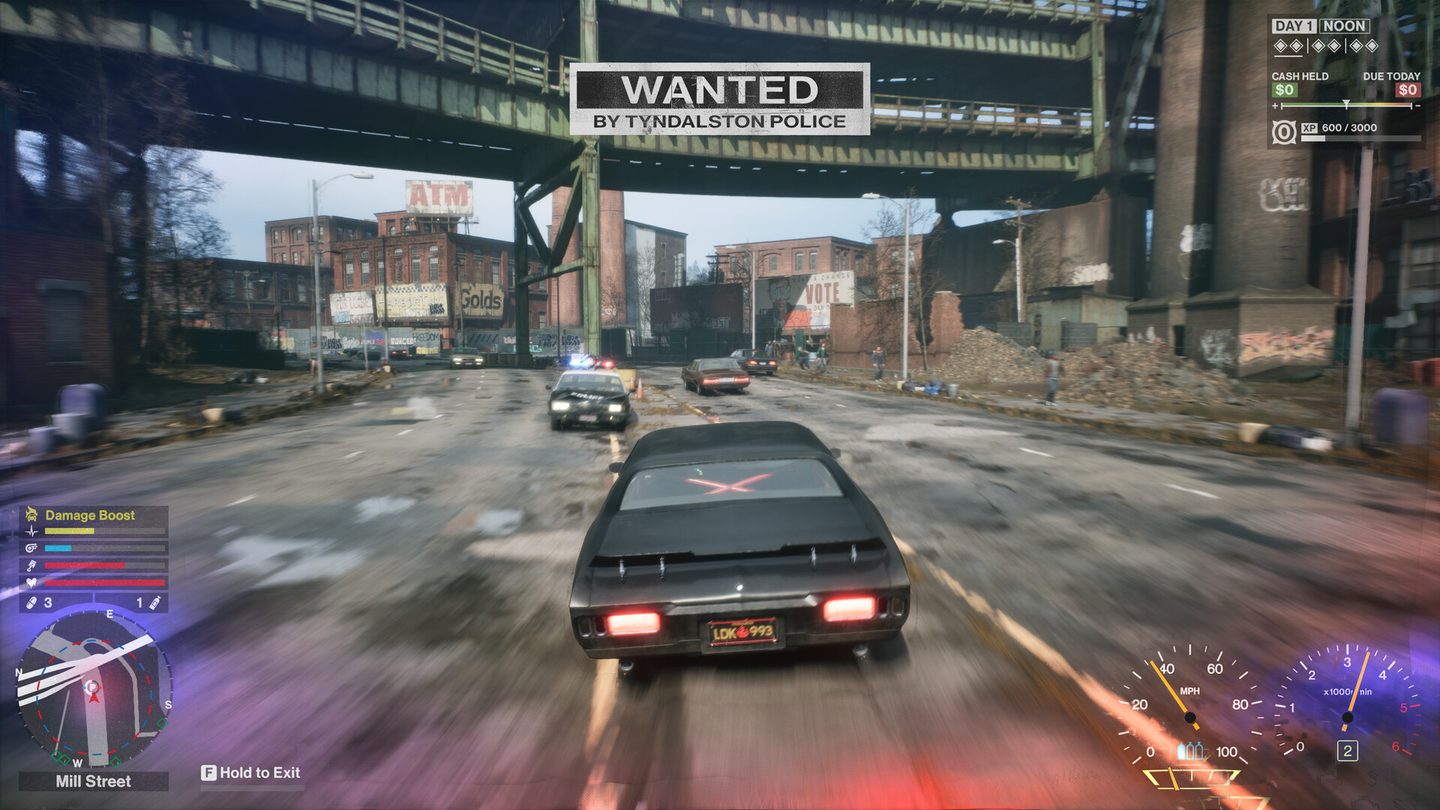
Twenty-eight critics reviewed Samson after it shipped in April, and most of them did not like it. OpenCritic has the average at 54 with 32% recommending; Metacritic sat at 51. But read enough of those reviews and the praise keeps landing in the same place. Checkpoint wrote about graffiti-covered buildings, storefronts, highways, reflections in muddy puddles — a city that felt lived in. Wccftech, hard on nearly everything else, still liked the driving. The complaints were about missions whose next stage never triggered, and a money system that wiped an in-game day’s earnings when you failed.
The environment art shipped. The game around it did not.
On 12 October the Stockholm District Court declared the studio that built it bankrupt. The petition did not come from a creditor — it came from the staff, who had not been paid. Reports put the headcount at between 27 and about 30 and the arrears at either two months or “since August”, which amounts to the same thing from the inside. Christofer Sundberg, who founded Liquid Swords in 2020 after co-founding Avalanche Studios, described a liquidity shortage he did not think could be solved. Karl Björlin of the law firm Cirio is the appointed trustee.
Sweden’s wage guarantee should cover what the roughly thirty of them are owed. That is worth saying plainly, because it is the part that does not travel: an artist in Stockholm has a state backstop under them when this happens, and an artist on a contract in most other places does not.
The shape of a scope cut
Samson was not what the studio set out to make. NetEase put SEK 220 million — somewhere around $20 million — into Liquid Swords in November 2022 for a large action RPG. In February 2025 the studio confirmed layoffs, having pledged a “sustainable work model” not long before; it gave no number at the time, and later reporting puts the cut at roughly half the staff.
What arrived instead was announced in December 2025 as a “consequence-heavy noir action game” and shipped on 8 April 2026, self-published, at $24.99. The launch press release called it a “focused hardboiled action game”. Consoles followed in September. NetEase is now one of the larger creditors in the bankruptcy, which is a tidy summary of how the last four years went.
Read that sequence backwards from the reviews and it stops being a mystery why the city was the good part.
Why the city survived the cut
An open city is the most labour-expensive thing in this medium and also the most front-loaded. CD PROJEKT RED’s art directors have said every building, advert and piece of litter in Night City was placed by hand — that is thousands of person-hours of authored content, and once it is authored, it is in the bank. Blocks, facades, props, road meshes, a lighting pass. It does not rot when the team shrinks. It reviews well in screenshots and in the first hour.
Everything that makes a city into a game needs people in the room at the end. Mission triggers. Encounter pacing. Economy balance. The twelfth playtest where somebody says out loud that losing a day’s money to a scripting failure makes people quit. That work is concentrated in the final year, it does not survive halving a team, and it is invisible in a trailer — which is why the studio’s own marketing beat was a development diary about city and car design.
So Samson’s reception has the shape of its layoff. The part already paid for held up. The part that needed thirty people through to launch is the part reviewers found broken.
Headcount alone does not settle this. Wolf Haus Games is out there with a dozen people shipping an open-world cult sim and seems likely to finish it. What matters is whether the scope you end up with matches the team you end up with, and a scope cut applied after an engine, a city and an art bible already exist tends to leave you carrying the expensive thing you built for the bigger game.
What the trustee is selling
Everything. Cirio has opened a sale of the remaining assets, Samson’s franchise rights included, with bids running to the end of October. No buyer has been named, and nobody reporting on it sounds optimistic.
Steam has the game at “Mostly Negative”, 54.25% positive across about 2,000 reviews as of today. That is a weak but not fatal number, which is roughly the worst place for an asset sale to sit: too poor to look like a bargain, too alive to write off. The likeliest outcome is that the city gets bought by nobody and sits in a liquidator’s inventory, which is a strange end for the best-reviewed thing the studio made.
For the people who built it, the portfolio problem starts now. A shipped open city with named districts and dressed interiors is a strong reel; a shipped open city attached to a 54 is a reel that needs a paragraph of explanation on every application. The work is good. The context it arrives in is not theirs.