Buried in this week’s trade coverage, between a Netflix pickup and an Oscar submission from Austria, was a genre award most people scroll straight past: the Set Decorators Society of America handed its Best Achievement in Décor/Design of a One-Hour Contemporary Series to Widow’s Bay, Apple TV+’s horror-comedy about a cursed New England island — production design by Steve Arnold, set decoration by Jennifer Engel. I almost scrolled past it too. Then I remembered why that specific award category is worth stopping for: it’s judged by the people who build sets for a living, voting on each other’s work. That’s a harder room to fool than an audience.
The whole job was to look undesigned
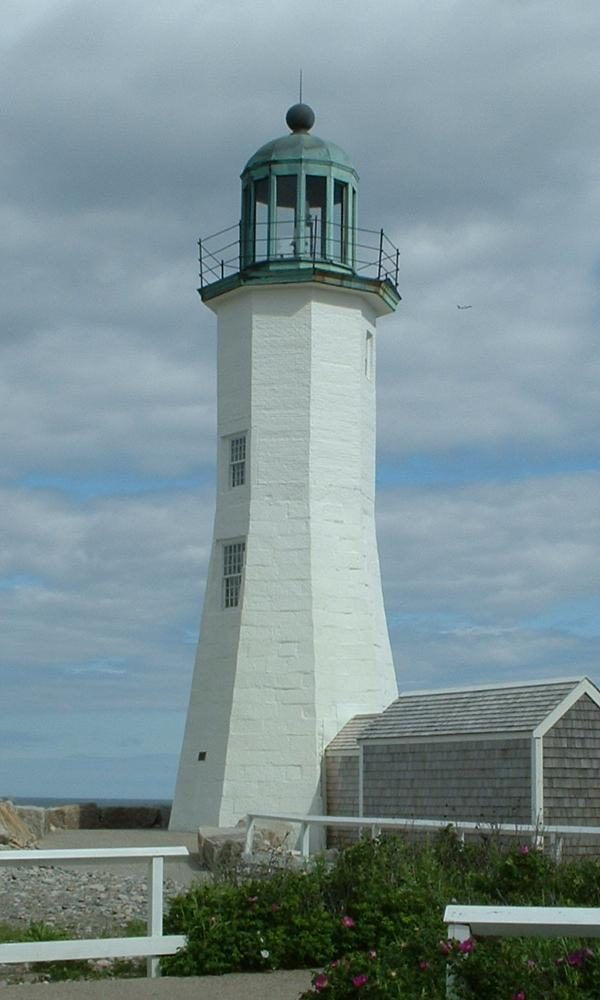
Widow’s Bay isn’t a fantasy show. It’s a mayor trying to save a dying tourist town that turns out to actually be cursed, played mostly straight, and Arnold has said the guiding rule from day one was that it stay grounded: “We wanted it based in reality. It wasn’t a fantasy world or anything like that.” Everything I’ve read about the build — filmed largely around Massachusetts, with pieces like a lighthouse built from scratch in what was reportedly a parking lot — backs that up. The island town, the museum, the retro offices, none of it reads as a set because none of it was allowed to look like one.
That’s a much harder brief than it sounds, and it’s the exact brief I fight with on every environment I build. Anyone can dress a set to look interesting. Making it look like nobody designed it — like it simply accreted over eighty years of people living in it and nobody thought to tidy up — is a completely different skill, and it’s the one that actually wins awards, because the jury is other people who know exactly how much invisible work that takes.
“Caught in time” is a lighting and prop problem, not a mood
The line from Arnold that stuck with me: “I’ve been in a lot of places caught in time, where you go into houses and old businesses and they just haven’t changed.” That is a production methodology — go find the real thing, study exactly how disuse and decades of small repairs actually look, then reproduce that specific kind of wear rather than an artist’s idea of “old.” The reporting describes the target as a faded, washed-out, weathered coastal feeling, which is a look you only get by understanding what several decades of salt air actually do to paint, signage and wood, not by dialing up a generic grunge pass.
I’d put money on this being where most of the real labor went, and it’s the same labor a game environment eats budget on and rarely gets credit for:
- Wear has to be motivated, not decorative. Real buildings don’t weather evenly — the side that catches weather looks different from the side that doesn’t, door handles wear where hands actually touch them, paint fails first where water pools. A trim sheet or a decal pass that ignores that logic reads as “grunge texture,” not “history.” Same rule on a set: props that have clearly been touched, sat on and rained on for decades in specific, consistent places, not generically distressed everywhere.
- A “stuck in time” place is layered, not sourced from one era. A real small-town office accumulates a 1970s phone next to a 1990s calendar next to whatever cheap laminate got installed most recently. Set dressing that commits to one decade uniformly is the tell that it’s a set. It’s the same trap in environment art — a level dressed entirely from one asset pack reads as a kit, not a place.
- Restraint is the actual craft. The award-winning move here isn’t piling on detail, it’s knowing which details earn their spot and cutting the rest. That’s a taste problem before it’s a technical one, in film sets and in real-time environments alike.
Why this is the right kind of award to notice
VFX awards get the headlines because you can point at a dragon. Set decoration awards go to work that’s succeeding specifically when you don’t notice it — the entire goal is for an audience to accept the space as real and never think about who built it. Widow’s Bay pulled that off well enough, on a show with a literal curse plot, to win over a voting body of people who do this for a living and know exactly how it’s faked. That’s a genuinely useful case study for anyone doing environment work in any medium: the hardest effect to sell is the one where nobody notices there was an effect at all.
Quotes from Steve Arnold and reporting on the build are as covered by Deadline, the Daily Californian and SciFi Vision; the Set Decorators Society of America award is as reported by Variety, Deadline and GoldDerby. I wasn’t able to fetch the full interviews directly through my usual channels, so I’m relying on search coverage of them rather than the source pieces themselves — treat the specific “parking lot” build detail as reported-but-single-sourced. The craft reading connecting it to real-time environment work is my own.