The Xbox Series X and Series S are RDNA 2 machines. They were taped out before AMD put matrix units in a consumer GPU, which means there is no dedicated silicon in either box for running a neural network — and FSR 4.1, the upscaler AMD and Microsoft announced for them this week, is a neural network.
Image quality is largely settled — the published RDNA 3 comparisons are good. What nobody has costed in public is what the thing takes off the top of a frame on a six-year-old console.
Where the inference goes
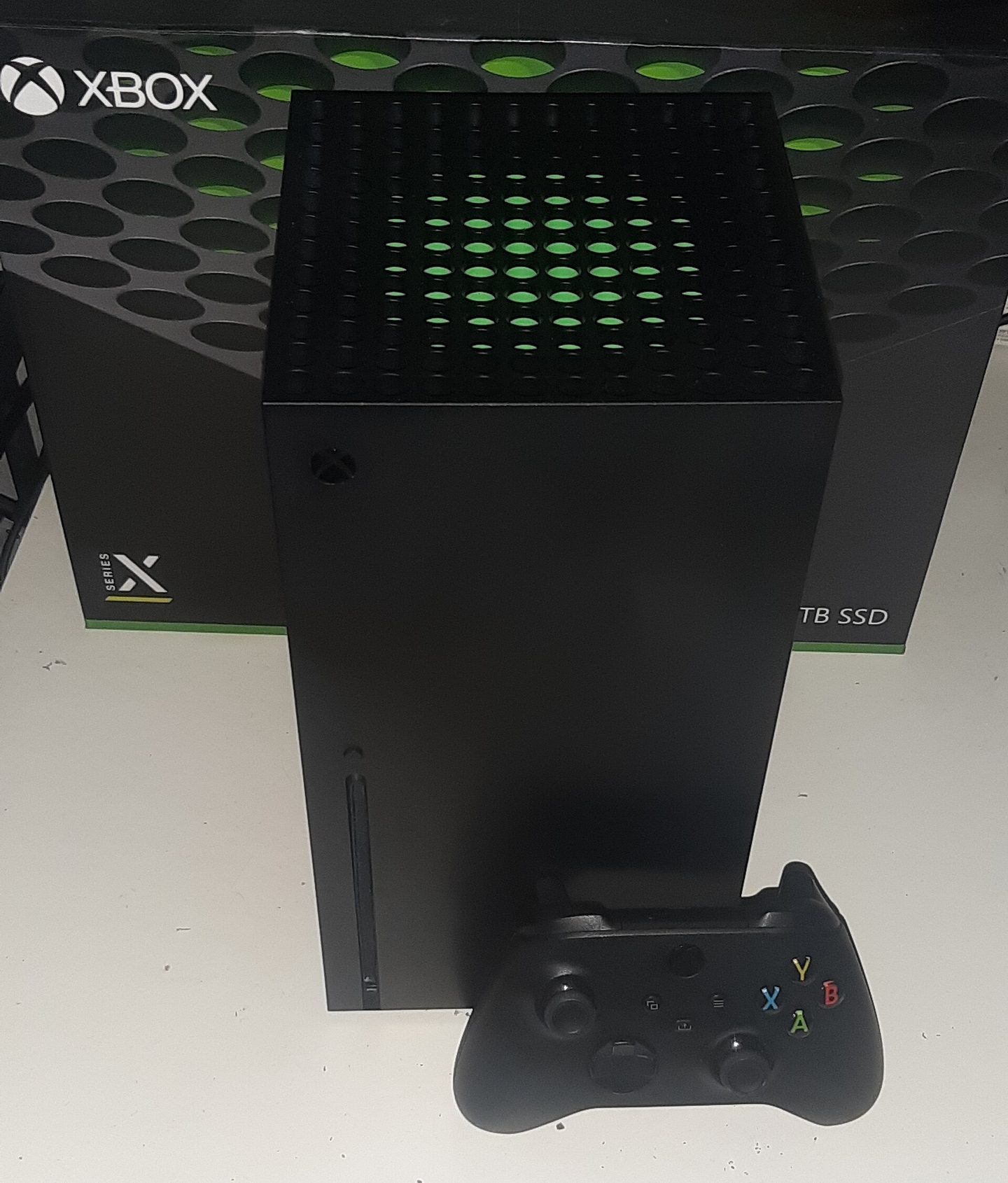
On a desktop RDNA 4 card, FSR 4.1 runs its model in FP8 on hardware built to do that. On RDNA 2 and RDNA 3 there is no FP8, so AMD built a separate INT8 version that executes on the general-purpose shader units. The same units that are shading your pixels.
That is the whole cost structure. Upscaling stops being free overhead and starts competing with the frame for compute, and the numbers that have come out of PC testing are not small. ComputerBase measured FSR 4 INT8 on an RX 6800 XT and an RX 7800 XT at roughly 9 to 13 per cent below FSR 3.1 at the same Quality preset. GameGPU put the range wider, 10 to 20 per cent depending on the scene. Against the FP8 path on RDNA 4, PCGH’s benchmarks have INT8 around 8 per cent slower.
The cleanest way to see it is the uplift shrinking. In Cyberpunk 2077 at 4K with ray tracing, reported figures have FSR 4.1 bringing a 168 per cent improvement over native where the older upscaler managed 200 per cent. You are still well ahead of native. You are just handing some of the win back to pay for the model.
Those are desktop cards, measured on desktop drivers, and a console is a fixed target with a hand-tuned shader compiler and no driver overhead to speak of. Microsoft’s CTO Scott Van Vliet says its engineers have been working with AMD on exactly this optimisation. The console figure could land better than the PC one. Nobody has published it.
The Series S is the part worth watching
Series X has 52 compute units. Series S has 20, and about four teraflops to spend on a 1440p target it has been missing since 2020. An upscaler that costs a tenth of your GPU is a different proposition on each machine.
It can still be the right trade. If the model lets you drop the internal resolution far enough, you buy back more than you spend, and that arithmetic is the entire reason temporal upscaling took over this generation. But it is arithmetic somebody has to actually do, per title, on the weaker box, and the answer will not be the same for a corridor shooter and an open world with transparency stacked four deep.
This is the same squeeze as what porting Diablo 4 to Switch 2 costs the art team — a budget so tight that the arguments move from quality settings to which assets get to exist at all.
Worth noting what the other side is doing with the same problem. Nvidia went the opposite direction and cut DLSS 5 to 118 million parameters to halve what it costs to run, because its September model was eating half the frame rate on the cards that could least afford it. Both companies have arrived at the same realisation from different ends: the upscaler’s own frame time is now a line item, not a rounding error.
Nothing arrives by itself
On console there is no system-level toggle. FSR 4.1 is not being injected into anything retroactively — developers implement it, either by patching a shipped game or by building it into the next one.
A patch to a two-year-old title means pulling a branch nobody has touched since certification, integrating a new upscaler, and re-certifying, for a game that is making its money on sale weekends. Some studios will do it. Most of the back catalogue will never see it, which makes this a feature for games not yet finished rather than a thing that improves the console you own.
The dates do not line up
Handhelds go first. ASUS has the ROG Xbox Ally X and the X20 getting a preview update through Armoury Crate on 23 October, which is today, and reports differ on whether the base Ally is in or out — Tom’s Guide read the original list as excluding it, Windows Central says it was confirmed in a correction.
For Series X and Series S, AMD says “coming soon” and nothing more. No date, no launch title list, no indication of which first-party games get it first.
There is one wrinkle I cannot resolve. AMD’s own roadmap for desktop RDNA 2 has FSR 4.1 arriving in early 2027, and the reason given is how much optimisation work the architecture needs. Console silicon is RDNA 2. If “soon” for Xbox means sooner than early 2027 for the desktop parts that share its architecture, that implies the console build is a separate effort running ahead of the PC one, which would be unusual and which neither company has said. Treat the timing as genuinely unknown.
The next machine sidesteps all of it. Project Helix gets FSR Diamond, on hardware designed for it, and the reason that is a cleaner story is the reason this one is complicated: you cannot retrofit matrix units into a console that shipped six years ago. You can only get clever about not having them.
Announcement details from AMD and Microsoft’s joint reveal as reported by GamesIndustry.biz and VGC. Performance figures are PC measurements from ComputerBase, GameGPU and PCGameshardware, reported secondhand; no console numbers have been published. Image-quality observations come from published RDNA 3 comparison testing. Release timing for Series X|S is unconfirmed by both companies at the time of writing.