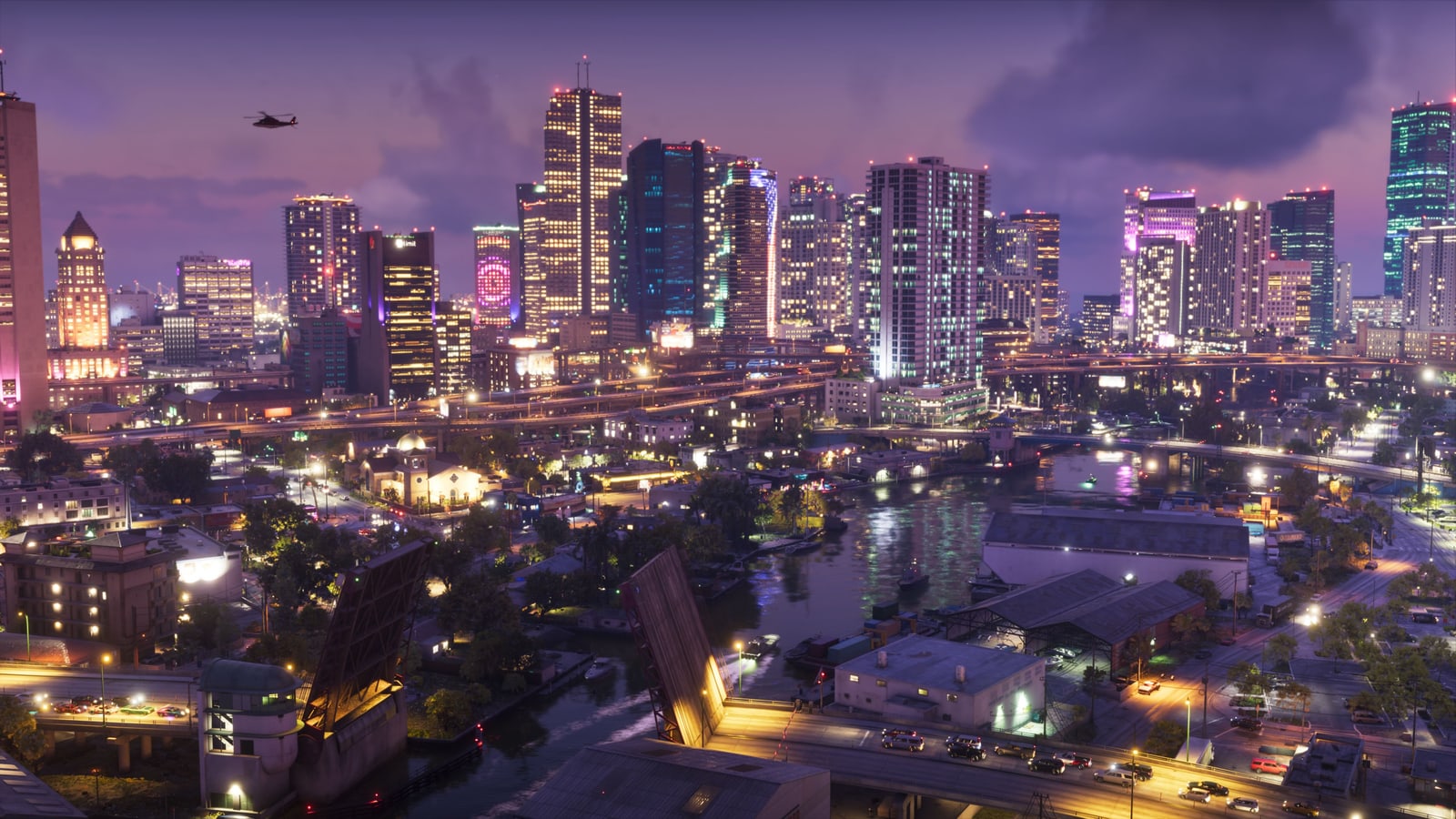
Six hundred thousand animation clips. That is what Rockstar says is sitting inside Grand Theft Auto VI, which went on sale today, 19 November 2026, on PS5 and Xbox Series machines.
Put it next to the studio’s own back catalogue and the shape of the thing shows up. GTA 5 shipped with about 55,000. Red Dead Redemption 2 had roughly 300,000. GTA 6 has over 600,000 — twice Red Dead’s library and close to eleven times GTA 5’s.
The figures come from Aaron Garbut, co-head of Rockstar North, in an interview with The New York Times published around the Extended Look in late August. They were not announced this week; they have been resurfacing all through launch as people go looking for a number to explain what they are seeing. I have not read the NYT piece directly — it sits behind a paywall I could not get past — so everything attributed to Garbut here comes through the outlets that did, and they agree with each other on the counts.
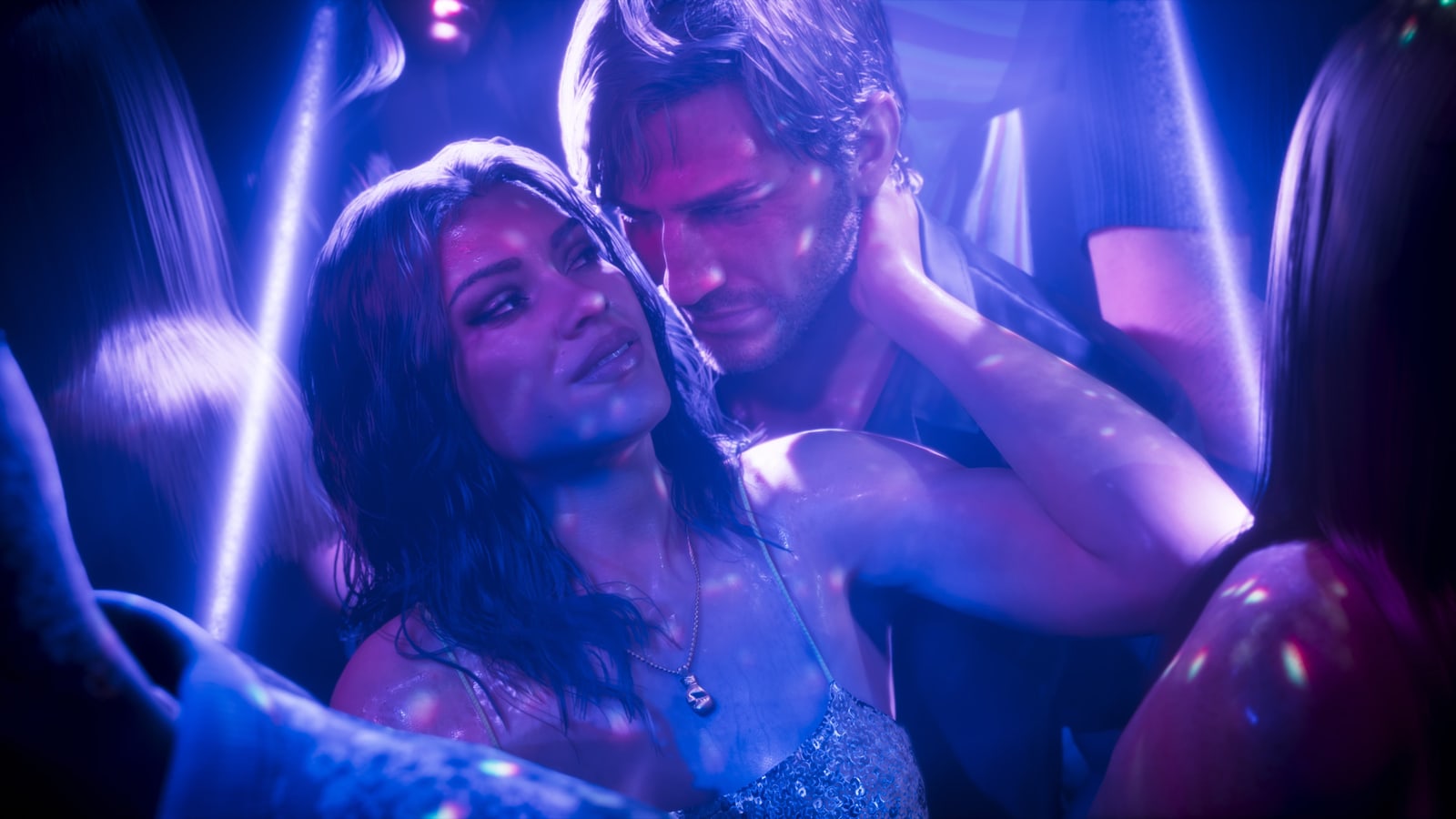
The expensive word is not “600,000”
Garbut’s line, as quoted everywhere since August, is that Rockstar “art-directed each individual one of them.”
That is the sentence to stop on. A large animation count on its own is not especially hard to reach — procedural variation, randomised playback speeds, layered additive noise on a base loop, and a few hundred source clips will generate you a very big number to put in a press release. Studios do this. It is a reasonable technique and it is how most crowds in most games work.
Art-directing each one is a different activity entirely. It means a person looked at the clip, had an opinion about it, and either kept it or sent it back. At 600,000 clips that is not a technical achievement so much as an organisational one: you are describing a review pipeline that someone had to staff, schedule and keep running for years without it collapsing into a folder nobody can search.
Divide it out. Red Dead Redemption 2 shipped on 26 October 2018. That is 2,946 days to today. Six hundred thousand clips across that span is a little over 200 a day, every day, weekends included, for eight years. The real curve was nothing like flat — that is a back-of-envelope figure, not a production schedule — but it gives you the order of magnitude, and the order of magnitude is a building full of animators.
Which is roughly what Rockstar did. The reporting around the same interview says the studio stood up a new Los Angeles team of writers, directors and producers pointed specifically at NPCs. Writers. For background characters.
What a clip costs after it exists
Anyone who has worked on a library this size knows the authoring is only the first bill.
A clip has to be named in a scheme that survives six years of people leaving. It has to be tagged well enough that an animator in another timezone can find it instead of making a ninth version of the same thing. It has to be retargeted onto every skeleton that might play it, and the moment you have more than one body type — adults, children, the heavier builds Rockstar has shown in Vice City crowds — that multiplies. Then it has to fit a memory budget, because 600,000 clips do not live in RAM at once. Something decides what streams in as you walk down a street and what gets evicted behind you.
None of that is glamorous and all of it is where the money goes. We wrote about the same economics from the other end a few weeks back, when Blizzard rebuilt its classic character models and found that the rig, not the mesh, is where the cost sits. Scale that argument up by three orders of magnitude and you have Rockstar’s problem.
I would like to tell you how they solved the search-and-dedup side of it. Nothing published so far says. The detail in the coverage is all about outcomes — sweat that responds to exertion, voices that carry on the wind, NPCs with personality traits weighted by demographic and profession — and almost none of it about tooling. That gap is the piece I actually want to read, and it will probably take a GDC talk in 2028 to get it.
It all has to tick
The runtime side is where this stops being an art-department story.
Every one of those clips is selected, blended and advanced by something on the CPU, alongside traffic routing, vehicle physics, police coordination and a second protagonist running combat behaviour next to you. That is the frame budget Rockstar has been defending for a year, and on 18 November it published the table that settles the argument: PS5 and PS5 Pro both render at native 1440p, with the Pro’s extra silicon spent on reconstruction and shadows rather than frames. A bigger GPU draws the same simulation faster. It does not make the simulation tick twice.
So the animation library and the 30fps lock are the same decision seen from two sides. You can have a street where four hundred people each have somewhere to be and a gait that belongs to them, or you can have sixty frames. On this hardware, in 2026, choosing both was never on the table.
Bloomberg’s reporting on the game’s development, which I have also only read second-hand, says the sheer volume of NPC work was among the things that pushed the schedule. Treat that as reported rather than confirmed. It is at least consistent with the arithmetic: if you commit to hand-directing every clip in a library that size, the date moves when the animators say it moves.
There is a version of this industry where that number gets generated overnight and nobody looks at any of it. Rockstar took thirteen years and hired a city. Both approaches produce a big figure for the press release. Only one of them produces a pedestrian who looks like she is late for something.