Nvidia announced the change on 12 November 2026. Jensen Huang has resigned as president, chief executive and board member, effective immediately. Colette Kress — chief financial officer since 2013 — becomes interim chief executive and keeps the CFO job while she does it. Harvey C. Jones becomes the first chair in the company’s history to sit separately from the chief executive, and the board says it is considering both internal and external candidates for a permanent appointment.
The reason has nothing to do with chips. Reporting across NBC News, CNN and CNBC ties the resignation to extramarital relationships, one of them with a woman US authorities have been investigating as a possible Chinese agent. Huang has denied compromising national security or any Nvidia secret, and the Justice Department has not concluded that the woman is an agent. Three House committees have summoned him for a closed-door interview on 1 December. The market took it badly: the stock fell more than 13% in Thursday trading before clawing back part of that.
I am going to leave all of that to the business desks, because from where I sit the question is much narrower. Does the box under the desk care?
What a chief executive cannot move
Mostly, no. And the reason is lead time.
The GPU you will be able to buy in eighteen months is already finished silicon in the sense that matters. Its architecture was frozen years ago, its die taped out months ago, and the fab capacity to print it was booked and paid for long before this week. Nobody arriving in the chief executive’s office on a Thursday can make a different chip appear in 2027. They can cancel things far enough out that nobody has seen them yet, and little else. Harvey Jones’s own statement in the announcement says the board expects operations, customer commitments and the product roadmap to continue without interruption, which is the thing a board always says, and in this case is also the thing physics requires.
The software is stickier still. The reason a render box is an Nvidia box has very little to do with who runs Nvidia and everything to do with CUDA being twenty years old. OptiX sits on it. Redshift, Octane and Arnold’s GPU renderer sit on it. Cycles has a CUDA and an OptiX backend and the OptiX one is the one people actually use, because it gets the denoiser and the hardware ray tracing. Thousands of engineer-years of driver and toolkit work sit under that, and a replacement chief executive inherits every one of them.
So the roadmap is safe, the ecosystem is safe, and the thing most of the coverage this week is about — who sits in the chair — turns out to be the part of Nvidia that reaches an artist last.
Allocation is the lever
Here is the decision that has actually set the terms of my working life.
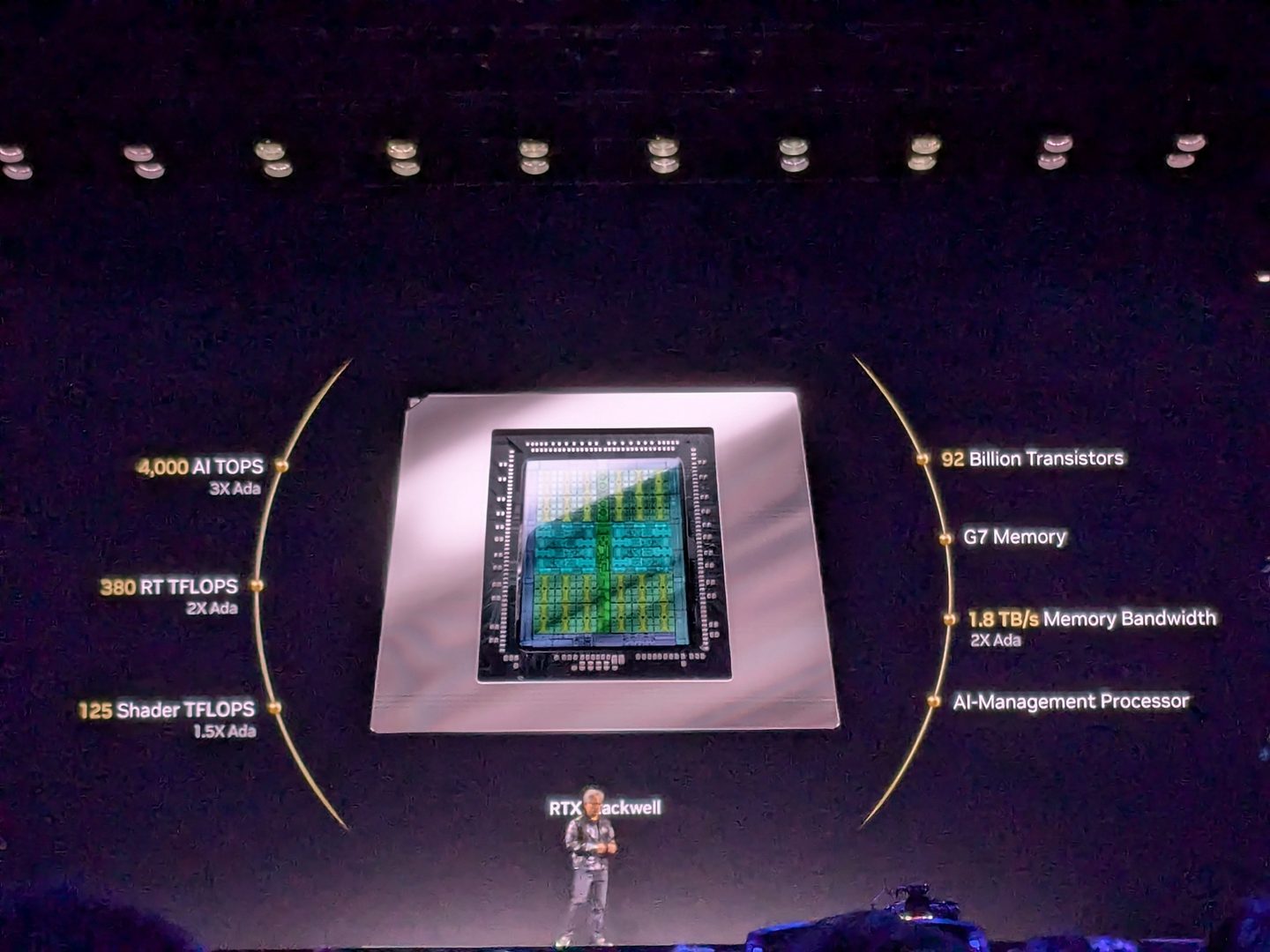
Nvidia makes a GeForce card and a data-centre part out of broadly the same industrial capacity, and somebody decides the split. For three years that split has gone one way, and the consequences land on anyone building a workstation. It is why an RTX 5090 that launched at 1,999 dollars was asking 4,929 on Nvidia’s own store in August — a price that has nothing to do with how many people want to play games. It is the pressure behind the reports in October that the GB202 die is being reserved for professional cards, which would drop the top GeForce from 32GB of VRAM to 24. A heavy scene either fits in memory or it does not. There is no graceful degradation at that boundary; you just stop being able to render the shot on the machine you own.
That split is genuinely a management decision. It can be revisited quarterly. It does not need a tape-out. If anything at Nvidia is going to move because the person in charge changed, it is this, and it is the only part of the story I would spend attention on.
A CFO in the chair
Which brings me to the uncomfortable arithmetic.
Kress is interim. No permanent successor has been named, the board has opened a search that may go outside the company, and a results call lands next week. She is also, still, the chief financial officer — the executive whose job for the past three years has been to explain data-centre margins to investors every ninety days.
Set those facts next to each other and I cannot construct a reading where consumer graphics gets a bigger share of capacity in the next two quarters. An interim leader under a congressional summons, a share price down double digits, and an earnings call days away is the configuration least likely to move silicon toward the lower-margin product line. That is inference, not reporting — Nvidia has said nothing about allocation this week and I am reasoning from who holds which job. I could be wrong, and there is a version of this where a new chief executive wants an early, visible, popular win and gives GeForce a generous generation to get it.
I have been doing this long enough to be suspicious of my own neatness here. The honest position is that the founder leaving is a smaller event for a 3D artist than a single line in a February product announcement about memory configuration, and we will not know which way the capacity went until a card with a price on it exists. The press release is not where that shows up.
What I will say is that Huang was personally the one who walked onto a CES stage holding a GeForce card up to a camera. Whatever the spreadsheets said about where the wafers should go, there was a founder at the top of that company for whom the consumer graphics brand was something he did himself, in front of people, once a year. That is not in any filing, and it is not nothing.