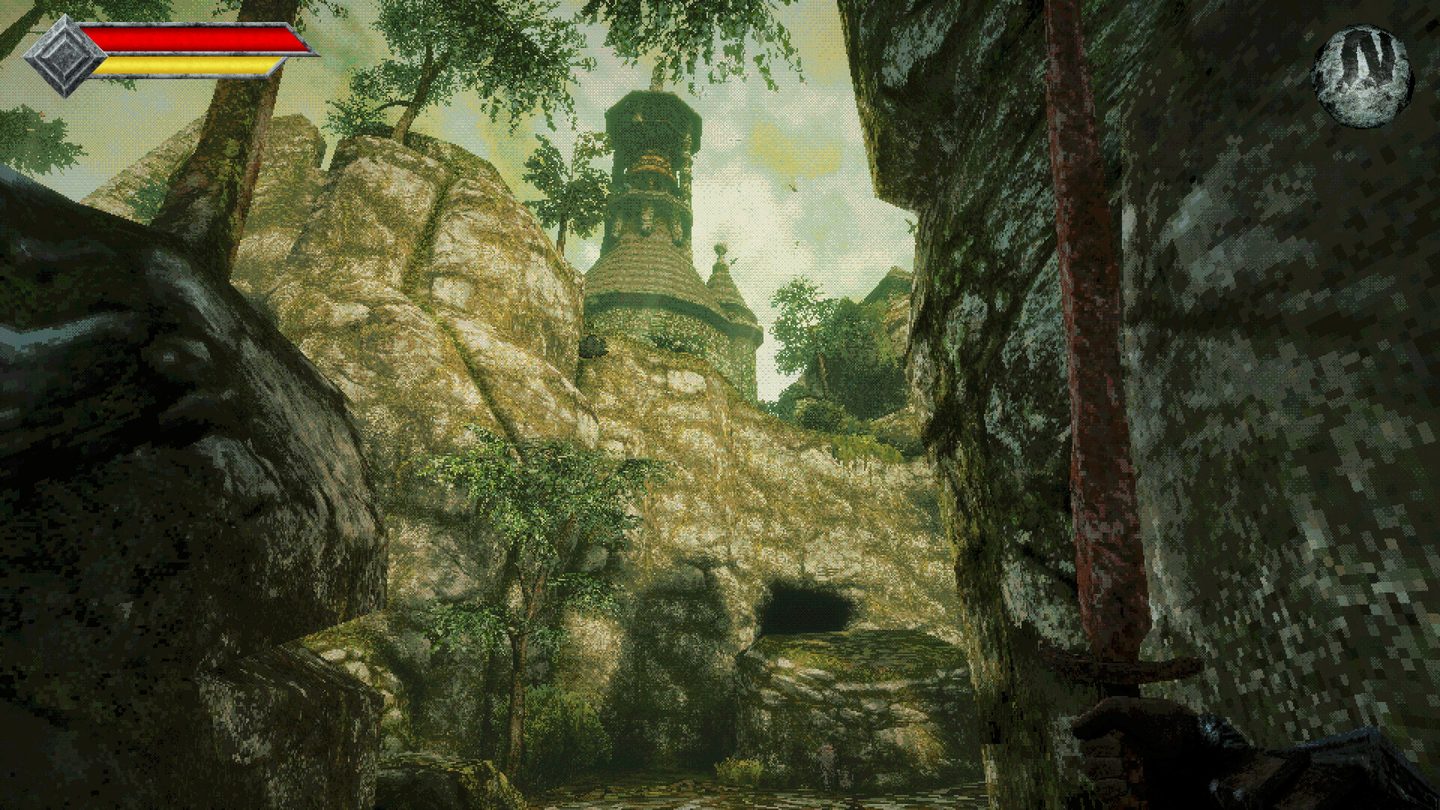
Queen’s Domain came out on 30 October 2026 and the scores have been arriving ever since, slowly, from outlets that clearly took their time with it. Polygon filed this morning, nearly a fortnight after release. That is a tell in itself.
Across the six scored verdicts I could verify, the average is 8.5, and the range runs from 7 to 9.5. OpenCritic sits higher, around 90 from a larger sample, with roughly nine in ten critics recommending it. Steam user reviews are near 95 percent positive as of 12 November.
A two-and-a-half point spread on a game this small is worth more attention than the mean. Nobody in that range disagrees about what Freshly Baked Games built. They disagree about whether it is navigable.
What the game withholds
The lineage is FromSoftware’s King’s Field, the first-person RPGs the studio made before Demon’s Souls gave it a different reputation. Slow melee in first person, a sword you swing with weight, and a dungeon you are expected to hold in your head.
Queen’s Domain keeps the awkward parts on purpose. There is no map. There are few signposts. Saving happens at obelisks, and dying between two of them costs you everything since the last one — no autosave, no checkpoint quietly dropped behind you as a kindness. GameGrin, in its preview, noted the spaces are wider and more open than King’s Field’s cramped corridors, and more room means more ways to lose your bearings.
The environment is the map
The craft consequence is where this gets worth sitting with.
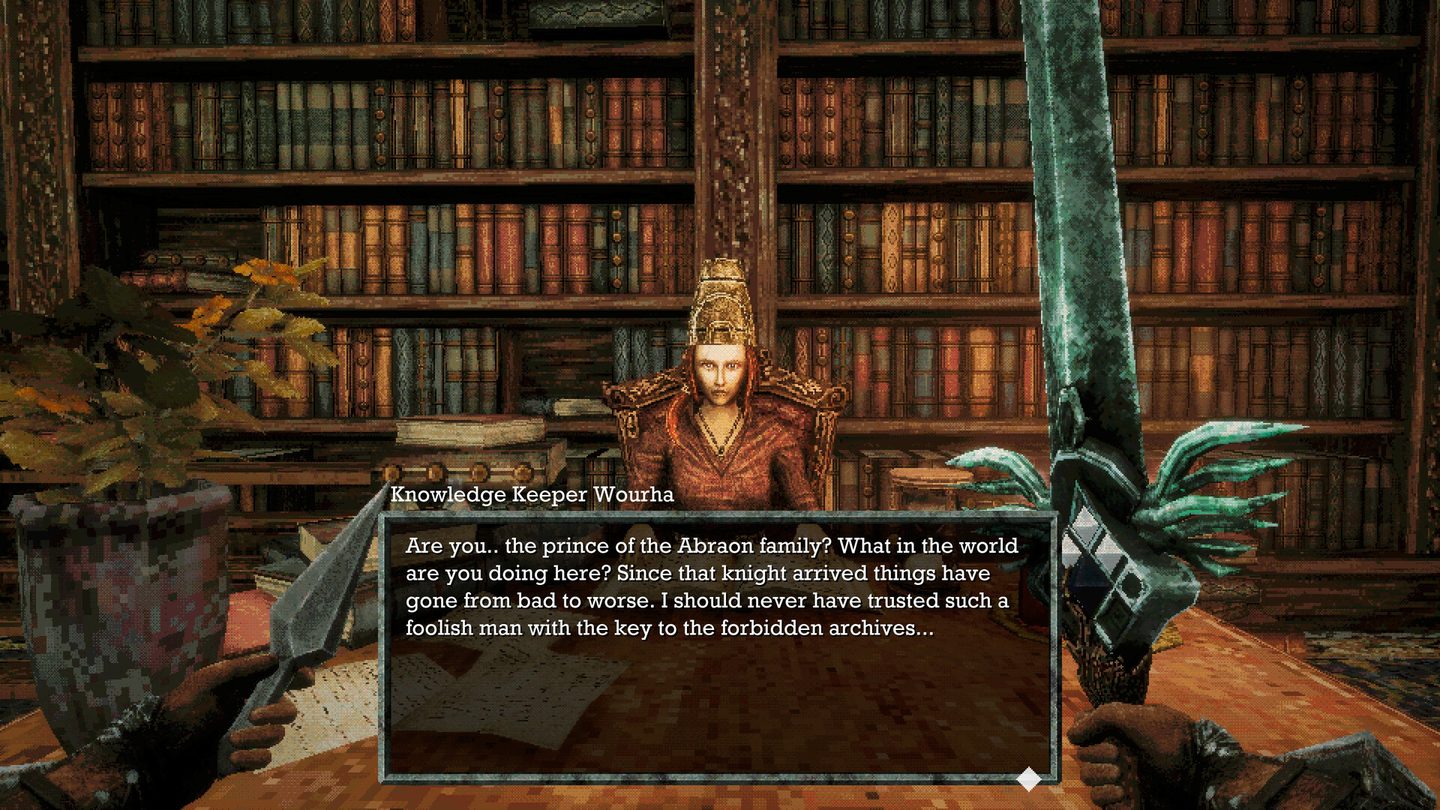
Take the map away from a first-person game and the navigation budget does not vanish. It moves. Every job the minimap was doing — where am I, have I been here, which way is forward — lands on the environment art department, and gets paid in things you can build: a silhouette you recognise from across a room, a material change at a threshold, a light source placed where a designer wants your eye to go.
That is expensive in a way that does not show up in a trailer. A corridor that only has to look good can be instanced. A corridor that has to be distinguishable from the other eleven corridors needs a reason to exist, which means unique dressing, a different stone, a broken thing on the floor you will remember. Nintendo Life describes exactly this: learning a space by wandering it and trying things.
The low fidelity helps here. Chunky geometry and small textures mean a landmark reads as one shape rather than as detail that dissolves at distance. Fog closes the sightline, so you are never choosing between twenty similar doorways at once. The same restriction that makes the game look like 1996 is what makes a hand-held mental map possible at all.
Compare it to the opposite problem. When Bethesda confirmed Hammerfell, the thing I kept coming back to was that their environment art has always hidden its seams behind trees — long sightlines with nothing to occlude them is a harder brief than it sounds, and a dune sea has no landmarks to lend you. Queen’s Domain has the inverse budget and solves the inverse problem.
Where the sevens come from
NoobFeed at 7.2 and Nindie Spotlight at 7 are the floor, and AltChar — which did not attach a number — makes the same case in words: the opening hours are brutal enough to send a lot of people away before the game starts paying out.
That complaint and the praise are the same observation seen from two chairs. A game that teaches you to navigate by refusing to navigate for you has a window in which it is just confusing, and the length of that window decides your score. Reviewers who came out the other side wrote about a world they knew. Reviewers who were still in it wrote about being lost.
It is a familiar shape. Phantom Blade Zero drew an 8.5 the same way, with a system critics agreed on and a surrounding argument they did not, except there the split was combat against story. Here it is one system against the patience it demands.
The number
8.5, from six scores between 7 and 9.5.
That is the arithmetic mean of what I could verify, rounded to the nearest half point. Six is a thin sample and I would not pretend otherwise — the aggregators are working with twice that and landing a point higher, which tells you the outlets I could confirm skew slightly harsher than the full field. Treat the range as the useful number.
What I cannot judge from here is the thing the sevens are actually measuring, which is how it feels at hour two. Everything above is a reading of how the world is built, taken from footage, screenshots and what reviewers describe.
Scores collected on 12 November 2026 from the outlets’ own pages and OpenCritic listings, converted to a 1-10 scale and averaged. Aggregate figures are OpenCritic’s and Steam’s own, read the same day.