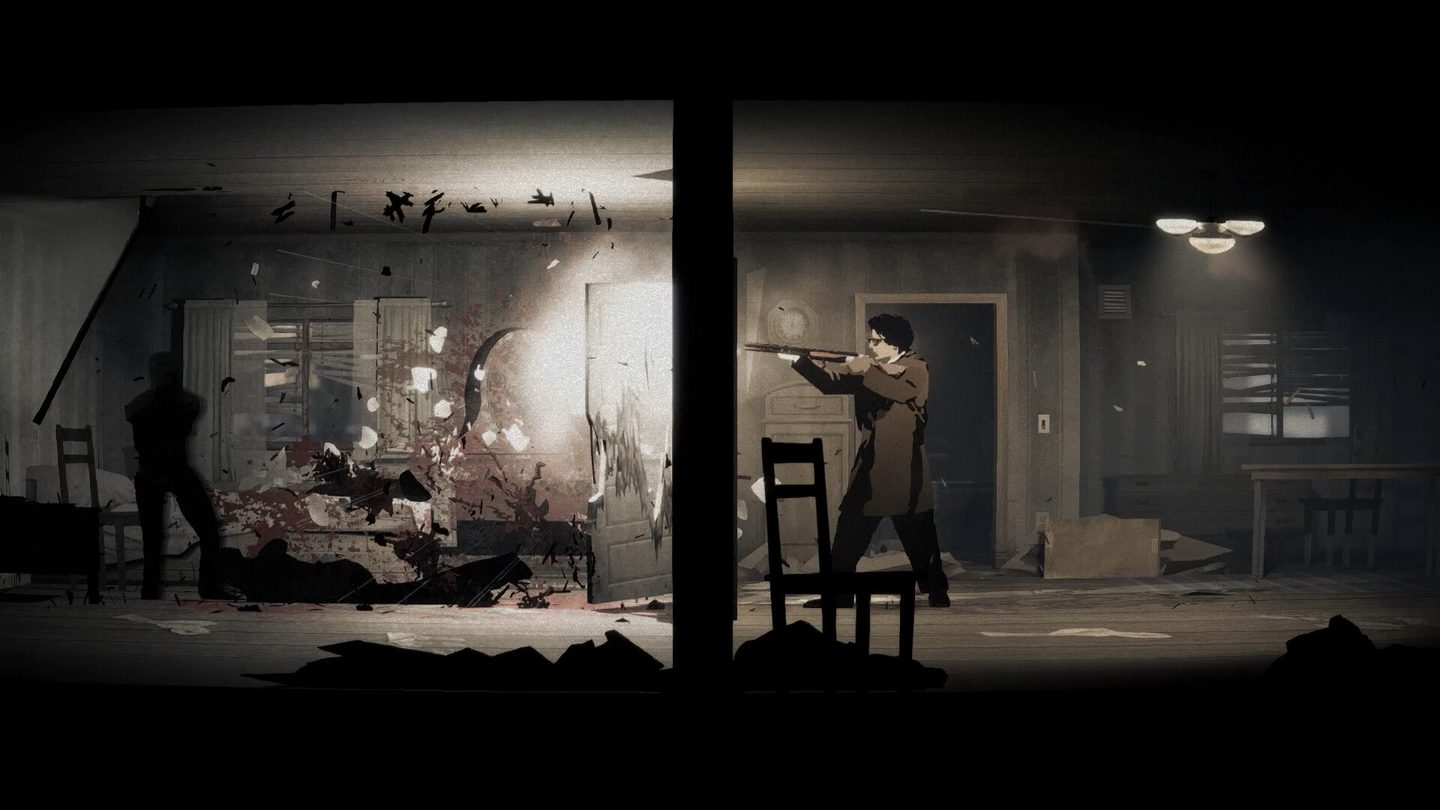
A first-time studio decided to rotoscope a horror game. That is the detail worth stopping on, well before the scores.
Silver Pines comes out of Wych Elm, published by Team17, and it arrives on 8 October 2026 on PC, PS5, Xbox, Switch and Switch 2. You play Red Walker, a private investigator who turns up in a half-abandoned town looking for a missing musician called Eddie Velvet, and the job goes the way these jobs go. The reference points reviewers reach for are Silent Hill, classic Resident Evil, Alan Wake, Twin Peaks and The X-Files, which is a crowded shelf to be compared against for a debut.
Reviews landed on 6 October, two days ahead of release.
The animation is the expensive decision
The game is hand-painted 2.5D, animated with rotoscoping — drawing over recorded footage frame by frame. For a small team that is an odd place to spend money. Rotoscope does not scale: you cannot retime it cheaply, you cannot reuse a cycle in a new context without it looking wrong, and every extra action is another shoot and another pass of drawing.
What you get back is weight. Rotoscoped figures sit on the ground properly, because the timing came off a body that was obeying gravity. In a genre where the horror is largely a matter of how slowly and how heavily your character moves through a corridor, that is not decoration.
This blog has watched the same technique get picked up on the other side of the industry, when the live-action Look Back brought in Yōko Kuno to direct a rotoscoped sequence inside a film. Different medium, same reason: rotoscope is what you use when you want drawing to carry the credibility of a performance.
The locked, painted camera pays for itself twice. Once in detail per frame, and once in what the team never had to build: there is no off-angle geometry to tidy, no lighting rig that has to survive a player spinning round in it, no LODs. A fixed shot is a promise that the player will never look behind you, and a small studio can spend that promise.
A Metroidvania wants its map to be honest
The structural choice is the one I would watch if you are deciding whether to buy it. Survival horror and Metroidvania pull in opposite directions. Survival horror wants you lost, rationed and reluctant to move. A Metroidvania wants you confidently re-reading a map you have already beaten, hunting the door your new tool opens.
Holding both means the map has to be legible enough to plan against while the world stays hostile enough to be frightening. Get the balance wrong in the direction of atmosphere and backtracking turns into a chore.
It is the exact seam that went wrong a week ago in End of Abyss, where reviewers kept hitting a map that lied to them — eleven verdicts, 7.5 average, and a patch the day after launch. Silver Pines is being praised for its exploration rather than forgiven for it, which suggests Wych Elm got the readability side right. Though I would note that a painted fixed-camera game has an advantage here that a 3D one does not: every room is a distinct composition, so rooms are easier to tell apart from memory.
The number
9, from five scored verdicts running 8 to 10.
Plain arithmetic mean of what I could verify and attribute, rounded to the nearest half point: CGMagazine 10, DualShockers 9.5, Digital Chumps 9, GamesRadar+ 9 (90/100 converted), Finger Guns 8.
Treat it as an early figure. Many more outlets have filed than the five I could attribute a number to with confidence, and on 7 October the aggregates were still moving as reviews came in — I saw OpenCritic quoted at 87 from 17 critics and then from 20, and Metacritic at 85 from 14 reviews in one place and higher in another on the same day. Those will have settled by the time you read this; mine is five outlets, named, converted and averaged.
The two-point spread is the interesting shape. CGMagazine called it a masterpiece. Finger Guns landed on atmospheric, engaging and truly great, which is an eight in the language reviewers use when a game is very good and something is nagging. A debut studio producing that split is normal — the things that separate a 10 from an 8 here are combat feel and pacing, and those are the parts of a first game that get rebuilt last.
One thing I cannot tell you from a desk: whether the rotoscope stickiness is the cost of the technique or a tuning problem that a patch reaches. Those look identical from outside, and they are not the same thing to live with.
Scores collected on 7 October 2026 from the outlets’ own review pages, converted to a 1-10 scale and averaged. Five verdicts, named above.