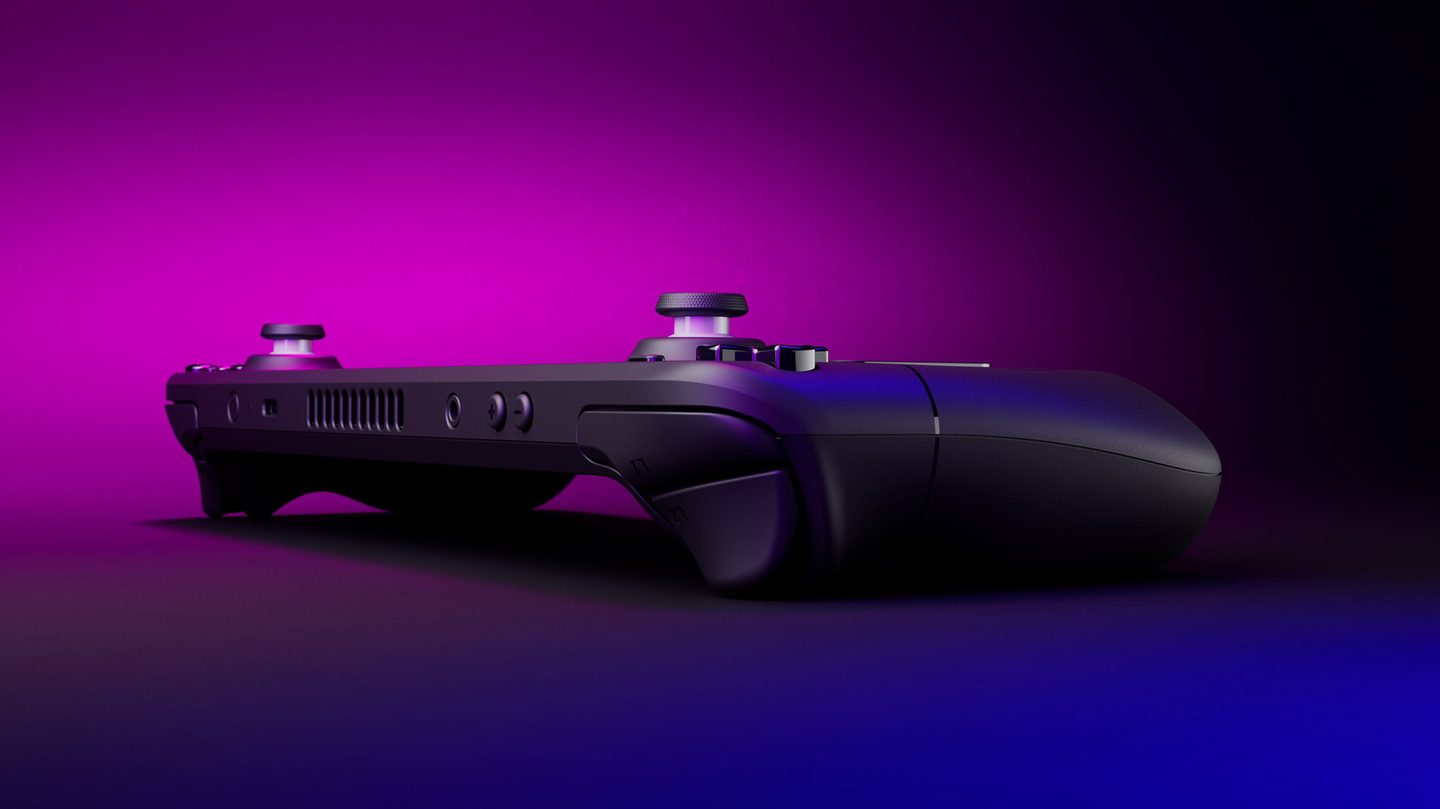
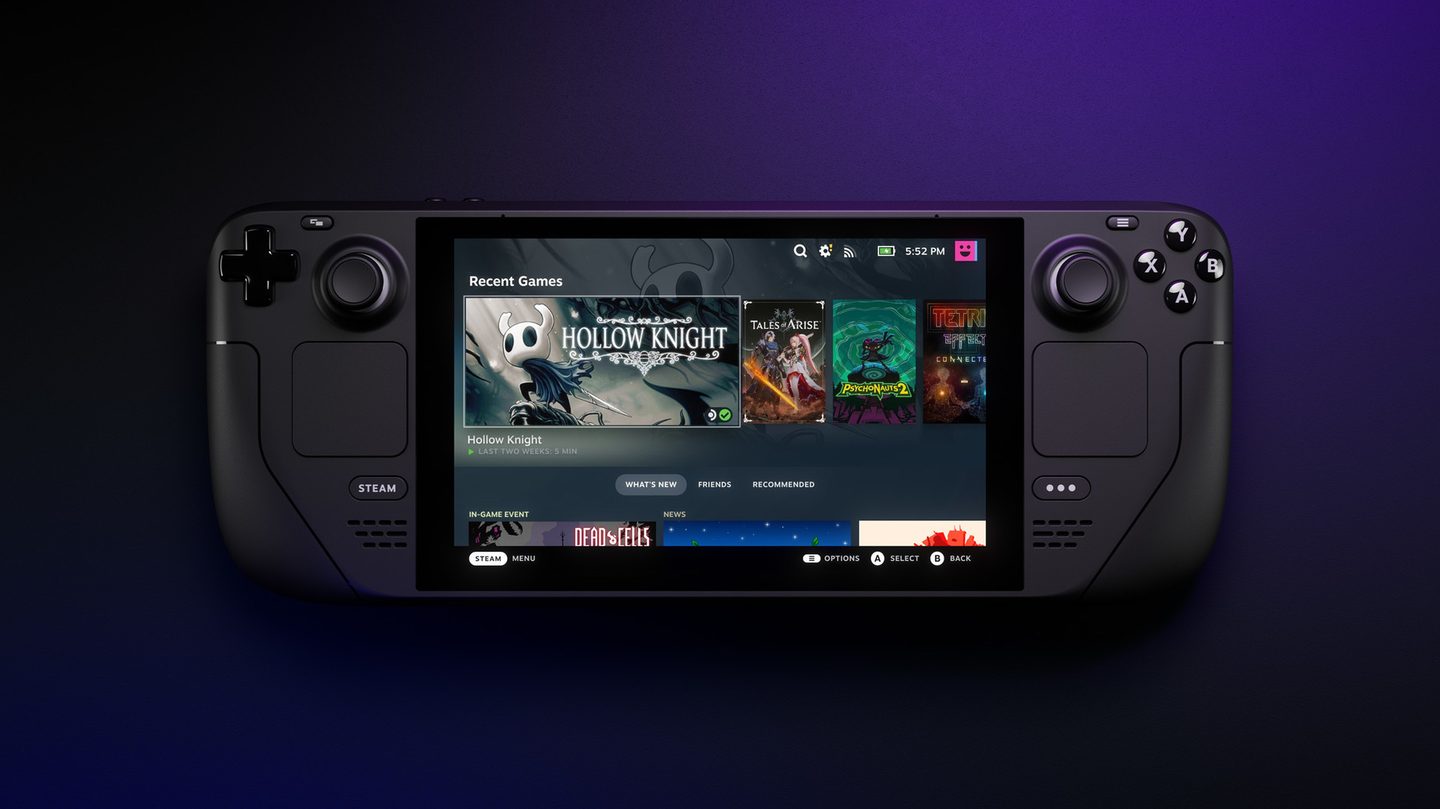
Open a game’s store page on a Steam Deck this week and there is a number under the compatibility badge that was not there before: the average framerate real Deck owners got out of the thing, measured on their own machines. Valve pushed it out in a client update on 10 November 2026, sitting behind the “Learn more” link in the Steam Deck Compatibility block, covering thousands of games across the Verified, Playable and Unsupported tiers.
Then Valve did something I did not expect. It explained, in its own documentation, why you should not trust the number it had just put on the page.
The 75 that never renders
The example Valve gives is a frame pattern of 90, 90, 45, 90, 90, 45. Average that and you get 75 frames a second. The game renders 90 or it renders 45. It never once renders 75.
Anyone who has spent an afternoon staring at a frame-time graph knows that cadence. On a 90Hz panel it is the classic vsync fallback — miss the window and you are held to half rate until you catch up — and it reads to the eye as a judder rather than a slowdown. A player would describe that game as stuttery. An average describes it as a comfortable 75, which is better than most handheld games manage.
The chart you can expand underneath it is where the update earns its keep, split into OLED and LCD panels, showing how often each framerate occurred. Two games can average 75. One of them has all its mass piled at 75. The other is the 90/45 sawtooth above. Those are not the same product and now, for the first time on a storefront, they do not look the same either.
This is the measurement the blog has wanted for a while. When I wrote about a 5090 that stutters at 60fps in Silent Hill: Townfall, the whole difficulty was that no single number could express the problem: the hardware was comically overspecified, the average was fine, and the game hitched anyway because shaders were compiling while you walked. A distribution catches that. An average buries it.
What the chart cannot tell you
Two limits, and both matter if you are going to read these things seriously.
Valve counts only sessions from Decks running their default frame limits — 60 on the LCD, 90 on the OLED. Good discipline, since it keeps unlocked and docked oddities out of the sample. It also means the right-hand edge of every chart is a hardware ceiling rather than a performance result. A game holding 90 with forty per cent of its GPU budget spare and a game holding 90 by the skin of its teeth draw an identical histogram. You can see a deficit on these charts. You cannot see margin — and margin is what survives the content patch six months later.
The other one is the left tail, and here I am less sure than I would like to be. Valve’s earlier note to developers said plainly that the framerate sampling includes loading screens, where the rate drops through the floor. I have not seen Valve say whether the public store figure filters them out. Until it does, assume some portion of the scary end of that distribution is a load screen, and that a game with lots of short loads reads worse than it plays. Valve also cautions that vsync settings, user frame caps and custom configurations can bias the sample, while arguing the data tends to cluster tightly enough to be useful.
There is a minimum data threshold before any of it appears, and a last-updated stamp on the panel, which is the right call for a figure that drifts with every patch.
Nine months of telemetry becoming a price-tag neighbour
The sequence is worth laying out, because this did not arrive in one go.
February 2026: Valve adds the opt-in to Steam, asking players to send anonymous performance data. April: developers get average framerates and survey results for their own titles, as a trailing thirty-day figure. 1 October 2026: the distribution chart lands in Steamworks, under Technical Tools and the Steam Hardware Compatibility Review, restricted to Steam Deck Verified titles. Six weeks after that, the whole thing is pointed at the public.
A diagnostic became a sales-page number. That is a different object. Internally, a framerate histogram is something a performance lead looks at on a Tuesday and assigns to somebody. On a store page it sits a few hundred pixels from the price, built from telemetry no publisher controls, and it updates whether or not anyone wants it to. Marketing cannot write around it. You can only ship a better build.
Which cuts against the way frame targets normally get discussed. Rockstar spent months letting people deduce GTA 6’s console frame rate from footage — the 30fps question ran on inference, because the studio would not state a number and nobody could measure one. On Deck that argument is now settled by the platform, publicly, with a sample size, before you buy. It is a small loss of control and I suspect a few publishers will feel it.
The desktop version is the one to watch
Buried in the coverage: Valve is prompting Steam client beta users to opt in to the same anonymised framerate collection on desktop PCs, with wider support planned. Earlier client strings spotted by KitGuru pointed at a store interface where you pick your own CPU and GPU and get a chart back, though Valve has not announced that, so treat it as unconfirmed.
If it ships, it is a much harder problem than the Deck one. The Deck is a single pair of fixed configurations, which is exactly why the statistics hold together. A desktop sample has to be sliced by GPU, CPU, resolution, upscaler, settings preset and driver version before the average means anything, and each slice gets thinner as you cut. Do it badly and you publish confident nonsense about tens of thousands of machine combinations. Do it well and PC gaming acquires the thing it has never had: a performance claim with a sample behind it instead of a minimum-spec box nobody believes.
The Deck chart is the easy case. Valve got the easy case mostly right, and was candid about where it is still wrong.
Store-page rollout, panel location and tier coverage from Eurogamer’s report and TechPowerUp’s write-up of the client update; outlets differ by a day on the exact release date. Valve’s averaging example, the 60 and 90 frame-cap sampling rule and the vsync caveat as quoted in that coverage. Developer-side timeline from GamingOnLinux’s October report on the Steamworks distribution chart. The desktop store interface remains unannounced.